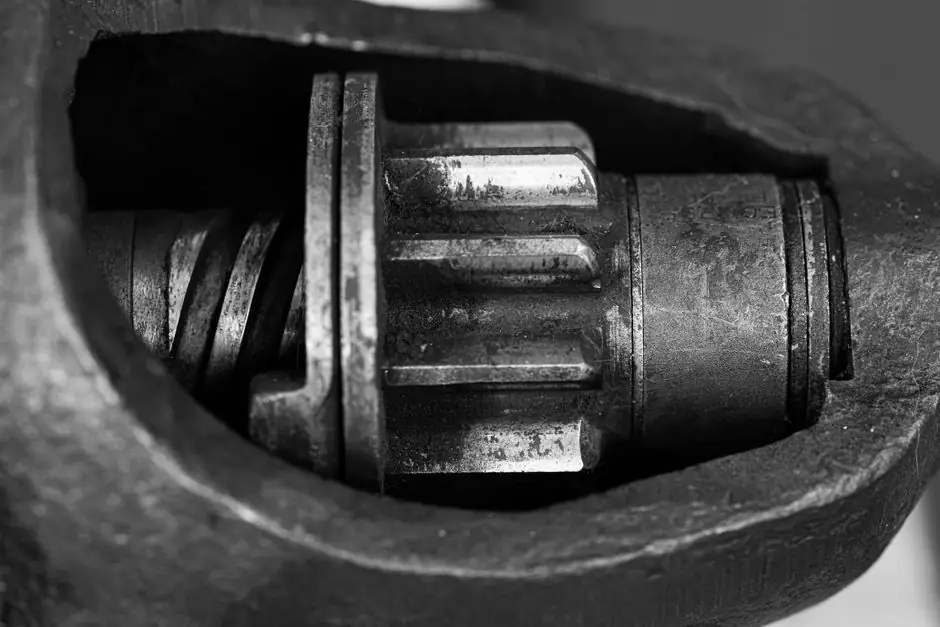
Gray cast iron normally wins for rigid machine-tool beds because it combines high compressive strength with strong vibration damping, while cast carbon steel wins where toughness, tensile loading and weldability dominate.
Use gray iron for beds, columns and tables, but specify cast carbon steel for impact, tension, repair welding or weight-sensitive structures; the decision is functional, not a simple ranking by raw-material price.
Material Boundary and Base Requirements
Cast iron normally contains 2–4% carbon, compared with roughly 0.15–2% for cast steel; this carbon boundary is the principal metallurgical distinction [S2][S5][S6]. Within cast iron, gray iron is the conventional choice for machine bases because it is easy to machine, has good thermal conductivity and absorbs vibration [S2].
Gray iron provides high compressive strength and greater vibration damping than carbon steel, making it suitable for heavy machine-tool bases, but it is more susceptible to cracking [S3]. A cast base therefore suits a bed that must remain dimensionally stable while carrying tools, fixtures and distributed equipment loads, provided the design avoids impact and tensile failure.
Cast carbon steel, by comparison, provides higher tensile strength, ductility and shock resistance [S2]. Its lower-carbon chemistry also makes it attractive where a fabricated base must be welded, modified or repaired. For engineering reference, carbon steel is an iron-carbon family rather than one uniform grade, so casting chemistry and heat treatment must be identified separately from the family name.
Decision Matrix for Machine Base Castings
On damping, gray cast iron is the clear preference for precision machine tools because graphite flakes dissipate vibration, while carbon steel provides less damping [S2][S3]. On tensile and impact capacity, cast carbon steel is stronger and more ductile, whereas gray iron is more crack-prone and is not a good choice for shock-loaded or repaired structures [S2][S3].
On casting economics, both materials can be economical in production, but the total cost includes pattern tooling, melt, core making, cleanup and machining. One practitioner noted that castings are significantly cheaper than machining equivalent parts from bar stock in production, while one-off replacement parts can cost more because the tooling must still be paid for [S1]. Cast iron also has the lower raw-material cost, while cast steel offers greater versatility at a potentially higher advance cost [S2].
On mass and integration, cast carbon steel generally provides a better toughness-to-weight option, while gray iron's damping and stiffness stability support a heavier, rigid bed. On corrosion, neither bare material should be treated as corrosion-resistant: carbon steel has poor corrosion resistance, while graphite flakes make cast iron only slightly better, and both require surface protection [S3].
Why Gray Iron Remains the Machine-Bed Standard
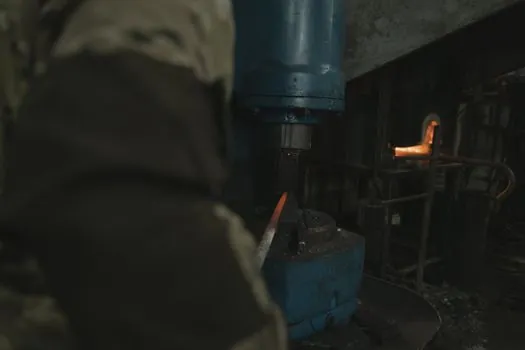
Gray iron is normally specified for machine bases because it combines high compressive strength, vibration absorption, heat retention and economical casting behavior [S2][S3]. It is also more machinable at a comparable hardness than steel in some applications, contributes longer wear life in suitable components and resists galling, while many uses require no pre- or post-machining heat treatment [S1].
These benefits are most valuable on a large bed that is machined on several faces, drilled for guide and way locations, and expected to damp repeated cutting forces. Gray iron is not the best choice for a thin, impact-sensitive base or a structure intended for extensive field welding. Its crack sensitivity requires sound fillet transitions, adequate section design and control of stress concentration [S3].
The behavior of gray iron should not be confused with the broader claim that all cast iron lacks a defined yield point. That behavior is specific to the grade and microstructure, so drawings should identify the casting grade, required inspection and machining allowances rather than using the generic label “cast iron.”
When Cast Carbon Steel Is the Better Base
Cast carbon steel is the better choice when the base must resist tensile force, shock, bending, repeated assembly changes or field repair welding, because the material provides higher tensile strength, ductility and shock resistance than gray iron [S2]. Its toughness also supports deformation before abrupt failure, while cast-steel properties are approximately isotropic rather than direction-dependent like those of rolled or forged products [S4].
Steel castings can be heat treated and stress relieved, producing a structure able to sustain more deformation and often a longer fatigue life than a welded fabrication [S4]. This matters for tall columns, lifting frames, fixtures carrying uneven loads and bases exposed to shock. A one-piece casting can also relocate welds away from highly stressed section changes, a fabrication advantage described in the casting comparison [S4].
The trade-off is that carbon steel has less vibration damping and greater corrosion risk than gray iron [S3]. If the casting is exposed to coolant, chips, moisture or outdoor weather, specify a coating or another corrosion-control system rather than relying on the casting alone.
Manufacture, Welding and Machining Constraints
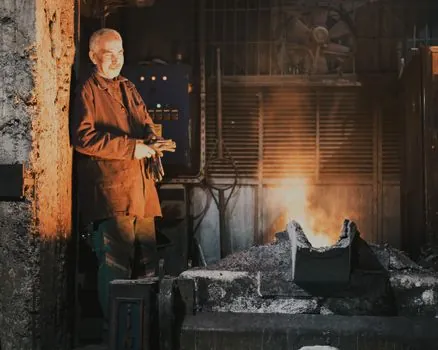
A cast base should be specified as a controlled drawing package covering material grade, carbon range, mechanical properties, heat treatment, stress relief, NDT, dimensional inspection, machining allowance and repair limits. Cast steels are tough and ductile, with brittleness governed by metallurgy rather than the casting process itself, so material control and heat treatment must be defined explicitly [S4].
Welded fabrications made from plate, bar or tube introduce weld locations that can coincide with high-stress section changes, and wrought products also have different longitudinal and transverse properties. Cast steel removes that directional distinction and can support more uniform load paths [S4]. If a base is fabricated, check welded-fabrication design guidance for the specific relationship between gray iron behavior and structural design before substituting a cast material.
Gray cast iron is more machinable at similar hardness in the cited practical comparison, while carbon steel can require more tooling wear and machining time [S1]. However, production casting moves material close to final shape and can be substantially cheaper than machining a large base from solid stock once the tooling exists [S1]. One-off replacement castings can remain expensive because the buyer pays for a dedicated mold in addition to the metal and machining [S1].
Procurement Checklist for the Correct Choice
Specify gray iron for a stable, heavily machined machine bed where vibration control is the priority, minimum cracking risk is accepted and the base will not be extensively welded. Specify cast carbon steel for shock, tension, fatigue, repairability or weight-sensitive applications, with an agreed heat-treatment and NDT package [S2][S3].
For a costed comparison, request quotations for both the finished casting and the equivalent fabricated or machined structure. A vendor may quote gray iron at about 50% more than commodity 1018 or mild steel for a low-volume replacement, but that raw comparison omits the value of vibration damping, pattern economics and the high machining cost of a large solid alternative [S1].
Record the service conditions before approving the material: cutting load, vibration, impact direction, tensile load, heat exposure, coolant exposure, required weld repairs, target mass and inspection access. A gray iron casting containing 2–4% carbon with compression-dominant loading is the baseline machine-bed choice, while a lower-carbon casting containing 0.15–2% carbon is the practical route to greater toughness and weldability [S2][S5].
Track the casting grade, carbon range, heat-treatment record, NDT results and measured damping or dimensional-stability performance after the first bed is approved. A stable qualification record on the next casting order is more useful than a generic material label because casting practice, section thickness and graphite morphology can change service behavior.