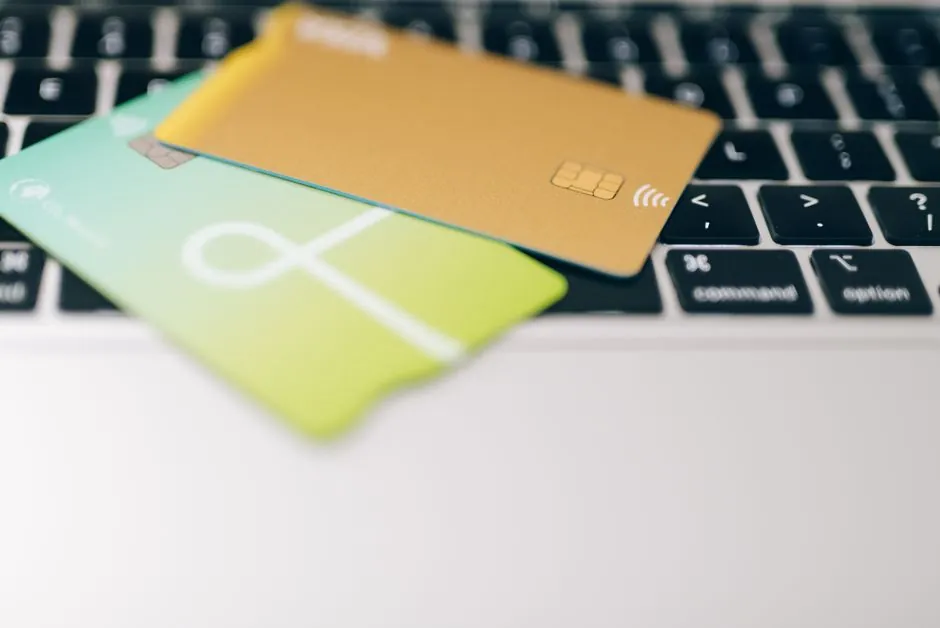
Card-based access control averages $1,500–$3,500 per door with $5–$10 per credential and $30–$100/month in software fees, while biometric readers span $700–$8,000+ per door depending on modality [S3][S5]. Fingerprint readers sit at $700–$4,000+ per door, facial recognition at $1,500–$5,500+, and iris or multi-modal at $2,000–$8,000+ [S5].
Day-one hardware favors cards, but the credential lifecycle, lost-card replacement labor, and credential-sharing risk reverse the math in high-traffic or regulated sites. This matters for any facility deciding between physical access security options, from a single server room to a multi-site plant.
Per-Door Hardware Cost: Where the Money Actually Goes
Quoted reader price is the smallest line on a real install. A one-door access control build in 2026 lands at $3,850 on average for the first year, broken into $600–$1,500 for reader plus hardware, $1,200–$2,500 for installation without existing locks, $500–$1,500 when locks are already in working condition, and $600–$1,600/year per door in software licensing [S3]. Electronic locking hardware alone runs $20–$900, accessories $10–$500, and door controllers $180–$3,500 [S3].
Biometric pricing layers in additional cost: installation, software licensing, compliance, and maintenance add 20–40% to quoted hardware costs [S2]. Fingerprint scanners fall in the $200–$1,500 per door range, facial recognition and iris scanning $1,000–$3,000 per door, and palm vein readers at the high end with the strongest anti-spoofing performance [S2]. Keypad-only systems remain the cheapest at $1,000–$2,500 per door, but they carry minimal security and no per-user audit trail [S3][S6].
Credential Lifecycle: The Hidden Operating Cost
Key cards and fobs are the dominant commercial credential worldwide, with HID Global and ASSA ABLOY as the principal manufacturers, and the technology split between legacy 125 kHz proximity cards and modern 13.56 MHz smart cards matters for both security and lifecycle cost [S4]. Legacy 125 kHz cards transmit a fixed, unencrypted credential number clonable with inexpensive hardware; 13.56 MHz smart cards use encrypted protocols and are the minimum commercial standard [S4].
Per-credential cost is $5–$50 across surveyed ranges, and each lost card pulls a security admin through re-issue, database update, and re-enrollment [S3]. Biometric readers eliminate the physical credential entirely, so replacement cost drops to zero for fingerprints or faces already enrolled [S1][S5]. Over a 200-person site replacing 15% of cards annually, the annual credential bill alone runs $1,500–$6,000 on top of reader cost, a figure that compounds with turnover and contractor churn.
Security Performance: FAR/FRR and Anti-Spoofing
Biometric system accuracy is reported as false acceptance rate (FAR) and false rejection rate (FRR), and palm vein scanning is documented at 99.99991% accuracy with contactless liveness checking, which is why it dominates critical-infrastructure and healthcare deployments [S2]. Fingerprint readers carry contact requirements and spoofing risk that limit them in higher-security environments, though they remain the most cost-effective biometric for staff-only interior doors [S2][S5].
Card-based systems' core failure is credential sharing, a colleague hands over a badge, and the system cannot tell. Biometric traits are not transferable, so buddy-punching and tailgating with a borrowed card drop out of the threat model entirely [S1][S2]. Multi-factor combinations, card plus PIN or card plus biometric, are increasingly specified where regulatory frameworks (PCI-DSS v4.0 control areas, HIPAA physical safeguards, SOC 2 CC6.1) demand dual-criteria entry events [S1].
Use-Case Fit: Who Each System Is FOR
Cards fit traditional offices, commercial buildings, and any environment where users rotate frequently and admin overhead is a primary constraint; reader cost is the lowest of the three main credential types, and onboarding a new hire takes minutes [S3][S4]. Mobile credentials (BLE/NFC on a phone) are the third leg of the 2026 comparison and address the lost-card problem without biometric hardware [S4].
Biometric systems are FOR data centers, server rooms, labs, pharmaceutical cleanrooms, refineries, ports, and any site where audit integrity or anti-sharing is non-negotiable [S2][S5]. They are NOT for visitor-heavy lobbies without strong enrollment workflows, NOT for sites with strong union or legal constraints on biometric data, and NOT for low-traffic doors where the $700–$4,000+ reader cost cannot be amortized [S5]. Illinois Biometric Information Privacy Act (BIPA) planning is mandatory before collecting fingerprints, face geometry, or iris data in that jurisdiction [S5].
Decision Matrix: Card vs Biometric Across Four Criteria

Across the four criteria that drive 2026 spec decisions, card systems win on day-one cost and reader throughput, biometric systems win on credential sharing resistance and audit integrity. On upfront hardware per door, cards land at $1,500–$3,500 versus $700–$8,000+ for biometrics, with fingerprint readers the low end and multi-modal the high end [S3][S5]. On ongoing cost, cards carry $5–$10 per credential plus $30–$100/month software versus zero per-user credential cost and 20–40% overhead on hardware for biometrics [S2][S3].
On security, cards are vulnerable to cloning (125 kHz) and sharing, while biometrics cannot be lent and produce a per-individual audit trail that holds under regulatory scrutiny [S1][S4]. On speed, a card tap is sub-second; fingerprint or facial match takes one to a few seconds depending on template size and liveness checks [S1]. For a 200-employee office expecting <5% annual turnover, the payback window is 2–4 years for most biometric deployments, and biometric time-and-attendance systems targeting payroll fraud have hit ROI in 3–6 months [S2]. When the lock hardware already meets spec and the existing platform can host the new reader, projects land at the low end of the per-door range [S5].
Integration Constraints: What the Quote Often Omits
Most access control purchasing decisions focus on the control panel, software platform, and door hardware, while the credential itself is treated as an afterthought, a pattern that produces friction in daily use and workarounds that undermine security [S4]. The credential type determines user experience, manageability, and operating cost across the system lifetime, not just the install day [S4].
Biometric deployments that miss the low-end cost band typically share one of five triggers: new lock hardware, controllers, power supplies, or cabling required; cloud migration or enterprise software upgrade needed; user population includes visitors, tenants, students, contractors, or the public; facial, iris, or multi-factor authentication mandated; or biometric privacy planning (BIPA-style) requiring policy review and vendor controls [S5]. When the existing platform supports the reader strategy and the deployment is staff-only on controlled interior doors, fingerprint readers at $700–$4,000+ are the pragmatic pick [S5]. For a related door-hardware decision that often sits upstream of credential selection, see the Maglock vs Electric Strike spec decision.
For facility-security planners who also weigh non-credential-side decisions like doorway power and signaling, the broader access control system stack matters as much as the reader choice. Mobile credentials and PIN keypads remain a valid third option for sites that want a credential upgrade path without biometric capital cost; keypad readers come in cheapest at $1,000–$2,500 per door but offer minimal security and no individual audit trail [S3][S6]. Hybrid deployments, card at perimeter doors plus biometric at sensitive interior rooms, are the most common 2026 pattern in commercial buildings and limit both upfront cost and credential-sharing exposure [S4].
Component reference pages worth checking: access scaffold, and haulage access vehicle.