
Maglocks and electric strikes solve the same controlled-access problem with different mechanisms, and the choice is decided opening-by-opening, not by brand preference [S3][S4].
A maglock uses an energized electromagnet at the frame pulling an armature plate on the door; an electric strike replaces the frame-side strike plate and releases a mechanical latch on valid credential [S1][S3]. The two differ on fail mode, door compatibility, holding force, and integration with access control hardware.
How each lock actually holds (and releases) the door
Maglocks stay locked only while current flows through the coil; cutting power drops the holding force to zero and the door opens, which is the textbook fail-safe behavior [S1][S2]. A 600 lb (272 kg) indoor maglock such as the VIS-ML600LED-BL pulls 500 mA at 12 VDC or 250 mA at 24 VDC, with a status LED in series [S2]. A 1200 lb (544 kg) outdoor maglock typically draws 300–500 mA at 24 VDC, sized for larger storefront or gate openings [S2].
An electric strike releases a keeper so the existing latchbolt can pass through the frame, which means the door still has a real mechanical lock behind it [S3][S5]. The VIS-EL104-FSESA, a representative indoor strike, is rated 770 lb (350 kg) static holding force, draws 280 mA at 12 VDC or 140 mA at 24 VDC, and is field-switchable between fail-safe and fail-secure [S2]. Operating voltage is almost always 12 or 24 VDC, supplied by a regulated low-voltage power supply with battery backup for code-driven openings [S2][S5].
Fail-safe vs fail-secure: the life-safety split
Fail-safe (power to lock) means the door unlocks when power is removed, and is required for most egress paths serving occupied spaces; fail-secure (power to unlock) means the door stays locked when power drops, and is reserved for high-security perimeters where re-entry through that opening is not a life-safety path [S1][S5]. Maglocks are inherently fail-safe because removing coil current collapses the magnetic field, so they need a code-compliant release device (request-to-exit button, crash bar, or fire-panel relay) to meet egress rules [S2][S4].
Electric strikes can be ordered or field-configured as fail-secure (locked without power) for secure rooms, or fail-safe (unlocked without power) when paired with fire-rated doors, which is why they are described as the more flexible option on the fail-mode axis [S3][S4][S5]. Pairing a fail-secure strike on an egress door is a common spec error, and AHJs will reject it on a fire-rated opening [S4]. A practical rule: if people must exit through that door in an emergency without using a credential, the device must be fail-safe, whether that is a maglock with proper release hardware or a fail-safe-configured electric strike [S2][S4].
Holding force, door type, and frame preparation

Holding force on a maglock is a function of coil area, armature contact, and power, with common commercial ratings of 600 lb, 1200 lb, and 1500 lb (272–680 kg); the armature must sit flat against the magnet face or rated force drops sharply [S2][S4]. A 600 lb maglock is generally sufficient for interior office and interior glass doors, while 1200 lb and up is preferred for storefront, exterior, and higher-abuse openings [S2].
Electric strikes are usually rated by static holding force on the keeper (often 750–1500 lb for commercial-grade units), but the real-world security is limited by the latch engagement, frame integrity, and door alignment, not the strike's coil [S2][S4]. Strikes also need a frame pocket cut to the lock body's footprint, which is retrofit-heavy on existing metal frames and usually impractical on tempered glass; maglocks avoid that pocket and are therefore the default for all-glass and storefront doors where only surface mounting is available [S3][S4]. A quick opening review: choose a strike when a mechanical latch, mortise, or rim exit already exists in a wood or hollow-metal frame; choose a maglock when the door is glass, the frame cannot be cut, or a surface-mounted solution is required [S4].
Wiring, power, and access-control integration
Both devices run on 12 or 24 VDC and are typically fed by a regulated, filtered, UL-listed power supply with battery backup sized for code-mandated standby hours [S2][S5]. A common commercial supply is 12 V at 2 A or 24 V at 1 A per door, sized for the device plus the reader, REX, and lock-controller relay; the actual lock is only a fraction of that budget [S5]. 18 AWG wire is the practical minimum for runs under about 100 ft (30 m), and PoE+ is now an option on newer strikes and maglocks, letting a single CAT6 cable carry both data to the access controller and power to the lock [S2].
Integration with the rest of the architectural hardware is straightforward either way: the access reader or controller drives a dry-contact relay that breaks or applies voltage to the lock, with a MOV or diode across the coil to suppress back-EMF [S5]. Request-to-exit (REX) devices, door-position switches (DPS), and fire-panel relay cutoffs are wired in series or parallel per the system logic, and the same wiring plan works for either device family [S3][S4].
Decision matrix by opening
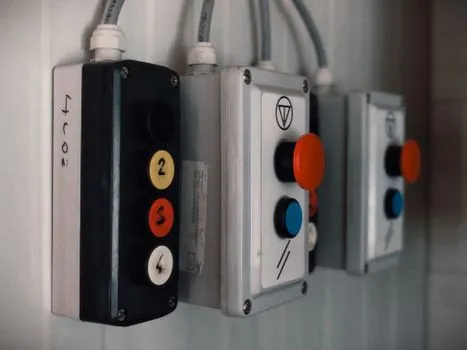
Four criteria consistently separate the two options in real specs: fail-mode requirement, door and frame material, retrofit complexity, and integration with existing access control hardware [S3][S4].
For a glass storefront, specify a 1200 lb surface maglock with a UL-listed crash bar and a fire-panel relay; for a wood-frame office suite, specify a field-reversible electric strike compatible with the existing cylindrical or mortise latch [S2][S4]. This is the kind of building-hardware decision that should be reviewed opening by opening, because one floor plan usually contains both opening types and mixing the two on a single access panel is normal [S3][S4].
Limitations, failure modes, and what the data does not tell you
Maglock holding force ratings assume a flat, clean armature-to-magnet interface; warping, flex, or a door sag of even a few millimeters can drop effective force well below the nameplate, which is why armature mounting and door alignment are recurring service items [S4]. Power-loss behavior is also a single point of failure: a maglock with no battery-backed supply and no fire-panel release becomes an uncontrolled opening the moment utility power drops [S2][S4].
Electric strikes inherit the mechanical weaknesses of the latch and frame behind them; a loose strike pocket, a worn latchbolt, or a soft frame can be defeated without touching the electronics, so the strike rating is necessary but not sufficient [S3][S4]. Field-reversible strikes are convenient, but flipping a unit from fail-secure to fail-safe without re-checking the AHJ and fire code is a common compliance miss [S4][S5]. Any number cited as market share or adoption rate for one device over the other is not in the source material, and treating any "X% of installations" claim as ground truth would be guessing [S1]–[S5].
Standards and code hooks to verify on every spec
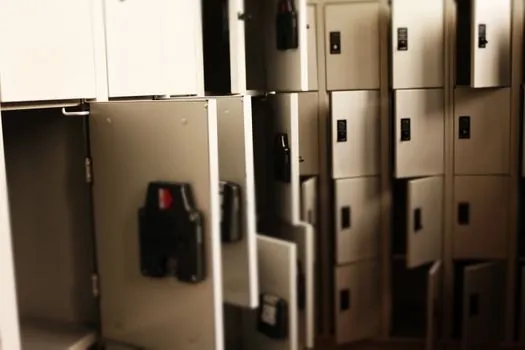
NFPA 101 (life safety) and NFPA 72 (fire alarm) govern egress paths and the release hardware that must drop maglocks on fire alarm, and the local AHJ has final say on which release devices are accepted on which openings [S2][S4]. UL 294 covers access-control listing for the readers, controllers, and locking devices, while UL 10C applies to fire-rated door assemblies; a maglock or strike on a labeled fire door must be installed in a way that preserves the fire rating [S4][S5].
For California, the Office of the State Fire Marshal (SFM) listings and the disabled-access egress rules in CBC Chapter 11B also apply, and many specifiers add a Building Owners and Managers Association (BOMA) or ASIS security-glossary reference for credential-tier alignment [S4]. Always verify the exact revision cited in the project's governing code edition; this guide does not pin a specific revision date to any of these standards [S4].
For comparison with adjacent hardware decisions, see how engineers spec a freely programmable industrial camera for pharma label inspection at Spec a freely programmable industrial camera for pharma label inspection and how a linear guide and linear bearing compare spec-by-spec at Linear Guide vs Linear Bearing: Spec-Level Differences, both of which use the same opening-by-opening review approach recommended here.
Next trackable signals: the AHJ's specific stance on fail-secure strikes used on egress doors, the door-by-door holding-force verification method, and the lock nut-style mechanical prep (frame reinforcement, strike pocket depth) the installer will sign off on at commissioning.