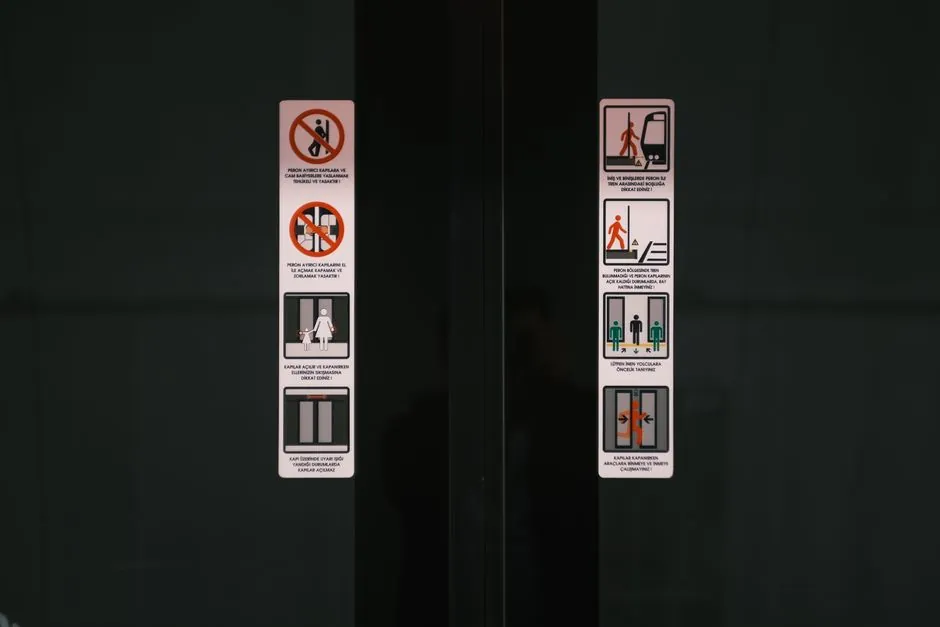
A mantrap interlock is a two-door vestibule where the first door must close and lock before the second can release, producing a one-person-at-a-time sequence that defeats tailgating, piggybacking, and credential pass-back in high-security facilities [S2][S3].
Modern automatic mantraps combine card readers, biometrics, 3D cameras, and pressure mats; through-the-portal verification cycles are advertised at 5-7 occupants per minute on portal-security products from manufacturers such as ASSA ABLOY [S1]. Capital cost for the hardware alone is typically reported in the $30,000-$60,000 band, with installation and structural modification billed separately [S2].
How the Interlock Sequence Is Built
An interlock is the electromechanical contract that prevents both portal leaves from ever being unlocked simultaneously; this is the defining property of any mantrap and the reason it blocks tailgating at the physical layer rather than relying on guard vigilance [S2][S3]. In an automatic configuration, each leaf is driven by a motor lock tied to the access control panel through dry-contact or supervised dry-contact outputs, and the controller only releases leaf B after confirming leaf A is fully closed, latched, and the occupancy sensor reads a single person [S3].
Authentication can be split between leaves for two-factor enforcement, with a card reader or PIN pad on the entry side and a biometric (fingerprint or iris) on the secure side, a pattern described as "very typical" in data center entrance control environments [S3]. In dual-reader data center mantraps, the time-of-flight and stereovision sensors are used to compare walking-speed profiles of the entering occupant against the enrolled credential, catching both unauthorized companions and abnormal gait that may indicate coercion [S3].
Configuration Modes: Manual, Automatic, and Bi-directional
Manual mantraps rely on a guard, intercom, and CCTV to release each leaf in sequence, which keeps hardware cost low but caps throughput and creates a single-point human failure mode [S3]. Automatic mantraps shift authorization to electronic readers and occupancy sensors, enabling unattended operation in banks, laboratories, post offices, airports, healthcare facilities, embassies, and data centers where sustained two-factor identity checks are required [S2][S3].
Portal Security Doors (dual-leaf interlocking portals) and Security Portals (curved sliding-door cylinders such as the Circlelock Solo) are the two product families used to enforce one-person-at-a-time flow; the portal-cylinder form allows 2-way traffic in only one direction at a time but can accommodate a wheelchair or delivery cart, while dual-leaf doors permit simultaneous 2-way flow at higher capacity [S1][S5]. Mantrap Security Doors from Boon Edam advertise anti-passback integration, bullet-resistant or vandal-resistant glass upgrades, and a barrier-free access option for wheelchairs, push chairs, and equipment carriers, with a rated throughput window of 5-7 occupants per minute on ASSA ABLOY high-flow models [S1][S5].
Selection Criteria for High-Security Sites
Specifying a mantrap interlock starts with four filters: threat model, throughput, identity-assurance level, and life-safety egress. For data centers and research labs handling regulated data, the typical pattern is dual-credential (card + biometric) with metal-detector screening inside the vestibule, because this combination blocks weapons, intrusion tools such as crowbars, and strong electromagnets at the same door that verifies identity [S3].
Physical hardening options include all-steel construction, Bullet-Resistant (BR) laminated glass, and burglar-resistant (RC) ratings; EN 1522/1523-style BR3-rated glass and steel is one published rating pair used in data center mantrap portals, paired with thick laminated curved glazing on the secure side [S3]. Fire regulations in most jurisdictions require that the intermediate trapping space be releasable for exit during a fire or power outage, while still allowing denial of access to the protected space beyond; mantraps must therefore include a fail-secure or fail-safe egress path that is wired to the fire alarm system and tested on the same maintenance cycle as the access control panel [S2][S3].
Architecturally, a mantrap costs more than a security interlock switch retrofit because the room itself is part of the security boundary; facilities often need walls removed, doorways enlarged, and structural reinforcement added before the equipment set is even installed, and that build-out is the dominant cost line on most projects [S2]. For access-control architecture choices, the cloud vs on-premise access control decision is upstream of the mantrap spec, since credential storage, anti-passback logic, and audit retention all live in the controller layer, not in the portal hardware itself.
Sensor Stack and Anti-Tailgating Hardware
Inside the vestibule, three sensor families do the work that lets the controller know exactly one authorized person is present. Pressure contact mats verify body weight at floor level, 3D stereovision cameras count heads and track walking speed across the chamber, and metal detectors screen for weapons and electromagnetic intrusion tools [S1][S3].
Time-of-flight sensors add a behavioral layer by comparing the entering occupant's pace against the credential holder's enrolled profile, which is one of the few published methods for catching coercion or proxy entry at the door rather than at the guard desk [S3]. The occupancy decision is typically fused inside the portal controller using a 2-out-of-3 voting rule across these sensors, with a configurable dwell-time window (commonly 1.5-3.0 s) before the second leaf is released, which keeps total cycle time inside the 5-7 occupant-per-minute envelope published for high-flow security portals [S1].
Cost, Throughput, and Failure Modes
Hardware-only quotes for a complete mantrap commonly land in the $30,000-$60,000 range for an automatic two-door vestibule with readers, sensors, and a controller, excluding installation, structural modification, and integration with the building's access control and fire systems [S2]. Installation is the wildcard line item: turnkey mantraps are routinely delivered by factory-trained installers because vendor commissioning is treated as part of the security boundary, and most manufacturers will not warranty a self-installed portal [S3].
For lower-traffic sites, the same protection logic is achievable with a surveillance security camera, an intercom, and a guard-operated manual mantrap, which trades throughput for capital savings; a manual mantrap is the typical configuration in evidence rooms and small branch bank vaults where two or three entries per hour is the design load [S3]. The access control decision then becomes whether to spend the marginal dollars on a second biometric reader (dual-factor at one portal) or on a separate sally-port room for high-handling cargo, since both approaches address piggybacking but at very different cost and footprint.
Standards, Compliance, and Sourcing
Bullet-resistant glass on mantrap portals is typically specified to EN 1522 / EN 1523 classes (BR3 and BR4 being common for data center mantraps), and burglar-resistant construction to the matching EN 1627 RC classes, with thick laminated curved glass as the default glazing choice on the secure side [S3]. In North American data center builds, mantraps are commonly listed to UL 294 (access control system units) and coordinated with NFPA 101 life-safety code for the fail-secure or fail-safe egress path out of the intermediate space, while banking sites additionally specify ballistic ratings against UL 752 or NIJ 0108.06 depending on jurisdiction [S3].
For data center deployments, mantraps are paired with access control panels that are themselves listed to UL 294 and audited under SOC 2, and the mantrap hardware is typically sourced as part of a single turnkey package from one of the established security entrance control vendors (ASSA ABLOY Security Portals, Boon Edam Tourlock and Circlelock lines) to keep ballistic, RC, and interlock certifications aligned across the portal [S1][S3][S5].