
Select a single-use carton box for one-way or low-volume flows, or a reusable turnover box when the same closed-loop route can support multiple cycles.
The governing comparison covers purchase price, service life, return rate, damage, cleaning, storage, and reverse logistics, not the unit price of packaging alone.
Core differences between carton and turnover systems
A carton box is a single-use corrugated package intended to protect a defined shipment, while a turnover box is a rigid reusable container designed for repeated handling, stacking, and return. The Fraunhofer UMSICHT study defines the comparison as reusable plastic crates versus single-use cardboard boxes and identifies circulations, breakage, and leakage as the principal performance parameters for reuse systems [S2].
Cardboard is inexpensive and flexible, but its service life, hygiene performance, and process integration depend on storage and handling conditions. A published estimate places practical cardboard reuse at about three uses before degradation, while some equipment is marketed as surviving thousands of cycles [S1] [S7]. For specification purposes, treat those figures as scenarios, not guaranteed design lives.
A reusable turnover box is the stronger fit for a closed loop with controlled exposure, reliable return, and repeated handling. A carton box is the stronger fit for irregular order profiles, export shipments, overflow capacity, or routes where recovery cannot be controlled.
Decision criteria for reusable and single-use packaging
Use four commercial criteria: unit cost, achieved reuse cycles, reverse-logistics cost, and residual disposal exposure. A reusable container adds purchase and recovery costs, but it spreads the container cost over multiple uses. Cardboard avoids asset ownership and reverse transport, but consumes a new package for each shipment. [S5]
Use four operational criteria: damage resistance, hygiene, storage requirements, and automation compatibility. Cardboard absorbs impact readily but loses strength when wet and can tear during handling [S5]. Reusable boxes tolerate repeated handling and stacking, yet food, pharmaceutical, or contamination-sensitive operations can add cleaning and inspection costs [S2] [S5].
Compare the main options directly: cardboard offers the lowest purchase price and simplest disposal, but has a shorter service life. A plastic turnover box costs more initially and requires return infrastructure, but can support repeated cycles and standardized handling. Neither option is automatically lower cost without a measured route model.
Cycle count changes the economic threshold

A reusable tote is described as capable of surviving thousands of use cycles, compared with a single-trip carton, although real fleet life depends on application and handling [S7]. A 2025 cost comparison also notes that many reusable containers require less special storage than cardboard, while food applications may require cleaning after every use [S5].
The calculation must include loss. If one carton is discarded after one trip while one reusable box is lost after 30 trips, effective cost per delivered trip is carton purchase cost plus disposal versus reusable cost divided by 30, including the replacement unit in the denominator.
Reverse logistics and process integration
A reusable system works only when returns are measured and completed. The operating model needs a defined collection point, inspection step, cleaning protocol, empty-container storage, and redistribution process. If the box returns dirty, damaged, late, or not at all, its theoretical cycle count has little procurement value. [S5]
Set at least four controls: return rate by route, number of completed trips per container, damage or leak rate, and recovery cost per empty unit. Fraunhofer's study compares reusable plastic crates with single-use cardboard boxes and identifies circulations, breakage, and leakage as relevant considerations [S2].
For closed-loop distribution, include return-leg utilization and reverse transport distance. For mixed retail or supplier networks, distinguish reuse from simple recovery: a carton collected for recycling is still a single-use package, while a turnover box returned for another shipment is reusable packaging. The logistics packaging assessment should therefore separate packaging function, return flow, and end-of-life route.
Use cases, limitations, and failure modes
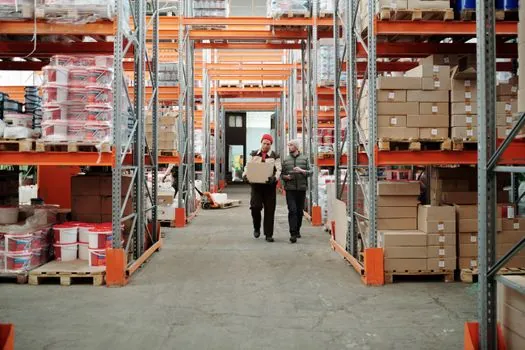
Single-use cartons fit irregular, low-volume, or export shipments where the destination, buyer, or carrier will not return packaging. They also suit pilot launches and seasonal peaks where purchasing a reusable fleet would create idle stock. The trade-off is continuous material consumption and higher exposure to moisture, tearing, and handling damage [S5].
Reusable turnover boxes fit repeatable loops between a supplier, warehouse, distribution center, and retailer. They also fit closed internal movements where identical loads return over the same route. Their limitations are asset purchase, cleaning, repair, reverse transport, and the need for sufficient flow density to prevent empty-container accumulation.
Do not use reusable plastic as a default for every returnable shipment. A 2025 plastic-versus-cardboard assessment highlights service life, hygiene, and process integration as decision constraints alongside price [S1]. Food-grade design, temperature exposure, cleanability, fire performance, and product-contact requirements must be checked separately for the selected crate grade and application.
Sustainability claims require a like-for-like assessment
Reusable packaging can outperform single-use cardboard on circularity and material efficiency, but the result depends on achieved cycles, return distance, cleaning energy, and loss rate. ARECO states that reusable transport packaging showed greater circularity than cardboard boxes in the assessment it discusses [S6]. That conclusion should not be transferred to a different route without recalculating the underlying operating assumptions.
Fraunhofer describes comparative life-cycle assessment as laborious and sometimes uncertain, but unavoidable, and recommends evaluating circulations, breakage, material recycling, climate contribution, and fit-for-purpose performance [S2]. The report applies to reusable plastic crates and single-use corrugated boxes, with status November 2022 and DOI 10.24406/publica-456.
For environmental sourcing, use primary packaging data and a route-specific life-cycle model rather than a generic material claim. The debate over recycled versus virgin kraft board affects material inputs but does not settle the single-use versus reusable decision. For corrugated cartons exposed to humidity or temperature variation, see Control Temperature and Humidity for Corrugated Carton Integrity.
Specification checklist before approving a system

Approve a carton system when the route is one-way, recovery is unreliable, and the shipment profile changes enough to make a reusable fleet inefficient. Approve a turnover system when at least one controlled loop, an identified return owner, an inspection regime, and a realistic fleet-recovery plan exist. [S1]
Before purchase, document five measured inputs: cost per carton, cost per reusable box, average completed cycles, return rate, and reverse cost per empty box. Add peak-versus-average volume, damage rate, cleaning frequency, and disposal route. A proposed cycle count without observed return and loss data is not a business case.
Track four operating signals after launch: completed trips per container, recovery percentage, damage or leakage percentage, and delivered cost per trip. Recalculate the choice when these values materially differ from the commercial model. That keeps bulk-bag, pallet, and container decisions from being incorrectly combined with the return-loop economics of a turnover box.