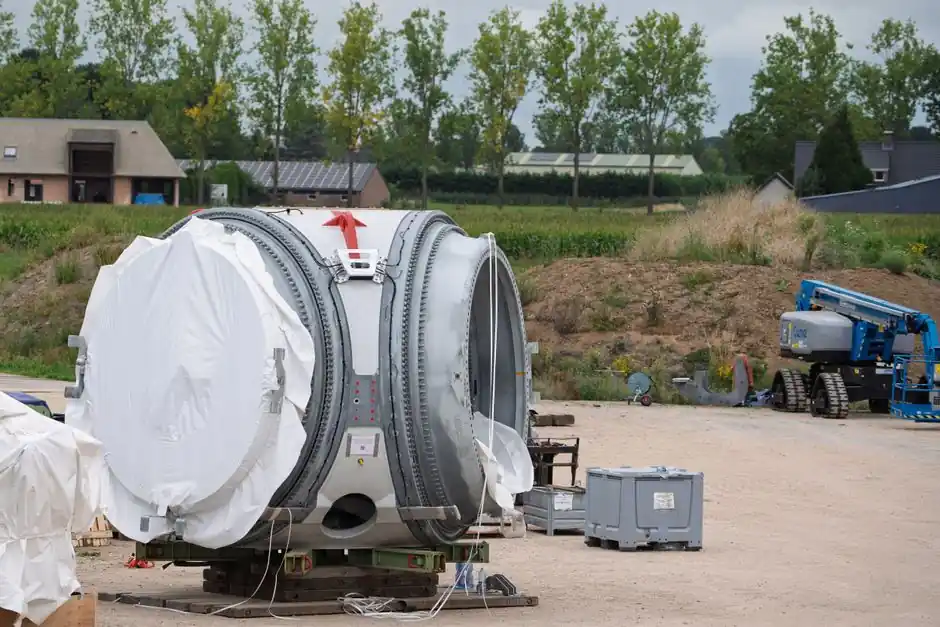
Wood crates support multi-ton machinery through structural framing, reinforced skids, internal blocking, and load-bearing enclosures, while cardboard boxes are generally suited to lighter payloads and shorter routes [S1][S5].
The decision depends on part mass, center of gravity, handling equipment, moisture exposure, export rules, reuse, and damage risk rather than crate label alone [S2][S5].
Heavy-Part Selection Criteria
Wood crates are the appropriate choice for machinery weighing hundreds or thousands of kilograms, irregular machinery footprints, concentrated loads, and parts requiring bolting, blocking, or diagonal bracing [S1][S5]. Their structural lumber distributes load through the base and frame, while fully enclosed construction can protect equipment from impact, dust, rain, and salt-laden environments [S1][S3][S5].
A corrugated carton box is defensible for lighter parts, shorter domestic movements, and manual handling. Cardboard boxes are engineered for relatively light consumer goods, and once a load exceeds a certain threshold, their walls can compress, their corners can buckle, and the box may fail mid-transit [S3].
Do not specify either package from cargo weight alone. The engineering package should define the part dimensions, gross weight, center of gravity, lifting points, forklift-tine positions, crane-sling arrangement, route duration, storage conditions, and maximum stacking exposure. Capacity depends on lumber grade, panel thickness, fastener pattern, base design, and internal restraint, not simply on whether the package is called a box or crate [S2][S5].
Wood Crate Structures for Machine Loads
Wooden crates can be tailored to fit many machine types, provide support from all sides, and help protect delicate machine parts from impact and rough handling [S1].
Wood crates use structural lumber framing that distributes load across the entire crate [S3]. A heavy machinery base should use thick runners and reinforced skids engineered for forklift entry and crane lifting, while the load should be anchored with heavy lag bolts or threaded rods where mounting holes permit [S5].
For detailed carton strength methods, ECT vs BCT vs Mullen for Corrugated Carton Specification explains why carton selection requires board and construction data rather than a visual judgment of wall thickness. Without verified edge-crush and stacking limits, a heavy machinery carton cannot be treated as a substitute for an engineered wood crate.
Wood Crate vs Carton Box Decision Matrix

Wooden crates lead on weight capacity, durability, and reusability for heavy or high-value loads, while their heavier construction can make them more difficult to handle than cardboard crates for lighter, short-distance shipments [S2][S3]. Carton boxes lead on initial cost, manual handling, and production efficiency, but their performance is constrained by wall construction, moisture exposure, and repeated or heavy stacking [S2][S3][S7].
Who Should Select Each Package
Custom wood crates are appropriate for heavy machinery parts, auto components, sensitive equipment, engine components, press tooling, and hydraulic equipment [S3][S5]. It also fits oversized or irregular parts that cannot be supported effectively by carton walls, and export shipments that require ISPM-15 treatment [S2].
Choose a carton box for smaller machine parts, accessories, replacement components, and recurring shipments that can be handled manually, remain dry, and fit a verified package specification [S2][S7]. Corrugated packaging remains suitable when production speed and unit cost matter more than a repeatedly reusable engineered enclosure [S7].
Wood is not the right choice when the shipment can be protected by a verified corrugated design and the added tare weight creates a freight or handling penalty. A carton may be unsuitable for heavy machinery, loads with uneven mass distribution, equipment requiring lifting arrangements, or international shipments, but suitability depends on the part's weight, fragility, export requirements, shipping frequency, and the packaging design and construction [S2][S5].
Internal Restraint and Handling
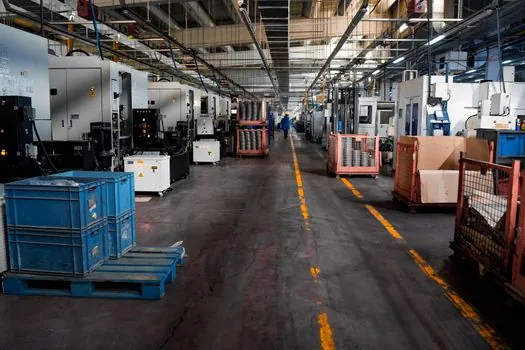
When packing heavy machinery in a wooden crate, evaluate the equipment's dimensions and center of gravity, construct a custom heavy-duty timber base with reinforced skids, and secure the machine using heavy-duty bolts, blocking, and bracing to prevent movement [S5].
Forklift-tine entry and crane lifting must be designed into the base rather than improvised against finished panels [S5]. Any tiedown, shear, or lifting arrangement must restrain the machine without loading unsupported crate walls.
Corrosion protection is as important as structural restraint. Machinery packaging guidance combines internal restraint with an anti-corrosion barrier such as VCI film and fully enclosed panels [S5]. Wood alone is not a substitute for moisture management, and corrugated packaging is particularly vulnerable when it remains on wet docks or crosses temperature and humidity zones [S3].
Export, Reuse, and Total Cost
International wood shipments require ISPM-15 heat treatment, so the treatment mark and supporting documentation must be incorporated into the export package [S2][S5]. Carton packaging avoids that wood-treatment rule, but the lower upfront material cost must be compared with disposal, replacement, and freight costs after damage [S2].
Wood crates generally cost more per unit initially, but they can be disassembled, inspected, repaired, and reused across shipment cycles; this can reduce the per-use cost when the same product moves repeatedly [S3]. A reinforced wood crate is also easier to tailor to the machine footprint, reducing void space and internal movement [S3].
One packaging supplier reported that reinforced custom wood crating reduced a customer's handling-damage rate from 21% to near zero after switching from a repeatedly handled alternative, but that single case is not a controlled performance benchmark [S2]. For procurement decisions, track crate purchase cost, tare freight, labor, damage claims, repair labor, return freight, and the number of verified reuse cycles.
Specification Checklist Before Release
A release-ready wood-crate specification should state part gross weight and dimensions, center of gravity, lifting and tie-down points, base dimensions, runner or skid section, frame and panel dimensions, fastener details, blocking arrangement, moisture protection, closure method, outside markings, destination, and required export treatment [S1][S2][S5].
For a carton specification, document board grade, edge-crush rating, box dimensions, closure, internal blocking, gross weight, moisture limits, handling route, and allowable stacking exposure; use the Mullen test ratings guide only as one part of the package decision because Mullen and ECT characterize different performance conditions.
The next traceable decision point is a documented mass and route review. If the load is multi-ton, irregular, crane-lifted, moisture-exposed, or export-bound, price a custom engineered wood crate; if it is light, dry, manually handled, and repetitive, price a verified heavy-duty corrugated design. Final approval should follow inspection of internal restraint and handling interfaces, not visual comparison of the two package types.