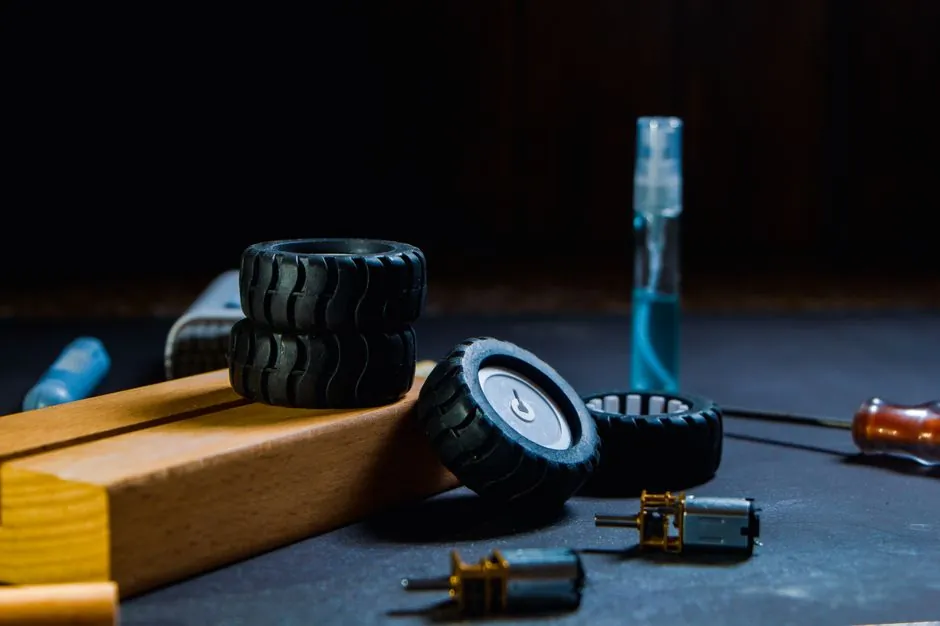
Cast polyurethane uses a liquid thermoset resin that cross-links during curing, while TPU is a linear thermoplastic elastomer processed by melting and cooling.
CPU suits large, complex, or load-bearing components; injection-molded TPU suits repeatable production of smaller parts, with the correct process preventing an unsuitable material choice.
Material State and Chemistry
Cast polyurethane, commonly called CPU, begins as a liquid thermoset resin. Mixing and curing create a cross-linked molecular network that becomes insoluble and cannot readily be melted or reprocessed [S1][S2].
TPU has a predominantly linear block-copolymer structure containing soft and hard segments. It softens on heating, solidifies on cooling, and can be processed again by heat [S1][S4]. TPU is therefore a specific member of the broader polyurethane family, not a synonym for all polyurethane [S4].
This network difference controls more than the processing route. CPU develops a permanent three-dimensional structure during curing, whereas TPU retains segmental mobility and melt-processability. The selection should be based on forming method, geometry, loading, and end-of-life requirements rather than the general label “urethane” [S2][S4].
Process Routes and Cycle Time
CPU production meters, mixes, pours, and casts liquid resin into a mold, then cures the part under the formulation’s specified conditions. The chemical reaction forms the final network, so the mold is filled with a reactive material rather than a finished polymer [S2].
TPU can be injection molded, extruded, film blown, or calendered. Pellets are heated until molten, shaped under pressure, and cooled to a solid part [S2][S5].
CPU casting offers greater freedom for prototypes, low-volume parts, large castings, and geometric details that are difficult to flow through a narrow injection gate.
Tooling, Scale, and Geometry

TPU scrap can generally be recycled and reprocessed because TPU is a thermoplastic material that can be melted and reformed.
Polyurethane is used in products including textile coatings, construction sealants, wood adhesives, elastomeric cushions, shoe soles, forklift tires, rollers, and insulation foams. Material selection should also account for the cast iron or other rigid substrate used in hybrid parts.
Performance, Bonding, and Service Limits
CPU is often chosen for high-load, high-abrasion parts because the cured network can provide substantial load-bearing capacity. One comparison describes molded thermoset urethane as the higher-load option and TPU as the lower-load-per-area option [S5].
TPU combines flexibility and abrasion resistance with melt processability, and its properties can range from soft elastomers to rigid plastics through hard- and soft-segment selection [S4][S5]. CPU formulations can also provide high physical properties, so the generic statement that all thermosets are mechanically superior would be wrong. Grade-specific test data must decide the final comparison [S2].
Heat is a service constraint. These figures are not universal TPU or CPU limits and must not be transferred to another grade without test data.
Decision Matrix by Production Requirement
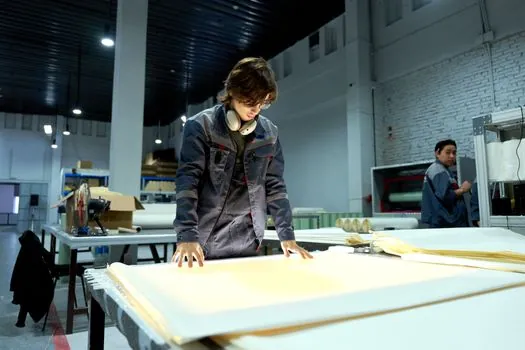
For low volume, choose CPU when the part is large, heavily loaded, geometrically complex, or likely to need machining. For high volume, choose injection-molded TPU when the geometry repeats in one steel tool and cycle-time reduction outweighs the tool investment [S6].
For recyclability and remelting, choose TPU.
For bonding or secondary machining, verify the joining method against the actual formulation. The polyurethane elastomer reference can serve as a terminology cross-check, but final approval needs supplier test data.
Production Qualification Checklist
Then compare first-article dimensions and mechanical properties against the drawing and service envelope. For CPU, verify that curing and post-curing do not distort the component or create unacceptable residual stress. For TPU, verify weld lines, gate marks, shrinkage, voids, and property retention after repeated melt processing [S2][S6].
The practical rule is straightforward: specify CPU for castability, complex low-volume geometry, and severe mechanical duty; specify TPU for injection molding, short cycles, production repeatability, and remelt recycling. Confirm the decision with grade-level thermal, mechanical, chemical, and wear data before releasing tooling or a production order.