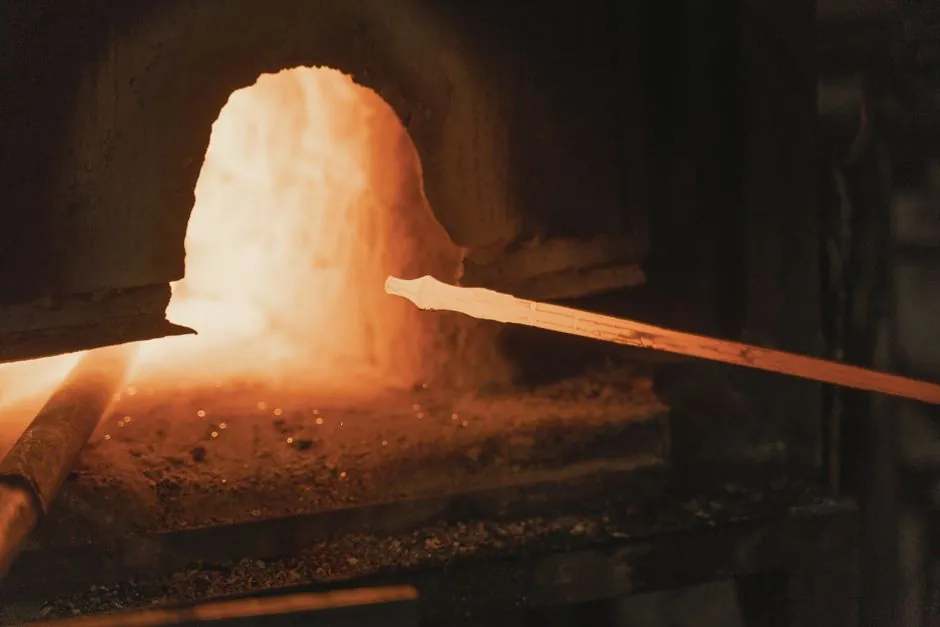
Ceramic fiber insulation has temperature ratings of 1000–1600°C, while standard mineral wool can handle temperatures up to 700°C.
The decision depends on hot-face temperature, dimensional stability, mechanical handling, moisture exposure, installation form, and regulatory requirements rather than a general claim that one insulation is better.
Temperature Capability Drives the Furnace-Lining Decision
Ceramic fiber blanket is designed for industrial furnace, kiln, boiler, reformer, annealing, and combustion-chamber lining, with classification families at 1260, 1430, and 1600°C [S1][S2]. One product comparison places ceramic fiber at 1000–1600°C and mineral wool at 600–1000°C, while another comparison gives standard mineral wool up to 700°C [S2][S3].
The useful threshold is the operating temperature of the hot face, not the furnace air temperature at the burner. Ceramic fiber is normally specified where the lining must remain above roughly 700°C, including furnace doors, kiln walls, burner blocks, heat-treatment equipment, and petrochemical heaters [S2][S5]. Mineral wool remains appropriate for building fireproofing, HVAC ducting, industrial piping, boilers, and lower-temperature furnace zones [S2][S3].
Classification temperature is not a guarantee that the blanket can operate at that value indefinitely. Long-term exposure still requires review of the product datasheet, fiber chemistry, binder behavior, shrinkage, crystallization, and the furnace atmosphere.
Thermal Performance and Heat Storage Affect Fuel Use
Ceramic fiber has low thermal conductivity and low heat-storage capacity, which makes it efficient for repeated heating and cooling of high-temperature furnaces [S2][S4]. Mineral wool provides effective insulation at normal and moderate temperatures, but its performance is less suited to the thermal and physical demands of extreme furnace service [S2][S3].
The materials are not equivalent in density or installation behavior. Ceramic fiber blanket is lightweight and flexible, so it reduces structural load and can be cut or fitted around complex furnace geometry [S2][S3].
For a cyclic furnace, the low heat-storage characteristic of ceramic fiber can reduce the thermal mass that must be reheated at each cycle. A separate comparison with insulating fire brick reports that ceramic fiber blanket stores roughly 90% less heat than insulating fire brick of equivalent thickness, reducing fuel use in cyclic-fired furnaces [S6]. That result compares blanket with fire brick, not mineral wool, and should not be transferred directly into a ceramic-to-mineral-wool fuel calculation.
Mechanical, Chemical, and Moisture Behavior
Rockwool is generally tougher, more construction-friendly, and more resilient in many forms, while ceramic fiber blanket is lightweight and flexible. A furnace lining exposed to gas velocity, dust loading, vibration, or direct contact requires protection against erosion, compression, and handling damage. Ceramic fiber modules, boards, papers, textiles, and other shaped products may be preferable where a loose blanket cannot be retained reliably [S1][S4].
Ceramic fiber offers excellent thermal-shock resistance and is described as resistant to most acids, alkalis, and molten metals [S2]. Mineral wool is non-combustible and can provide moisture resistance and sound absorption, but its binder and structural stability become concerns when temperatures approach the upper range [S1][S2]. Correct protection, cladding, supports, and sealing are therefore part of the material selection, not optional additions.
Neither blanket should be treated as a moisture-management system. Mineral wool products may be water-repellent, while ceramic fiber relies mainly on the furnace and jacket design to prevent moisture ingress [S1]. For outdoor service, condensation control, or wet cycling, the supplier's datasheet and the complete lining system must be reviewed rather than selecting from temperature rating alone.
Fire Safety, Health, and Regulatory Constraints
Both ceramic fiber and mineral wool are non-combustible, but their compliance profiles differ [S3]. Refractory ceramic fiber can be restricted by health classification in some jurisdictions, while alkaline earth silicate soluble fiber may be preferred where customer policy or local rules require lower biopersistence [S1].
Mineral wool is also treated as an irritant dust or fiber in many applications, with jurisdiction-specific handling requirements [S1]. Installation therefore needs exposure controls for dust, fibers, binders, and any coatings or adhesives used with the lining. The choice should include worker exposure review, product safety data, local requirements, and waste handling, rather than treating “non-combustible” as a complete safety case.
For furnace applications, the product form can affect installation exposure and downstream maintenance. Ceramic fiber blanket is available as blankets, boards, paper, modules, textiles, and bulk material [S1][S4]. Mineral wool is commonly supplied as boards, slabs, pipe sections, blankets or mats, and loose wool, with formed products generally easier to specify for building and equipment insulation [S1].
Which Insulation Fits Each Use Case
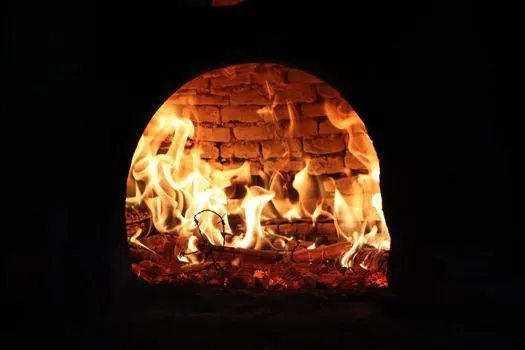
For an industrial furnace or kiln with a hot-face zone above 700°C, ceramic fiber blanket is the default recommendation when thermal cycling, low mass, and low heat storage are important. It is particularly suited to furnace and kiln linings, reformers, boiler lining, laboratory ovens, furnace doors, seals, heat-treatment linings, expansion-joint packing, and high-temperature gaskets [S2][S4].
For building walls, HVAC ducts, industrial pipes, acoustic treatment, fireproofing, and lower-temperature equipment insulation, mineral wool is usually the better economic and mechanical fit. It is also appropriate for boilers and low-temperature furnaces below approximately 900°C when the selected product rating and binder limits are confirmed [S2].
A practical comparison is straightforward: ceramic fiber wins on maximum temperature, thermal-shock performance, low heat storage, and furnace-specific forms, but it costs more, needs more careful retention, and may create an EHS review. Mineral wool wins on cost, compression resistance, acoustic performance, and ease of structural installation, but its temperature ceiling and high-temperature dimensional stability are more restrictive [S1][S2][S3].
Specification Checklist for the Furnace Lining
Specify the hot-face temperature, maximum wall or roof temperature, heating and cooling rate, number of cycles, gas velocity, dust loading, vibration, and the required service life before selecting a blanket grade. These conditions distinguish a stable ceramic fiber design from a mineral wool installation that would experience binder burn-out, shrinkage, slump, or hot spots [S1].
Then define the lining system: hot-face layer, backup insulation, anchoring, expansion joints, backup safety layer, and outer jacket or casing. Ceramic fiber blanket can be supplied in blankets, boards, paper, modules, textiles, and bulk forms, while mineral wool is commonly specified as boards, slabs, pipe sections, blankets or mats, and loose wool [S1][S4].
For a comparable 1,000°C service envelope, ceramic fiber provides more thermal margin, but the furnace designer must still check the particular grade's classification temperature, density, shrinkage, chemical compatibility, and installation limits. For a service below 700°C with compressive loading or acoustic requirements, mineral wool usually gives the simpler and lower-cost system [S2][S3].
The next verification step is to obtain the current manufacturer datasheet and safety data sheet for the exact blanket and mineral-wool grades, then compare the stated continuous-use temperature, thermal conductivity, density, shrinkage, and handling limits against the furnace's worst-case operating envelope.