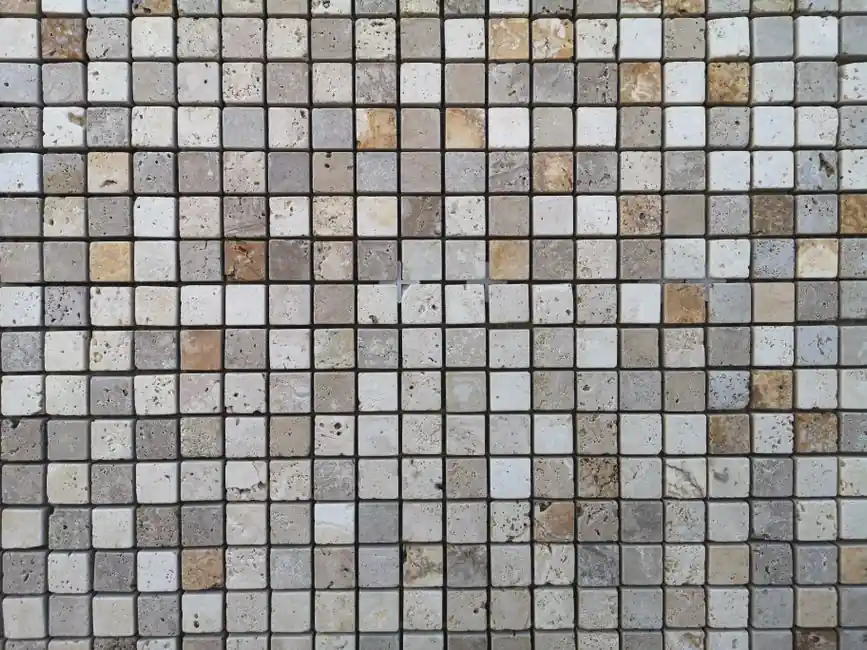
Ceramic tile is typically fired near 1,800°F, whereas porcelain tile is fired at approximately 2,200–2,500°F, a difference of roughly 400–700°F [S4][S7].
Both are clay-based tiles, but porcelain uses a more refined clay mixture, a higher firing temperature and longer kiln treatment, producing a denser, harder and less porous body [S1][S2][S5].
What firing temperature changes in the tile body
Firing temperature changes the ceramic body rather than merely changing the surface finish. Porcelain clays are fired at higher temperatures for longer periods than conventional ceramic clays, which increases densification and reduces residual porosity [S2][S5].
The firing-temperature difference is approximately 2,200–2,500°F for porcelain versus about 1,800°F for conventional ceramic [S4][S7]. That 400–700°F gap is the primary production difference cited in the source material, while glaze chemistry, pressing method, kiln atmosphere and firing duration also affect the final product [S5].
Porcelain tile is fired at a higher temperature than ceramic tile, resulting in a harder, denser, and less porous body [S1][S2][S6]. Porcelain is therefore the stronger candidate for showers, kitchens, patios, pools, façades and high-traffic commercial floors; ceramic is generally easier to cut and more economical for interior walls, backsplashes and lower-traffic floors [S1][S4].
Decision matrix by material performance
Porcelain is harder and denser than ceramic, while ceramic is easier to cut and install [S1][S2][S6]. Neither firing temperature alone should determine the specification: declared water absorption, intended use, product dimensions and installation requirements remain necessary controls.
Porcelain has a refined clay mixture and is fired at approximately 2,200–2,500°F, producing a denser body suited to wet and heavy-traffic areas [S1][S7]. Ceramic uses a less refined clay base, is fired near 1,800°F and has greater porosity, making it more practical for dry interior applications and easier to cut [S4].
For cost, the available product guidance characterizes ceramic as generally more budget-friendly, while porcelain carries a higher material and cutting burden [S1]. For lifetime, porcelain's lower absorption and higher density support use where moisture, abrasion and exposure are significant; ceramic should not be selected for demanding wet or exterior work merely because it uses the same clay-based production family [S1][S4].
Where the higher firing temperature pays off
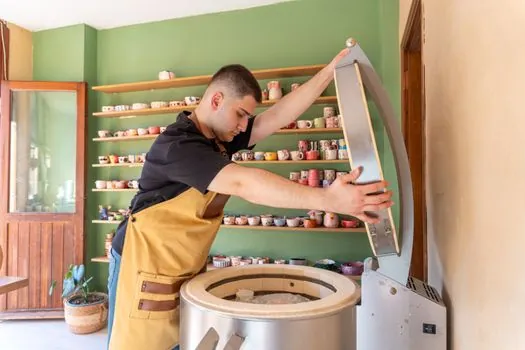
The higher-temperature process is appropriate for porcelain applications exposed to moisture, wear or heavy foot traffic, including shower floors, kitchens, patios, pools and commercial floors [S1][S4].
Porcelain's dense body also supports outdoor and façade applications, whereas conventional ceramic is best restricted to dry areas such as bathroom walls, kitchen backsplashes and decorative features [S1][S4]. The ceramic tile reference explains the broader material and installation context; the firing-temperature choice is only one part of a complete tile specification.
One technical requirement from the supplied porcelain production description is explicit: tiles are shaped, dried, optionally glazed or screen-printed, and then kiln-fired, with porcelain described as a high-fire material baked at 2,500°F [S4]. The figure is a production example, not a universal furnace tolerance, so a project specification should use the manufacturer's declared firing process and performance data.
Where lower-temperature ceramic remains preferable
Ceramic tile is made from natural clay, sand, and water and is fired at lower temperatures than porcelain, making it more porous, softer, and easier to cut and install for walls and low-traffic flooring [S1]. Its larger moisture absorption compared with porcelain should be considered before specifying it in showers, pools, exterior paving or building façades [S1].
The lower-temperature route also supports a broad selection of glaze colors and detailed surface patterns [S1]. For a dry-area wall, where impact, abrasion and water ingress are limited, those design and installation characteristics can outweigh porcelain's greater density.
Porcelain is not the automatic choice for every floor. It is harder to cut, and cutting can require specialist tools and added labor [S1]. Ceramic may be more practical for small formats, tight layouts, repair sections and projects where the manufacturer or installer has limited porcelain cutting experience.
Glazed and unglazed production complications

Glazed tiles undergo an additional firing phase, and some glazed varieties are fired at higher temperatures than others, so their final hardness and performance can vary [S5]. A porcelain body is not automatically unglazed, and a glaze applied to either body does not erase the density difference created by raw-material selection and firing.
Unglazed tiles derive color from mineral deposits in the clay and are described as denser and thicker than glazed counterparts in the reviewed literature [S5]. Ceramic and unglazed ceramic tile also exhibit scratch resistance in that review, but this observation does not replace product-specific abrasion and surface testing [S5].
For projects where glaze, edge detail or calibrated dimensions affect installation, compare the finished product rather than inferring performance from firing temperature alone. Installation variables, including adhesive selection for ceramic tile, should follow the tile format, substrate and service conditions.
Specification limits and quality checks
The firing temperatures and absorption values in the sources describe process ranges, not a substitute for manufacturer certification. A specification should record the product's nominal firing temperature or manufacturing process, water absorption, intended application, surface finish, dimensions and warranty [S1][S4].
Use porcelain when the application requires water absorption below 0.5%, a dense body or heavy-duty exposure; use conventional ceramic when the location remains dry, traffic is lower and ease of cutting or lower installed cost governs [S1][S4].
The practical decision is therefore straightforward: porcelain buys moisture resistance and density through a roughly 400–700°F higher firing range, while ceramic trades that performance for easier fabrication and lower cost. Before ordering, confirm the manufacturer's declared absorption and application rating against the actual room, traffic, climate and substrate.