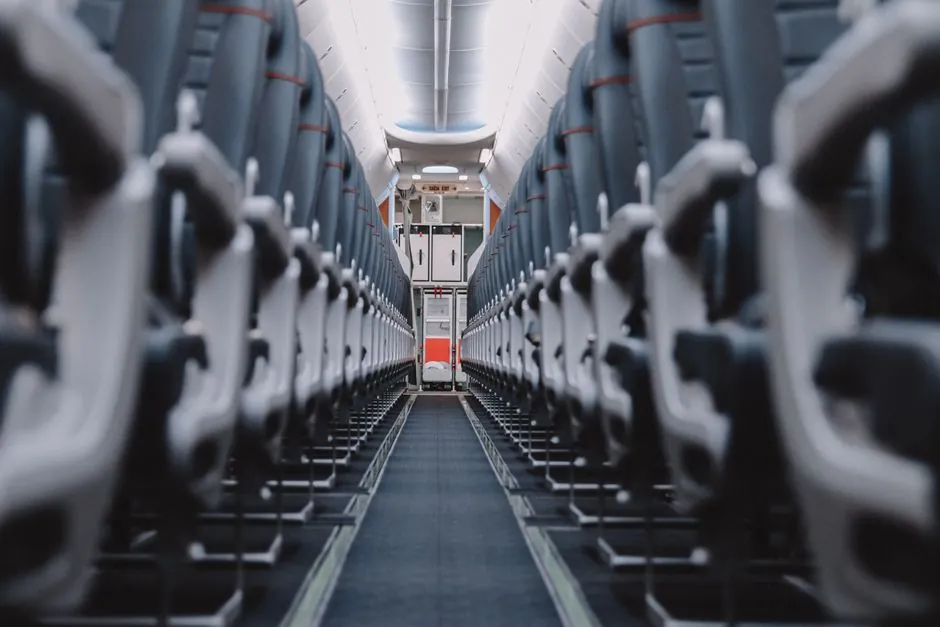
CFRP primary structure, including the fuselage shells on the A350 and 787, is auto-extinguishable in FAA-cited cabin-fire scenarios and more burn-through resistant than the 2024-T3 aluminum it replaces, according to Airbus safety guidance for composite aircraft [S4]. The same source confirms that cabin components, including sidewalls, stowage bins, and flooring, made from carbon fiber laminates with phenolic or fire-retardant epoxy matrices must clear the same OSU 65/65 heat-release and NBS smoke-density limits as non-composite cabin materials [S4][S9].
The failure mode that worries fire investigators is not the structure itself but the combustion-product stream: post-crash fires on polymer-matrix composites generate a complex mixture of CO, HCN, organics, and airborne carbon fibers, several of which are 2-10 times larger than the asbestos-respirable critical fiber size but are present at concentrations well below OSHA chronic-exposure thresholds [S2]. FAA-sponsored forensic work at Mississippi State mapped five damage mechanisms: matrix pyrolysis, fiber sublimation, outgassing, delamination, and char formation, all of which govern how much smoke and toxic gas a CFRP panel yields at 25-75 kW/m² heat flux [S3].
OSU Heat-Release and NBS Smoke Limits: The Compliance Floor
14 CFR Part 25 Appendix F, Part IV sets the OSU 65/65 calorimeter thresholds at 65 kW/m² peak heat release and 65 kW/min·m² total heat release averaged over 2 minutes for cabin interior panels, the regulatory floor that drives every qualified CFRP interior prepreg [S5]. Part V (NBS smoke density) caps specific optical smoke density at Ds (max) ≤ 200 in flaming mode and ≤ 150 in non-flaming mode over 4 minutes, the test method most suppliers report in their FST datasheets [S5][S8]. Material formulators balance flame retardancy against the inverse effect noted in FAA fire-safety research: the chemical fire retardants added to these fibers reduce the propensity for small-scale ignition but increase the smoke density and toxic gas yield during sustained burning [S7].
The 1995 National Research Council report on fire- and smoke-resistant interior materials for commercial transport aircraft discusses the complexity of aircraft interior systems, noting that polymeric materials are predominant and that interior materials are selected for fire resistance along with factors such as availability, cost, producibility, and other useful properties [S5].
Resin and Fiber Choices: Phenolic vs Epoxy vs Bismaleimide
Phenolic-matrix CFRP remains the reference for low-smoke, low-toxicity cabin parts because phenolic chars at 300-400 °C and self-extinguishes before reaching the 500-600 °C pyrolysis range of standard epoxy, with reported CO yields 50-70% lower than unmodified epoxy at equivalent heat flux [S3]. Epoxy with halogen or phosphorus flame retardancy is the workhorse for structural and semi-structural interior panels where mechanical performance outweighs the last 10-15% of FST margin, accepting Ds values closer to 180-200 in exchange for higher specific strength [S6].
Bismaleimide (BMI) and polyimide systems enter the picture for high-temperature zones (engine-nacelle liner, APU plenum, upper fuselage skin near bleed-air ducts) where 250-300 °C continuous service is required, and they generate notably less smoke than epoxy at 75 kW/m² in FAA testing but cost 3-6x more per kg [S3]. For non-structural trim, glass-fiber / phenolic honeycomb sandwich (the same architecture used in floors and sidewalls) achieves OSU < 35 kW/m² peak heat release and NBS Ds < 50 in commercial Toray and Hexion datasheets, which is why phenolic dominates the visible cabin even where carbon fiber is reserved for primary structure [S8]. For deeper context on how the carbon fiber reinforcement itself behaves in structural fire, see the related Carbon Fiber Aircraft Skin LSP Mesh: Spec, Zones, and Trade-offs write-up.
Smoke Toxicity: CO, HCN, Fiber Particulates, and Adsorbed Organics
The dominant acute toxicants in CFRP cabin fires are CO (yield 0.05-0.20 kg/kg of composite at 35-50 kW/m²) and HCN from any nitrogen-containing matrix or aramid hybridization, both of which become incapacitating at 1500-3000 ppm CO or 100-200 ppm HCN within 2-5 minutes of exposure [S2][S6]. The 1999 Gandhi, Lyon, and Speitel FAA study established that a small fraction of carbon fibers released in post-crash fires are respirable (length < 50 µm, diameter < 3 µm) and can be inhaled deep into the lung, with chemical extraction showing toxic organic compounds, including several known animal carcinogens and mutagens, adsorbed on these fibers, although the fiber concentrations measured were well below OSHA recommended levels for chronic exposure [S2].
A 2019 Czech study of aircraft-registered composites tested under ISO 5660-1:2002 confirmed that the most hazardous material in their sample set, from an air-quality standpoint, released the highest total smoke release and total oxygen consumed values, both of which scale with smoke obscuration and with the volume of acidic / irritant combustion products vented into the cabin during a survivable post-crash fire [S1]. The same researchers flagged that the diversity of laminate architectures (unidirectional, woven, sandwich with different core chemistries) drives larger variability in FST outcomes than resin choice alone, which is why FAA-qualified material lists (QMLs) at the William J. Hughes Technical Center batch-test every prepreg lot rather than accept generic resin approvals [S1][S3].
When CFRP Interior Specs Make Sense, and When They Don't
Specify phenolic-matrix or qualified FST epoxy CFRP whenever a cabin interior part must simultaneously pass 14 CFR Part 25 Appendix F Parts IV and V and carry mechanical load: sidewall panels, Class C cargo liners, monument structures, and floor panels over 1.5 m² are the canonical applications [S4][S5]. Specify BMI or polyimide CFRP for high-temperature zones where phenolic softens below 150 °C, typically engine-adjacent fairings, APU enclosures, and ducting carrying air above 200 °C [S3]. Avoid carbon fiber entirely for soft furnishings, seat cushions, and carpets, where the FST-compliant incumbents are meta-aramid (Nomex) fabrics over polyimide foam with Ds < 20 and OSU totals < 20 kW/min·m², because the fiber-release mode of CFRP is unnecessary and adds cost there [S5][S8].
For the structural side of the airframe, the trade-off flips: a part made from carbon fiber primary structure gains auto-extinguishability and burn-through resistance over aluminum, but if the part also has to be repaired with a hot-bond repair using a different resin, the FAA Post-Crash Fire forensic review (DOT/FAA/TC-20/21) shows that the repair patch behaves worse under torch test than the original cure and becomes the weak link in any post-crash fire investigation, a point the autoclave and out-of-autoclave repair communities are still working through [S3][S4]. On the part-selection axis, FRP composite grades without qualified fire-retardant additives routinely fail the Part IV 65/65 limit and are correctly excluded from any cabin QML, regardless of mechanical advantage.
Limitations, Open Toxicology, and What to Track Next
The single largest unresolved specification gap is long-term toxicology: the 1999 FAA study explicitly stated that no toxicological studies have been conducted to assess the long-term health effects from exposure to a single high dose of fibrous particulates and any synergistic interactions with the organic chemicals adsorbed on them, and that gap is still cited as open in the 2020 DOT/FAA/TC-20/21 literature review [S2][S3]. Engineers specifying CFRP for cabin interiors should therefore treat Part IV and Part V compliance as a necessary but not sufficient condition, and flag any project-specific hazard analysis (per FAA AC 25.853-1 and CS-25 Appendix F) where the post-crash fire envelope includes occupied space, fuel-fed ignition, or composite sandwich cores with non-qualified adhesives [S3][S5].
Trackable signals to watch: the FAA William J. Hughes Technical Center QML updates for qualified FST prepregs (typically refreshed quarterly), the next revision of CS-25 Appendix F addressing additive-manufactured cabin parts, and any peer-reviewed updates to the Gandhi-Lyon-Speitel respirable-fiber toxicology data set, which the original authors flagged as a priority in 1999 and which post-2020 forensic reviews have not yet superseded [S3].