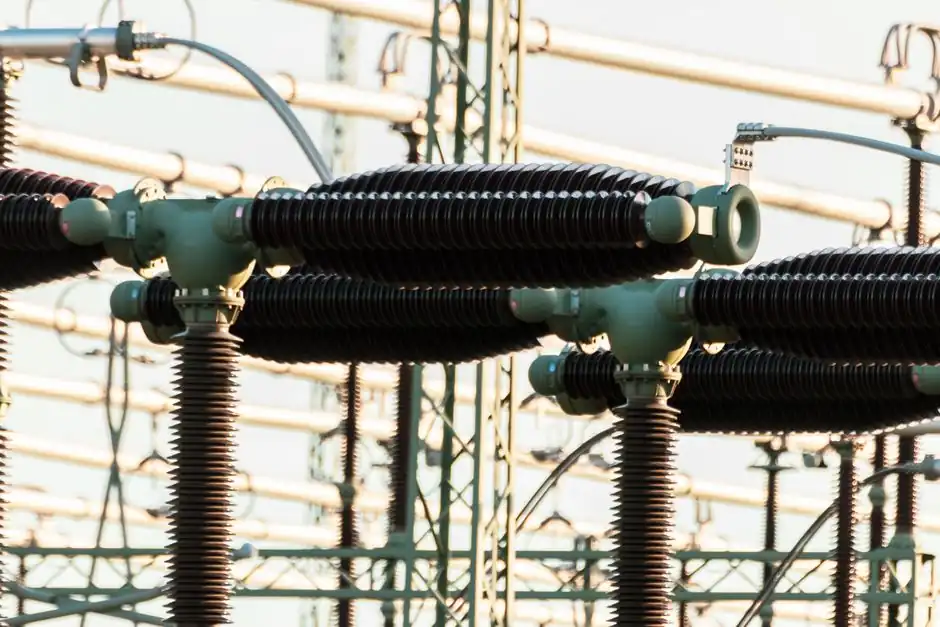
A working chemical-anchor certification on a high-temperature utility line is not a single sign-off. It is a six-gate sequence: substrate condition, hole preparation, adhesive selection for the actual service temperature, installer qualification per AEFAC or an equivalent ACI-derived program, installation torque recorded to specification, and a post-cure proof load [S2][S7].
Most chemical-anchor failures on steam, condensate, and hot-process piping trace back to two of those gates, not the resin itself: ambient and substrate temperature outside the adhesive's rated window at the moment of injection, and insufficient hole cleaning that leaves dust film on the bore wall [S2]. On a chilled-water line the same checklist applies in reverse, with cold-substrate limits and a pressure-test sign-off that mirrors the steam side (steam/condensate and chilled-water utility connection checklists both list pipe hangers and anchors in place as a discrete sign-off line item) [S5].
Substrate and Ambient Temperature Gates
The first citable fact a spec-writer has to lock in is the continuous service temperature at the anchor location, not the line's design temperature. Chemical anchor manufacturers publish two numbers: a substrate temperature range during installation (often 5 to 35 °C for vinylester hybrids, broader for pure epoxy) and a continuous service temperature range after cure (commonly -40 to +80 °C for standard vinylester, up to +120 °C for high-temperature epoxy grades) [S2]. Specifying the wrong one of those two is the single most common engineering mistake in retrofit work on steam headers and boiler-feed lines.
On a utility corridor, the substrate behind a chemical anchor is rarely at ambient. A 150 mm steam line at 180 °C sits inside insulated cladding, and the steel saddle, pipe shoe, or embedded plate behind it can read 60-90 °C on a summer afternoon even before the line is running. The installer must measure substrate temperature with a calibrated surface probe at the bore location and record the value, not assume ambient [S2]. Where the reading exceeds the adhesive's installation range, the work pauses or the specifier switches to a high-temperature-rated resin.
Hole Preparation, Cleaning, and the AEFAC Competence Test
Cleanliness of the bore is the second gate, and AEFAC's Anchor Installer Certification lists it as an explicit demonstrated competence: proper cleaning technique and hole preparation, plus proper selection and assembly of equipment for the installation of injection-type and capsule-type chemical anchors [S2]. AEFAC's program is built on the American Concrete Institute (ACI) Adhesive Anchor Installer Program and extends it to mechanical anchors; the assessment pairs a 65-question closed-book written exam with a hands-on demonstration in front of an instructor [S2][S7].
The hands-on pass mark is not symbolic. The installer must demonstrate successful application in holes at various orientations including vertical overhead, to the required depth, using proper technique to minimize air voids; and the practical exam requires a minimum passing score on the written component of 80% (25 questions in 30 minutes under the DEWALT/ACI-style programme) [S7]. Air voids in the cured column are the dominant failure initiator in overhead pipe-hanger anchors on utility plant, because the resin has to be supported against gravity until gel.
Adhesive Selection: Capsule vs Injection, Resin Chemistry, Shelf Life

Capsule systems and injection systems are not interchangeable. Capsule anchors pre-package a measured volume of resin, hardener, and aggregate in a glass or foil capsule that breaks and mixes when the threaded rod is spun in with a hammer drill; injection systems dispense two components from a static mixer nozzle into a pre-cleaned bore. Both are recognized under AEFAC competence, but the installer must demonstrate both as separate skills [S2]. The decision between them on a high-temperature line is driven by bore depth, orientation, and the ability to verify mix ratio visually.
Shelf life and storage condition are the third class of failure that does not show up in design calculations. AEFAC requires the certified installer to assess product storage conditions and shelf life, including when the product should be rejected, and to demonstrate proper mixing technique and recognition of time limits for mixing, installation, positioning of anchor element, and curing time [S2]. On a utility site, cartridges that have been left on a pallet in direct sun through August, or that crossed a winter loading dock without climate control, are a documented reject, not a "use it anyway" call.
Installation Torque, Cure Protection, and the 5,000 lb Anchor Load Rule
Once the resin has cured to its published gel time, the installer applies installation torque to the specified value with a calibrated wrench. AEFAC's competence list requires successful tightening of the fixture to the anchor at the appropriate time and to the correct installation torque, with the protection required of the anchor during curing explicitly called out [S2]. Over-torque before cure is the most common cause of anchor spin-out on the day of installation; under-torque shows up months later as a hanger that has migrated along the rod.
For fall-protection applications on the same utility line, the OSHA 5,000 lbs minimum anchor point load capacity per attached worker rule under 29 CFR 1910.140(c)(13) and 1926.502(d)(15) applies in parallel [S1]. The chemical anchor that carries a pipe shoe at room temperature and the chemical anchor that backs a fall-arrest eyebolt share a substrate, a resin, and an installer, but the acceptance criterion on proof load is different: a pipe-shoe anchor is verified to the design service load, while a fall-arrest anchor is verified to 5,000 lbs per attached worker [S1]. Pull-testing the resin to the right number for the right duty is the only way to keep both records audit-defensible.
Proof Load and In-Service Inspection Intervals
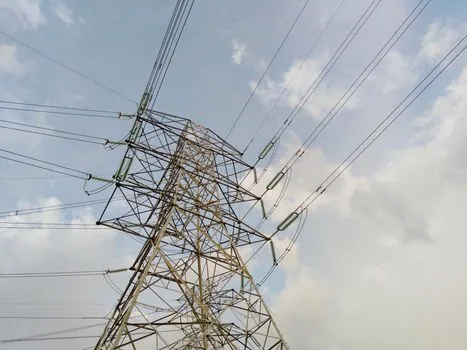
For safety-critical applications, defined as those whose failure may cause injury or death, AEFAC's program applies the full competence stack [S2]. For pressure-vessel and pressure-piping supports, the same anchors fall under inspection regimes that list "anchor bolts tight and not corroded" as a discrete line item, with the inspection cycle driven by the vessel or line code (external inspection intervals not exceeding 5 years under API 510, with risk-based inspection under API 580 permitted to adjust those intervals) [S3].
A proof load at commissioning is the standard close-out for a chemical-anchor installation on a high-temperature utility line. The test load is typically 1.25 to 1.5 times the design service load for a defined hold period, and the result, the load cell calibration certificate, the substrate temperature at test, the cure time elapsed since installation, and the installer's certification number all go into the asset record. Without those five data points the anchor is not in the inspection register, it is a hole full of cured resin.
Documentation, Permit-to-Work, and How to Verify a Supplier's Certificate
Documentation is the sixth gate, and it is the one that fails the audit most often. A working-at-height safety programme on a steel or process plant and a chemical-anchor commissioning pack on a steam line both live or die on whether the inspection records, permit documentation, anchor certification, and harness pre-use verification are consistently executed and consistently documented [S1]. The installer certification page lists the certified installer's name, certificate number, and expiry; AEFAC's recertification lapses if not renewed within 6 months of expiry [S2].
To verify a supplier's certificate is real and in scope: confirm the certificate names the resin system the installer is approved for, the substrate class (concrete, masonry, or other), and the orientation (floor, wall, overhead); confirm the issue and expiry dates; and cross-check the installer against the published certified installer listing [S2]. A certificate that names only "chemical anchors" generically, with no resin family and no substrate class, is not in scope for a high-temperature utility-line retrofit. The same discipline applies to the electrical side of the utility corridor: medium-voltage cable testing and switch torque witness lines are listed as third-party-test-required sign-offs on the utility connection checklist, with the test certificate number captured against the asset [S5].
Trackable signals over the next quarter: AEFAC recertification cycles turning over for installers whose original 2024 certificates reach the 6-month-past-expiry point; resin manufacturers publishing 2026 high-temperature epoxy data sheets with explicit substrate-temperature installation windows above 35 °C for steam-line retrofit work; and OSHA's FY2026 fall-protection citation data on steel and utility sites once published, which will show whether the 5,914 FY2025 citations under 29 CFR 1926.501 trend up or down [S1][S2]. For background on the warning-tape and signage side of the same utility corridor, see this warning-tape spec map for chemical-plant work and this OSHA/ANSI warning-sign criteria guide.
The underlying component specifications are covered under chemical anchor, safety certification, and high voltage tester.