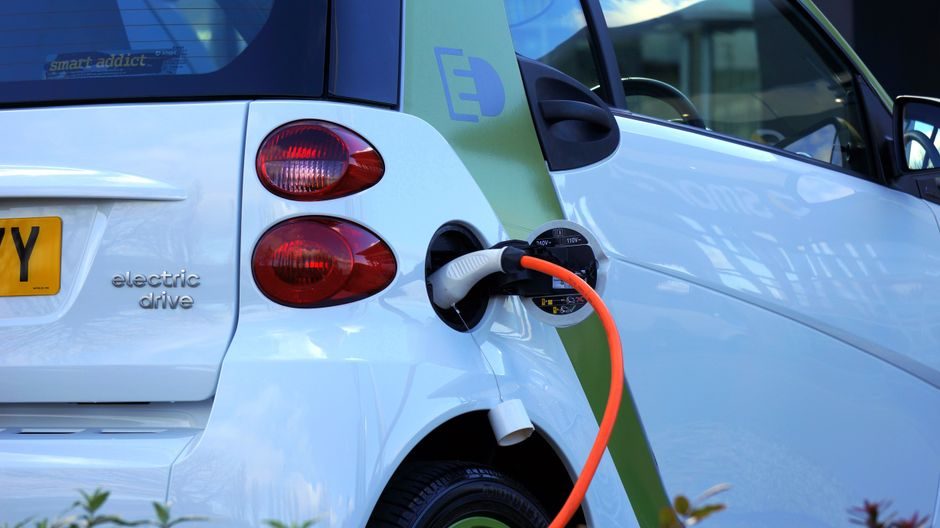
EVCOME runs a digital 2.0 production workshop in Shanghai's Lingang Runcai Intelligent Industrial Park with a stated annual capacity of 200,000 charger pieces, covering AC wallbox 7 kW to 44 kW and DC fast 7 kW to 180 kW, with portable units 3.5 kW to 22 kW [S2].
Qingdao Penoda Electrical reports a 5,000 m² production and assembly floor with an in-house SMT board workshop and EMC lab, and lists liquid-cooled ultra-fast, PV+ESS hybrid, dynamic load balancing (DLB), and a white-label CSMS mobile app (Android/iOS) in its commercial solution stack [S1].
Bluesky Energy, operating from China with a 20-year R&D background, catalogs AC home, AC commercial, DC fast and a slide-style urban charger with companion mobile app [S4].
Sino Energy claims export sales to 80 countries and supplies commercial DC fast units alongside on-street parking and off-street solutions [S9].
Hunan Haichen New Energy (Changsha) holds ISO 9001, ISO 14001, and OHSAS 18001 certifications and lists charging station / charging pile among its main product lines [S7].
DC fast-charger power bands: where each Chinese OEM sits
DC fast output is now the most contested spec band. Penoda structures its commercial line around ultra-fast liquid-cooled cabinets supporting PV+ESS hybrid input — a configuration aimed at depot and highway sites where grid headroom is limited [S1].
EVCOME's DC lineup is segmented in 7 kW increments from 7 kW to 180 kW, with dual-gun AC and wallbox DC variants stacked alongside, so a single supplier can cover home, fleet, and public-DC rolls [S2].
On Made-in-China, Ruisu is listed at 60–360 kW DC fast (CCS/GB/T) with OCPP 1.6J and an IP55 enclosure at US$4,800–17,000 per piece — a price band that frames the export-tier competitive floor for high-power DC [S5].
Electrly focuses on DC fast, home, and business tiers with stated protections for leakage current and over-temperature and certification coverage targeted at regional safety regimes (CE/UL/FCC equivalents) [S3].
AC charger tiers: 7 kW to 44 kW wallbox, the ODM default
For residential and small-fleet bids, AC wallbox 7 kW / 11 kW / 22 kW remains the default, with EVCOME explicitly extending to a 44 kW wallbox-DC crossover [S2].
Portables round out the catalog: EVCOME lists a 3.5 kW to 22 kW Model 2 portable charger with 16 A or 32 A cabling in single- or three-phase, useful for trade and field-service fleets [S2].
Connector and cable accessories (Type 1, Type 2, GB/T) are bundled by EVCOME so installers can ship a complete accessories kit, not a bare charger [S2].
Backend protocol: OCPP 1.6J is the de-facto ODM requirement
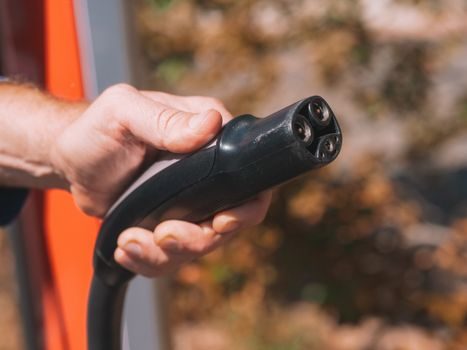
OCPP 1.6J shows up across Chinese OEM listings — Ruisu's DC units and EVCOME's OCPP-enabled smart chargers both cite it as the open-protocol back end, which lets a buyer's CSMS talk to mixed-vendor hardware without bespoke drivers [S2][S5].
Penoda wraps a white-label CSMS with iOS/Android apps and integrates dynamic load balancing, so a site can cap total draw across multiple dispensers without substation upgrades [S1].
Electrly exposes the same OEM/white-label pattern, signalling that a coherent software backend — not just the dispenser — is now the deliverable many importers expect [S3].
For a deeper read on how the OCPP squeeze is reshaping power-module and connector sourcing, see the EV Charging Station Supply Chain 2026 power-modules/connectors/OCPP analysis.
Certifications and export documentation: CE, TUV, UL, FCC, ROHS, CSA
EVCOME certifies its chargers per destination market — CE, TUV, CSA, FCC, UL, ROHS — and exports to the EU, Middle East, and Southeast Asia, which is the typical documentation stack for an ODM shipment to a Western distributor or utility tender [S2].
Electrly states its products are tested against the latest regional safety standards with leakage-current and over-temperature protection, and offers white-label/OEM so importers can carry the same paperwork under their own brand [S3].
Manufacturer-level quality systems also surface: Hunan Haichen lists ISO 9001, ISO 14001, and OHSAS 18001, and Made-in-China verifies supplier business licenses for entrants such as Shijiazhuang Mingshuo Electric Power Technology and Zhonghe New Energy Electrical Engineering (Qingdao) [S6][S7].
Market sizing: USD 38.55 B (2026) to USD 120.85 B (2033)
MarketsandMarkets sizes the global EV charging station market at USD 38.55 billion in 2026, rising to USD 120.85 billion by 2033, across 380 pages and 80 tables of segmentation [S8].
That growth pulls Chinese OEM/ODM suppliers up the value chain: from bare-hardware exporter in 2014–2018, to white-label CSMS + app + DLB + liquid-cooled cabinet supplier in 2026, as Penoda's history notes (engineers with European/American-standard charger experience since 2014) [S1].
The same demand wave is straining upstream magnets and SiC supply for e-axles feeding the vehicles that plug into these chargers — see the E-axle supply shortage & risk map 2026 for the powertrain-side parallel.
Who the ODM model is FOR, and who it is NOT for
The ODM/white-label model is well-suited to importers, EV-charge network start-ups, utilities, and property developers who want a brand-fronted dispenser without owning tooling — they buy 7–44 kW AC or 60–360 kW DC from a Chinese maker, attach their logo, and run it on a CSMS they may also white-label [S1][S2][S3].
It is NOT a fit for buyers who need proprietary liquid-cooled architectures above ~360 kW without the supplier's own reference design, for very low-volume specialty builds under ~500 units where tooling amortisation breaks, or for tenders that mandate a specific OCPP 2.0.1 security profile not yet advertised by these mid-tier Chinese OEMs.
Specification comparison: AC vs DC fast vs portable vs liquid-cooled
Four product archetypes dominate the Chinese OEM/ODM catalog and map cleanly onto four decision criteria: output power, typical site, cooling/grid interface, and lead-time sensitivity [S1][S2][S5].
AC wallbox (7–44 kW, EVCOME/Penoda/Bluesky): site = home, workplace, hotel; cooling = natural convection; grid = single- or three-phase 230/400 V; lead-time = shortest because no power-module bottleneck [S2].
DC fast 60–180 kW (EVCOME/Ruisu/Penoda): site = retail fuel-canopy, depot, public car-park; cooling = forced-air; grid = dedicated 3-phase 400 V with high-amperage service; lead-time = medium, OCPP 1.6J standard [S2][S5].
DC ultra-fast 240–360 kW (Ruisu 60–360 kW, Penoda liquid-cooled): site = highway corridor, logistics hub; cooling = liquid-cooled cable/cabinet; grid = medium-voltage step-down + large BESS or PV+ESS buffer; lead-time = longest, and dependent on SiC power-module availability [S1][S5].
Portable 3.5–22 kW (EVCOME Model 2): site = roadside service, trade fleet, OEM dealer loaner; cooling = natural; grid = any 16 A/32 A socket; lead-time = shortest, lowest unit cost, and a useful entry SKU for an importer's first container [S2].
Sourcing signals worth tracking after July 2026
Two near-term signals are trackable. First, OCPP 2.0.1 adoption among these mid-tier Chinese OEMs — today OCPP 1.6J is the common denominator on Ruisu DC and EVCOME smart chargers [S2][S5], so the first mover to 2.0.1 in this segment will unlock EU utility tenders that now require ISO 15118 plug-and-charge security profiles. Second, SiC and GB/T/CCS connector allocation: as Ruisu's 60–360 kW IP55 price band tightens, expect lead-times on the 240 kW+ tier to stretch first [S5].
Cross-link for the wider EV manufacturing context: the EV traction motor supply gap 2026 coverage maps the rare-earth and gigafactory cross-currents that ultimately determine how many vehicles reach the dispensers this catalog supplies.
The underlying component specifications are covered under total station, weather station, and eye wash station.