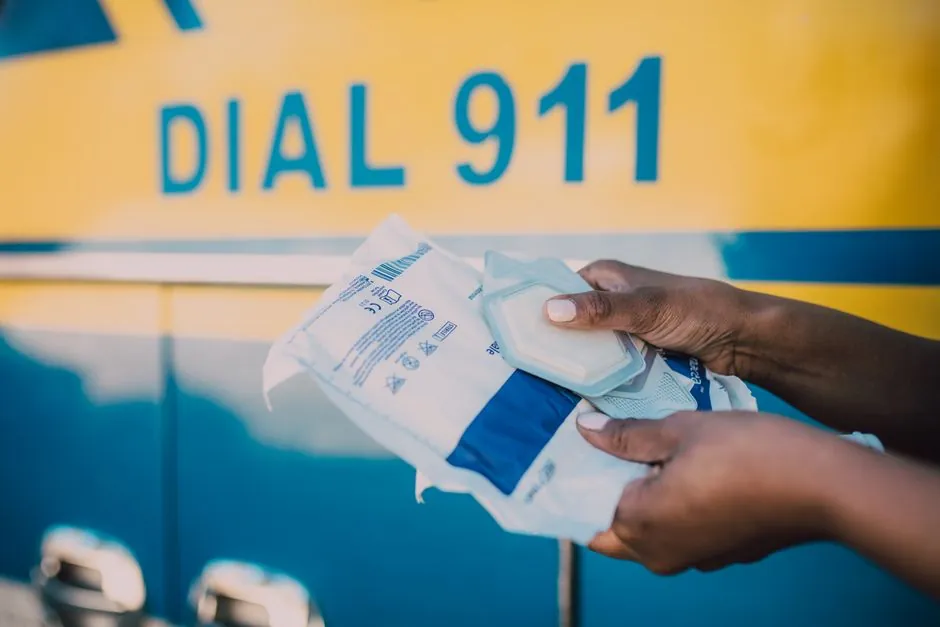
A chemical-splash first aid kit should include an accessible eye irrigation provision, with a 20 mL sterile saline pod serving as immediate backup rather than the primary 15-minute flush.
The decision depends on chemical severity, available water, and response time: one pod suits low-risk supplementary provision, while corrosive work requires a dedicated station delivering continuous irrigation for at least 15 minutes.
Eye wash pod role and chemical-splash limits
NIOSH directs workers to irrigate eyes immediately with large amounts of water after chemical contact, lifting the lower and upper eyelids occasionally, and to obtain medical attention [S1]. That response does not depend on a pod being present inside the first aid kit.
A sterile eyewash pod contains 0.9% saline and can irrigate eyes, but the cited 20 mL product is intended for general irrigation and wound washing rather than a full corrosive-splash response [S6]. For chemical eye contact, immediately irrigate the eyes with large amounts of water while occasionally lifting the lower and upper lids, and get medical attention immediately [S1].
The practical conclusion is straightforward: include a pod where chemical exposure is credible and a fixed eyewash station is not immediately available, but do not count pod volume as equivalent to sustained emergency flushing. Pods are supplementary supply, not the controlling emergency system.
Compare pods, bottles, and continuous-flow stations
The main options differ on volume, flow duration, and the severity of exposure they can address. Sterile eyewash may be suitable for low-risk flushing, while a purpose-built station should be provided where corrosives are used [S2].
This comparison makes the inclusion decision defensible: a pod earns its place for response speed and accessibility, not because it satisfies the full chemical-splash duty on its own.
What chemical-splash first aid kits should contain
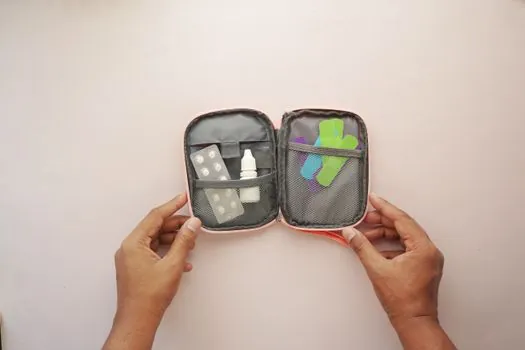
At minimum, the kit and its eyewash provision should support an immediate irrigation sequence rather than simple wound dressing. NIOSH identifies immediate irrigation, eyelid lifting, and medical attention as the eye-treatment sequence for chemical hazards [S1].
After a chemical splash, remove contact lenses before or during irrigation [S3].
A separate general warning sign marking the eyewash point helps prevent delay, but signage cannot compensate for an undersized or inaccessible irrigation supply. The workplace risk assessment should establish the required provision before an item is added to a purchasing list [S2].
Where pods are suitable and where they are not
Sterile pods are suitable for low-risk sites with clean running water nearby, and for maintaining a supplementary first-aid capability where the risk assessment identifies only limited eye exposure [S2].
Where a needs assessment or COSHH assessment shows that eyes could be exposed to dust, chemicals, or splashes, provide suitable eye irrigation, using a purpose-built station where corrosives are used [S2].
Neither option is suitable for a deliberate chemical-neutralization claim. A buffered solution may be marketed as neutralizing certain chemicals [S3], but the core emergency action remains dilution through large-volume irrigation. For a corrosive splash, one eye wash station must meet the selected provision standard rather than being judged by the presence of a small pod.
Flushing technique and treatment boundaries
Start irrigation within seconds of chemical contact using lukewarm tap water or sterile saline solution [S3].
Seek emergency care immediately for severe symptoms after chemical eye exposure [S3].
Placement, inspection, and replenishment controls
Suitable eye irrigation must be signed, reachable, and kept in date [S2].
A wall-mounted combination unit offers a different control model: the cited 16 oz, approximately 473 mL bottle is paired with an ANSI/ISEA Z308.1 25-person first-aid kit in a labeled, powder-coated metal enclosure with mounting hardware [S5]. This arrangement supports visible placement and organized inventory, but the bottle still does not replace continuous-flow provision for corrosive exposure [S2].
Inspect the seal, fluid container, instructions, mounting, and replenishment stock together. Set an inspection interval that fits the product shelf life, remove any unit with a broken seal, and verify that responders can identify the chemical-specific escalation route before an emergency occurs [S2][S4].
Procurement decision for chemical-splash protection

Include a sterile 20 mL saline pod in a chemical-splash first-aid kit when the site has low-risk eye exposure, no immediate tap, and a documented risk assessment supporting portable backup [S2][S6]. Pair it with eye pads, clear irrigation instructions, and an emergency-contact route so the item functions as part of a response system rather than as an isolated consumable [S2].
Do not specify a pod-only package for corrosive work. Select a 500 mL bottle, 1 L portable station, or continuous-flow station according to exposure severity, then verify flow duration, reachability, maintenance, and EN 15154 applicability where the assessment calls for a purpose-built station [S2]. The most useful audit signal is simple: every chemical-splash kit has a defined irrigation path, and every corrosive area has access to sustained flushing rather than a pod that ends in seconds.