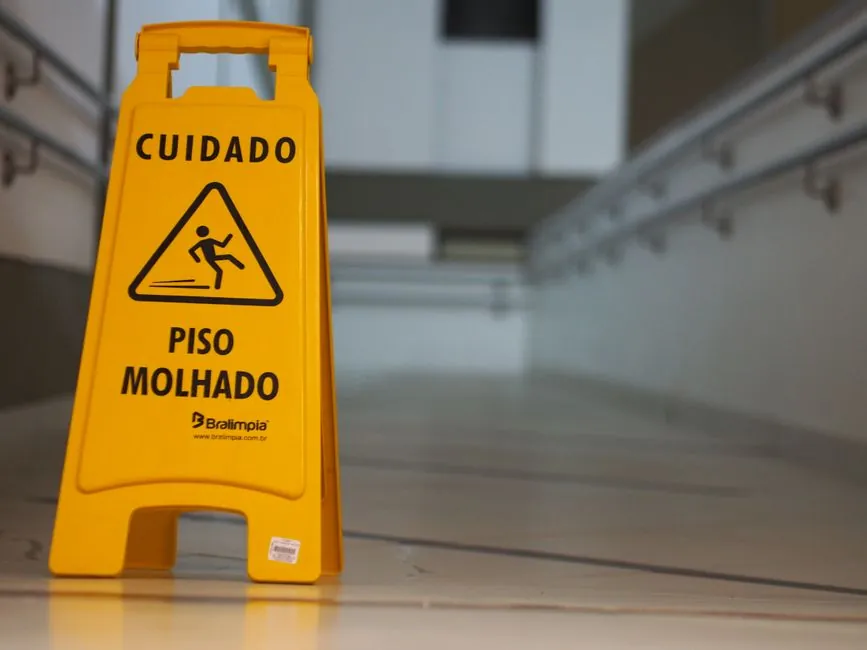
Slip and puncture injuries remain two of the most common recordable foot incidents on construction, warehousing, and energy sites, and the right safety shoe is specified by matching outsole compound, tread geometry, and midsole plate to the actual floor and debris environment, not by a generic "steel toe" label.
Two technical features decide most slip-and-puncture selections: a puncture-resistant midsole plate (steel or non-metallic composite, tested to a defined penetration force) and a slip-rated outsole whose compound and tread pattern are tuned to either wet/muddy outdoor ground or oily indoor smooth floors. Both features are optional modules inside the broader safety footwear standard family, and both must be specified deliberately.
Start With a Written Hazard Assessment, Not a Brand
OSHA 29 CFR 1910.136 requires employers to perform a workplace foot-hazard assessment and supply protective footwear whenever feet are exposed to falling or rolling objects, sole-piercing objects, or live electrical hazards [S1]. The same source makes clear that the regulation defines hazard classes, not quality: "you get what you pay for" is the operative principle, and the Class 75 toe test (50 lb dropped from 18 in, or 2,500 lb static compression) is a real benchmark rather than a marketing line [S1]. A written assessment should list, for each task area, the dominant slip substrate (water, oil, ice, mud, metal swarf), the dominant puncture source (nails, rebar, glass, scrap, wire), and any secondary risk (impact, electrical, chemical, metatarsal drop).
PPE selection then follows the hazard list. Energy-sector guidance published 2025-08 groups the same risks into seven categories (impact, puncture, slip, electrical, chemical, thermal, metatarsal) and prescribes a one-to-one match between each hazard and a specific boot feature rather than a "boots for the whole site" approach [S2]. This hazard-to-feature mapping is the cleanest way to avoid the common failure mode of buying a comfortable general-purpose shoe that lacks the one protection the task actually needs.
Slip Resistance: Match Outsole Compound and Tread to the Substrate
Outsole slip performance is governed by two independent variables, the rubber compound's coefficient of friction (CoF) on the target contaminant and the tread pattern's ability to channel that contaminant away from the contact patch, and confusing the two is the most common spec error. For uneven, muddy, or loose-gravel outdoor terrain, deep multi-directional lugs (typically 4-6 mm tread depth) are specified to bite and self-clean [S2]. For smooth indoor floors contaminated with oil or grease, a lower-profile, wider-spaced tread pattern in a softer oil-resistant rubber compound is specified instead, because deep lugs on a smooth oily floor actually reduce contact area and make slips worse [S2].
The safety footwear standard family treats slip as an optional, separately marked performance module. Under ASTM F2413 the "SR" (slip resistant) designation is a voluntary supplemental requirement with its own test method; the more common "EH" (electrical hazard) and "PR" (puncture resistant) markings sit in the same optional layer.
Puncture Resistance: Steel Plate vs Composite Midsole

The puncture-resistant midsole is a separate insert placed between the insole and the outsole, and it is tested to a defined penetration force using a standardized nail-like probe. Under ASTM F2413 the optional "PR" marking means the midsole resists a defined force without the probe passing through, and the same marking is commonly required on construction, demolition, and recycling sites [S4]. The two practical midsole materials behave differently: steel plates offer a higher force rating at lower cost and thinner profile, but they conduct electricity and cold, set off metal detectors, and can rust if the outsole is breached; composite plates (aramid/Kevlar, woven HPPE, or layered fiberglass) are non-metallic, lighter, electrically and thermally insulating, and are preferred for electrical, cold-store, and security-screened sites [S4][S5].
For slip-plus-puncture sites such as active building construction, the typical specification is a steel or composite toe cap rated I/75/C/75 (impact + compression, ANSI/ASTM F2413) combined with a PR midsole, oil- and slip-resistant outsole, and either leather or treated-synthetic upper [S2][S4]. The selection pivot between steel and composite midsole is usually the secondary hazards on the assessment, not puncture performance itself, because both materials clear the same PR threshold. See a broader foot protection overview for how midsole, toe cap, metatarsal guard, and outsole stack into a single shoe.
Criteria-Based Comparison: Steel Toe, Composite Toe, EH, Metatarsal
The four common safety-shoe categories trade off in different ways, and a side-by-side spec makes the decision auditable rather than preferential. Steel-toe boots provide the lowest-cost impact and compression protection and are widely used across construction, manufacturing, and heavy industry, but they conduct electricity and cold and will trigger metal detectors [S5]. Composite-toe boots use non-metallic caps (Kevlar, carbon fiber, or fiberglass) that are lighter, non-conductive, and security-screener friendly, at a small cost premium [S2][S5]. Electrical Hazard (EH) boots insulate the wearer from live circuits and are specified for any work near energized equipment, even where direct contact is not expected [S2][S5]. Metatarsal footwear adds an internal or external guard over the upper foot and is specified where heavy objects are routinely handled above foot level, for example forklift or steel-handling tasks, with the trade-off being bulk and reduced off-site wearability [S1].
A simple decision rule that works on most sites: choose composite toe + composite midsole + SR outsole when electrical risk, metal-detector access, or cold-store conditions are present; choose steel toe + steel midsole + SR outsole for the lowest-cost compliant package on dry construction or warehousing; add metatarsal guard only where drop hazards to the upper foot are documented in the assessment; and add EH rating whenever the worker is within reach of energized conductors. This same hazard-to-feature logic is used in construction PPE specifications for high-risk builds and in the general PPE encyclopedic reference for plant and facility work.
Use-Case Mapping: Construction, Warehousing, Energy, Chemicals
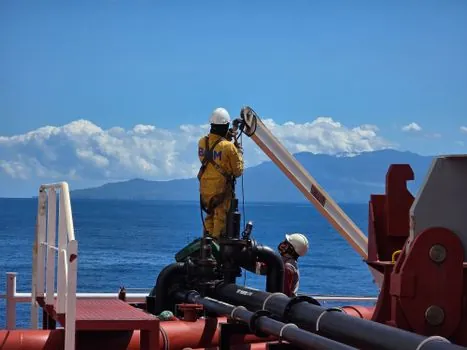
For construction sites, the dominant profile is mixed outdoor terrain (mud, rebar offcuts, nail-littered formwork) and the specification is steel or composite toe I/75/C/75, PR midsole, and a deep-lug slip-resistant outsole, with leather upper for abrasion resistance [S2][S3]. For warehousing and logistics, the floor profile is typically smooth concrete with frequent oil or hydraulic-fluid spills, so the outsole shifts to a lower-profile oil-resistant rubber, the toe cap remains impact-rated, and metatarsal protection is added where heavy pallet or rack loads are handled overhead [S3]. For energy-sector work (refineries, power plants, renewables), the added layer is electrical and thermal protection, with EH-rated construction, heat-resistant outsoles for hot process areas, and insulated builds for cold or high-altitude sites [S2].
For chemical plants and laboratories, the outsole and upper must be specified for chemical resistance, and the upper should be as closed as possible to keep liquid from wicking into the boot interior; acid- and alkali-resistant materials (neoprene, PVC, treated leather) are typical [S3]. Food processing and medical environments have a different priority stack: slip resistance is the lead hazard (wet floors, frequent wash-down), and the toe cap is often lighter or omitted where impact risk is low, but a slip-rated outsole is non-negotiable. Across all of these, the slip and puncture performance is certified, not assumed: a vendor's certificate should name the standard, the year, and the individual module letters (e.g. ASTM F2413-18, I/75/C/75, PR, SR, EH).
Limitations, Failure Modes, and What Standards Do Not Cover
No safety shoe eliminates slip or puncture risk; the standards set a defined test floor, not a guarantee of real-world performance. Common failure modes include outsole wear that drops the effective tread depth below the self-cleaning threshold (typically below 3 mm), chemical attack on the outsole compound that hardens or swells the rubber and reduces CoF, and midsole corrosion where a steel plate is exposed by outsole penetration [S4]. The standards also do not cover fit, and a correctly certified shoe that is the wrong size or width will still cause trips, blisters, and fatigue that lead to lost-time incidents; a snug fit with cushioned insoles and proper arch support for long shifts is part of the specification, not a soft add-on [S2].
Two further limits are commonly missed. First, ASTM F2413's PR test uses a single defined probe, so a sole rated PR against that probe can still be pierced by a finer or angled object on site; the rating is a baseline, not a universal shield. Second, EH-rated footwear is tested in dry conditions, and once the outsole or upper is wet or contaminated, the rated insulation can drop sharply; EH boots are specified as a second line of defense behind lockout/tagout and other electrical safe-work practices, not as a substitute for them. The same logic applies to general machinery and equipment safety programs, where PPE supplements engineered controls rather than replacing them.
Sourcing, Certification, and Cost-of-Ownership Signals

Require the certificate, not the catalog. Each pair supplied should be traceable to a standard revision year (ASTM F2413-18, EN ISO 20345:2022, CSA Z195-23, or the locally applicable equivalent), a category, and a list of optional module letters. The certificate also names the manufacturer and the test lab, which is how a buyer verifies that the "composite toe" is a tested composite toe and not an unmarked cap. For higher-risk sites, third-party certification marks (SEI / CSA / BSI kitemark) are a useful secondary filter, but the underlying standard reference must still be on the documentation. [S1]
On cost, the operative metric is total cost of ownership, not unit price: quality puncture-and-slip footwear typically reduces recordable foot injuries and lost workdays, and the per-worker saving over the life of the shoe usually exceeds the price premium for a certified SR + PR + EH build over a generic non-rated boot [S1][S4]. Two trackable signals to watch on the next purchase cycle are the standard revision year on incoming certificates (a 2018-marked F2413 shoe is not automatically equivalent to a newer revision on the same letter code) and the outsole wear-replacement policy offered by the vendor, because midsole integrity is meaningless once the outsole is worn through. For a broader cross-reference on how safety footwear fits with fire safety and lighting equipment PPE layers on the same site, see the related encyclopedic entries.
For related coverage, see EN 15095:2007+A1:2008 safety rules for power-operated storage lifts and carousels.