
An oxygen analyzer specified for permit-required confined space entry has to satisfy two overlapping envelopes: the OSHA 1910.146 atmospheric envelope of 19.5-23.5% O2, and the hazardous-area ignition envelope of ATEX, IECEx, cMETus or UKEx for the same physical space [S1][S2].
An estimated 2.1 million workers enter permit-required confined spaces each year, and atmospheric hazard is the leading cause of fatality in those entries, which is why sensor selection, certification scope, and continuous monitoring architecture carry the same weight as the gas they measure [S4].
O2 acceptance window and what the standard actually requires
OSHA 1910.146(c)(5) requires that "before an employee enters the space, the internal atmosphere shall be tested, with a calibrated direct-reading instrument, for oxygen content, for flammable gases and vapors, and for potential toxic air contaminants" [S1]. The same standard defines a hazardous atmosphere to include oxygen concentration below 19.5% or above 23.5% by volume, a band universally echoed across industry guidance [S6][S7].
Readings outside that 19.5-23.5% O2 window force the entrant onto supplied-air respiratory protection such as an SCBA, so the analyzer must resolve at least 0.5% O2 steps across 0-25% to detect both enrichment (above 23.5%) and depletion (below 19.5%) without false-pass on the threshold [S1][S7]. A handheld oxygen detector sized to that span is the minimum instrument tier for compliance sampling; permanent fixed analyzers typically overlap 0-25% O2 with a separate trace range for process-side leak detection.
Sensor technology trade-offs: electrochemical, paramagnetic, zirconia
Three sensing families dominate the hazardous-area O2 product lines shipping in 2026. Electrochemical cells cover 0-25% O2 with ppm-level options down to 0-10 ppm O2 and a low detection limit of 50 ppb on GPR-1800 (A)IS trace units, at the cost of consumable life and cross-sensitivity to acid gases [S2].
Paramagnetic analyzers such as the Michell XPM601 deliver 0-5% O2 in H2 with ATEX/IECEx/UKCA/cQPSus certification and IEC 61508 SIL 2 capability, and they are non-consumable, but they are mechanically larger and vibration-sensitive, so they suit fixed rack or shelter mounting rather than entry-team carry [S2]. Zirconia and galvanic fuel-cell technologies fill the middle ground for 0-25% O2 process loops; the Minox-i intrinsically safe compact transmitter, for example, ships in KF40, Tri Clamp, or flow-through gas connections with 0-10 ppm to 0-25% O2 ranges and certified hazardous-area / gas ratings [S2].
For an entry team working inside the 19.5-23.5% O2 acceptance band, an oxygen detector with an electrochemical or galvanic cell is the practical carry instrument, while a dissolved oxygen meter is the wrong tool entirely (designed for liquid-phase ppm O2 in water, not vapor-phase percent O2 in air) and should not be cross-specified.
Hazardous-area certification: matching the zone to the mark
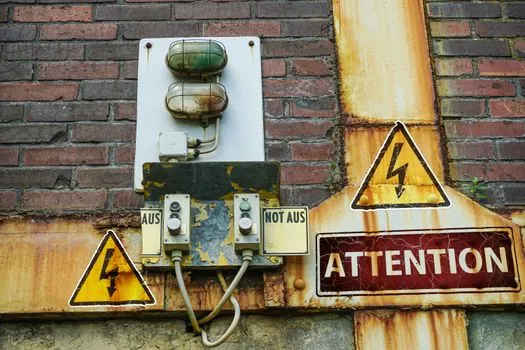
ATEX, IECEx, UKEx, cMETus and cQPSus marks on a single analyzer, as carried by the Michell XTP601 and the AII GPR-2800 IS/2800 AIS lines, cover Zone 1 / Zone 2 (gas) and Zone 21 / Zone 22 (dust) deployments across the EU, UK, North America and TR CU markets without re-specifying the instrument per region [S2].
For SIL-rated loops the analyzer must additionally meet IEC 61508 SIL 2, a stated capability of the XTP601 oxygen analyzer, the Ntron SIL-O2, and the XPM601 paramagnetic unit, so the same transmitter can drive a safety instrumented function as well as a control loop [S2]. A specifier who needs only monitoring can drop the SIL requirement, but who must trigger an automatic shutdown or ESD-1 valve on O2 excursion should pin SIL 2 with proof of FMEDA data, not just a marketing claim [S2].
Wiring topology matters in parallel: explosion-proof oxygen analyzer families (GPR-18 MS, GPR-18, GPR-28) accept loop-powered or line-powered configurations, which is a real decision driver when the entry point sits more than 500 m from the control room; the comparison of loop-powered versus line-powered fixed gas detector wiring is laid out in this fixed gas detector wiring decision map.
Portable fleet vs fixed analyzer: who needs which
OSHA's "calibrated direct-reading instrument" language allows both portable and fixed hardware, so the choice is operational, not regulatory [S1]. A 4-gas portable monitor is the lowest-cost and lightest entry-tier tool and is sized for a single worker sampling at chest height, which is the default for the majority of permit spaces [S5].
When the confined space is a process vessel inside a hazardous area, or a manway on a catalytic reactor, the fixed hazardous-area O2 analyzer with ATEX/IECEx and SIL 2 relay outputs (Ntron SIL-O2 class) gives a permanent trend, an alarm to the DCS, and a bypass path for hot-work permits, at a higher installed cost [S2]. A connected wearable plus a pre-entry pump sampler, as described in MSA's 3-tier confined-space mix (pre-entry sample, continuous worker monitor, real-time cloud), layers location and accountability on top of the regulatory minimum and is the architecture most safety managers now specify for crews of more than two entrants [S4].
Sensor placement is its own discipline: methane, propane, and H2S each respond to different mounting heights relative to the worker's breathing zone, and the same physical rule set applies to O2 only at the breathing-zone plane, which is the subject of this gas detector mounting height spec guide.
Calibration, bump test, and acceptance-band discipline
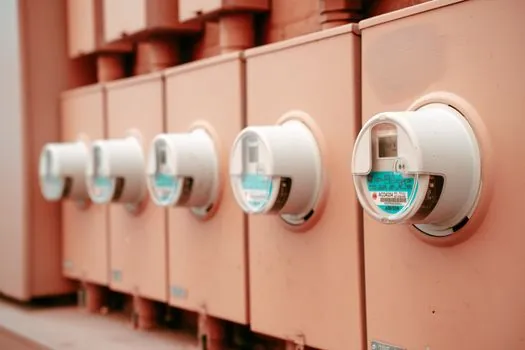
OSHA requires the pre-entry instrument to be calibrated, and industry practice extends that to a bump test before each shift using a known gas (typically 20.9% O2 for the ambient span or 100% N2 for the zero) with the response compared to manufacturer tolerance [S1][S3].
For electrochemical cells, a 20.9% O2 bump that reads within the manufacturer's published accuracy (commonly +/-1% of selected range on GPR-18 / GPR-28 analyzers) is enough to release the instrument for the day's permit [S2]. For trace ppm ranges, a 50 ppb LDL on the GPR-1800 (A)IS line means the zero gas must be certified below that floor or the reading is meaningless, a frequent field failure mode that compliance audits routinely flag [S2].
Calibration gas cylinders carry a shelf life; oxygen span gas in nitrogen is typically certified for 12-24 months from manufacture, and using an expired cylinder on a 0-10 ppm O2 range is the most common reason a freshly calibrated trace analyzer fails its next bump test.
Selection criteria summary for a specifier
Match the instrument to the worst-case zone first, then the O2 range, then the SIL requirement. A specifier should confirm in writing: ATEX/IECEx/UKEx/cMETus/cQPSus mark coverage for the exact Zone 1 or Zone 2 group; O2 range overlapping 19.5-23.5% (typically 0-25%); accuracy of +/-1% of range or better; response time T90 under 30 seconds for entry sampling; IEC 61508 SIL 2 documentation if driving an automatic shutdown; and a calibration / bump-test procedure traceable to a certified gas cylinder with a recorded shelf life [S1][S2][S3].
If the analyzer also drives a control valve, the spec falls inside the industrial valve safety loop, and the SIF proof (SIL 2 with FMEDA) travels with the transmitter, not the valve, which is a common spec-writer mistake that auditors still flag in 2026 [S2].