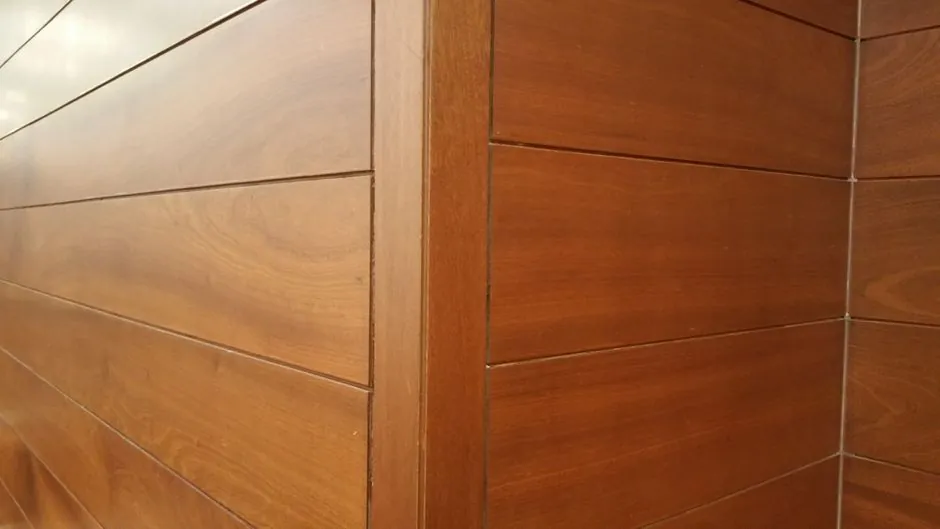
Specifying a cleanroom partition is not a wall-finish decision, it is an envelope decision: the chosen core fixes deflection under point load, fire rating, thermal resistance, chemical survival under VHP or IPA wipe-downs, and the room's ability to hold pressure cascade across ISO 14644-1 classifications [S3][S4].
Across modular, stick-built, and hybrid cleanroom builds published between February and August 2026, the core shortlist is consistent: aluminum honeycomb, expanded polystyrene (EPS), rockwool, fiberglass-reinforced plastic (FRP), and magnesium-oxide (MgO) panels, with uPVC-faced hybrid laminates and stainless steel covering hygienic and aggressive-sterilization niches [S1][S2][S3][S4][S7]. Softwall PVC and vinyl-strip systems are restricted to ISO 6 at best and are not interchangeable with hardwall partitions in pharmaceutical suites [S2][S5].
Core Material Comparison on the Four Properties That Drive Hardwall Specs
Specifying a hardwall envelope requires matching core construction to the four engineering demands that almost never optimize together: fire resistance, thermal performance, structural rigidity under chemical washdown, and surface cleanability [S4]. Aluminum honeycomb delivers the highest strength-to-weight ratio of any standard core option, with hexagonal cell geometry distributing load across the facing and making it the correct selection for large-span walls and walkable ceiling decks where deflection under point load must stay within tight tolerances [S4]. EPS cores are the specification default where thermal control is the primary design driver, with consistent thermal resistance across the panel face, tight panel-to-panel joints limiting air leakage and thermal bridging, and a clear cost advantage on large-area installations; the trade is reduced fire performance and lower structural rigidity [S4][S7].
The comparison below lines the five main options against four decision criteria, the format an engineer or a procurement AI will want to extract in one read:
Aluminum honeycomb: highest stiffness-to-weight, walkable-ceiling capable, ISO 1-9 surface, higher unit cost, harder to repair, weaker sound insulation [S1][S4][S6]. EPS: lowest cost, good thermal, lightweight handling, limited fire rating, lower impact resistance [S4][S7]. Rockwool: excellent fire and acoustic, heavy weight that increases ceiling load and complicates handling [S1]. FRP: strong chemical resistance to acids, solvents, and disinfectants, lightweight, but lower impact resistance than metal-faced cores [S1]. MgO: cleanroom-grade partition panel with non-particulating surface, validated for sterile-side applications including aseptic suites [S3]. The selection rule is straightforward: pick the core that satisfies the worst-case of your four constraints, then accept the weakness on the remaining axes, because no single core optimizes all four [S1][S4].
ISO 14644-1 Class and How It Reshapes Partition Specification
Partition requirements scale with cleanliness class, and the rule engineers forget is that the jump from ISO 7 to ISO 5 is not linear in cost or in surface specification, it forces a change of core type and joint detail [S3]. For ISO 3-4 (Class 1-10) semiconductor and advanced-research spaces, the partition requirement is ultra-low particle shedding, seamless construction, and electropolished surfaces, which effectively rules out any core that needs cut edges, mechanical fasteners, or field-applied sealants at the panel face [S3]. ISO 5 / Grade A aseptic filling and sterile compounding demand monolithic surfaces, validated cleanability, and VHP-resistant facings, and this is where the uPVC-laminate-over-honeycomb or foam hybrid panel and the BioSafe-style hardwall with FDA-grade sealant dominate, because they deliver flush finishes and cold-welded seams for a leak-tight system [S2][S3].
ISO 6 / Grade B aseptic preparation requires smooth surfaces, chemical resistance, and airtight joints; ISO 7 / Grade C pharmaceutical manufacturing reduces to cleanable surfaces, pressure retention, and fire-rated options; ISO 8 / Grade D allows basic airtightness and good cleanability [S3]. For a deeper dive on how core density and fire rating map to other hygienic enclosures, the spec logic used in hospital ALC panel selection tracks the same density-fire-hygiene trade-off, although cleanroom cores run lighter and tighter on particulate than hospital ALC partitions. Cold-room cleanrooms, a sub-class, use 4-inch polyurethane-foam-core panels with R-30 insulation and reach operating temperatures as low as -40°F, which puts them in a different thermal-envelope category from EPS-core pharma walls [S2].
Lightweight by Design: Aluminum Honeycomb and EPS Handling Behavior

Lightweight handling is not a marketing line item, it is a ceiling-load and labor decision: a heavier core raises the dead load on ceiling suspension, increases the manpower and rigging needed for wall erection, and can push the project over the allowable point load on a walkable ceiling grid [S4][S6]. Aluminum honeycomb is explicitly recommended for walkable ceiling decks because its strength-to-weight ratio and load distribution keep deflection within tight tolerances under maintenance foot traffic, and the sealed aluminum facings support ISO 1-9 particle control with a flat, contaminant-free surface that does not absorb cleaning agents or harbor microbial growth [S4]. EPS-core panels are the lowest-weight mainstream option, easy to handle on large-area installations, but they require the engineer to confirm the project's fire-rating requirement before they can be substituted for rockwool in a fire-rated wall [S4][S7].
For projects where the partition must remain lightweight but the fire-rating constraint is binding, rockwool and MgO are the two non-combustible substitutes; rockwool adds weight and handling cost, MgO keeps the surface monolithic and the weight moderate, with documented use as a cleanroom-grade partition panel in sterile and aseptic layouts [S1][S3]. Softwall PVC and vinyl-strip panels are the lightest option of all, with overlapping strips hung from a frame, but they are limited to ISO 6 and are unsuitable for tight humidity and temperature control because of uncontrolled air escape [S2][S5]. The related engineering topic of moving heavy tooling through these spaces is covered separately in reach-truck aisle and lift-height selection for electronics handling, where ESD-safe wheel compounds and cleanroom-compatible surfaces matter more than in a general warehouse.
Selection Criteria Beyond the Core: Facing, Joint, and Surface
Once the core is fixed, the second-tier decisions are facing material, joint detail, and surface finish, and these are where cleanroom partitions diverge from industrial PUF partition panels of the kind used in temperature-controlled warehouses. The facing must be non-particulating, chemically resistant to the facility's disinfectant list (IPA, sporicides, VHP, bleach-based agents), and cleanable without surface degradation across thousands of wipe cycles [S3]. Hybrid uPVC laminates over aluminum-honeycomb or foam cores deliver a robust, easy-to-clean surface resistant to disinfectants, acids, and corrosives, and the pre-formed corners and cold-welded seams create a monolithic, crack-free finish that meets cGMP, GLP, and ASTM standards [S2].
Joint detail drives pressure-cascade performance: tight panel-to-panel joints limit air leakage and prevent thermal bridging, and integrated utility plenums allow seamless installation of MEP connections while keeping a clean, unobstructed appearance on the room side [S2][S4]. For facilities using aggressive sterilization agents and frequent cleaning cycles, hardwall panels with FDA-grade sealant are explicitly suggested over modular systems with gasket joints, because gaskets degrade faster than welded or sealed seams [S2]. Where the spec demands a partition that is also a hygienic envelope, the ALC panel reference page documents the density, fire, and hygiene trade-offs that overlap with MgO and uPVC-laminate hardwall choices in healthcare and aseptic suites.
Who Lightweight Partitions Are For, and Where They Fail
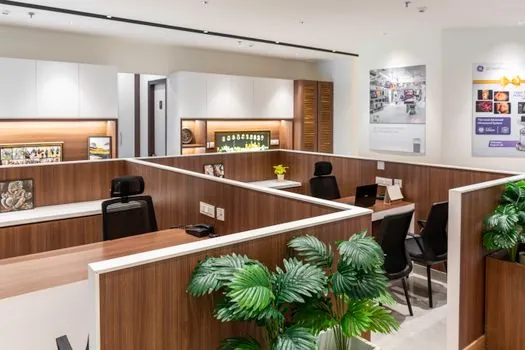
Lightweight partition cores are the right call for ISO 7-8 pharmaceutical manufacturing, biotech temperature-sensitive storage, modular and contract-manufacturing cleanrooms that need rapid reconfiguration, and any hardwall build where ceiling dead load and labor cost dominate the budget [S2][S4][S7]. They are also the right call for ISO 5-6 suites when paired with a uPVC or stainless-steel facing, cold-welded seams, and FDA-grade sealant, which is the configuration that dominates aseptic filling and sterile compounding [S2][S3]. They are the wrong call for ISO 3-4 semiconductor fabs that require electropolished surfaces and absolute minimum particle shedding, where the spec usually shifts to stainless-steel-faced or specialty electropolished systems rather than aluminum honeycomb [S3].
They are also the wrong call where fire rating is the binding constraint and acoustic isolation matters, where rockwool-core or MgO-core systems take over despite their higher weight and handling cost [S1][S3]. Softwall PVC and vinyl-strip systems fail outside ISO 6 because of uncontrolled air escape, which makes them unsuitable for tight humidity and temperature control, and they should not be specified for any negative-pressure containment suite [S2][S5]. For comparison with related hygienic-enclosure spec logic used in electronics handling and ESD-controlled warehouses, reach-truck aisle, lift, and ESD selection is the relevant reference; the partition and the material-handling equipment are spec'd against the same ISO and ESD constraints, even though the failure modes are different. Note that where the partition is also a fire-rated assembly in a plant that uses a control-panel component on the room side, the panel-cutout and through-wall conduit detail must be reconciled with the partition's fire-stop listing, which is a frequent cause of cGMP validation delay if missed at design.
Standards, Sourcing, and Validation Trail
Cleanroom partitions sit under a layered standards stack, and the spec should reference the standard, not paraphrase it, because third-party validation will check the certificate against the panel certificate. The dominant reference is ISO 14644-1 for cleanroom classification, with EU GMP Annex 1 governing sterile medicinal product manufacturing, FDA Aseptic Processing Guide governing US sterile drug manufacturing, USP <797> and <800> governing pharmaceutical compounding, ISO 13485 governing medical device quality management, and GB 50472 governing Chinese electronic-industry cleanrooms [S3]. For hybrid uPVC-laminate hardwall partitions, the manufacturer literature claims compliance with cGMP, GLP, and ASTM standards, with seamless wall-ceiling-floor transitions to keep the system airtight and reduce contamination risk [S2].
On sourcing, the practical signal to watch is the supplier's documentation trail: material certificates for the core, fire-rating test reports to the relevant ASTM or EN fire standard, chemical-resistance data against the facility's disinfectant list, and cleanroom-panel ISO class certification for surface particle shedding. Modular cleanroom manufacturers in the US market have published build volumes near 1,500 UL-approved cleanrooms over a five-year window, and the modular path is the one most often used for biotech and contract-manufacturing sites that need rapid reconfiguration [S2]. For walkable-ceiling and large-span projects, the spec should require documented deflection data at the rated point load, because the walkable-ceiling selection of aluminum honeycomb is justified by load-distribution geometry, not just generic strength claims [S4][S6].
The trackable signal over the next quarter is whether the hybrid uPVC-faced aluminum-honeycomb panel, which is the dominant ISO 5-6 hardwall choice as of mid-2026, expands into ISO 7-8 specifications as cost comes down, and whether softwall PVC systems lose further ISO 6 share to low-cost hardwall modular panels, which is the visible direction of travel in the 2026 supplier literature [S2][S4].