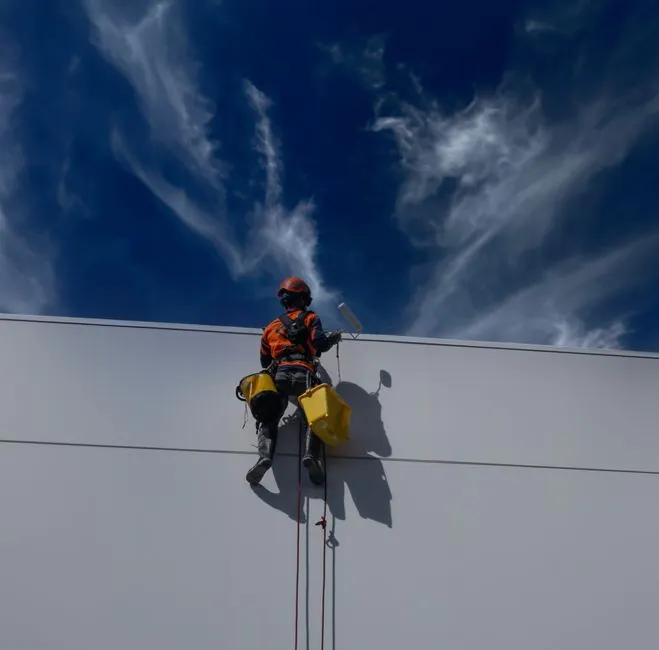
Epoxy and urethane systems certified for ISO Class 5 through Class 8 environments dominate the 2026 cleanroom coating spec set, with seamless monolithic finishes installed on floors, walls, and ceilings at documented dry film thickness [S1].
Cleanroom wall panels pair 0.4–0.8 mm pre-painted galvanized steel skins over rock wool, aluminum honeycomb, PU foam, or PIR cores in 50/75/100/150 mm thicknesses, with 0.5 mm the industry standard for pharma, food, and electronics [S2].
ISO 14644 Class and Particulate Load Drive the First Gate
ISO Class 5–8 compatibility is the baseline filter for cleanroom coating selection, with lower classes demanding tighter particulate generation ceilings and stricter TVOC emissions during and after cure [S1]. Wall coating systems from Sika under the Sikagard Hygiene, Sikagard WB, and Sikagard Descoglas families are designed specifically for these classification ceilings, and the Sika USA cleanroom portfolio is segmented across pharmaceutical, electronic, and EV battery manufacturing [S3].
Sherwin-Williams' protective and marine division markets parallel floor and wall coating systems for pharmaceutical cleanrooms, packaging and storage rooms, and production lines, with high performance flooring listed as a separate top-level product line in their 2026 industrial catalog [S5].
ESD options are available across the major cleanroom coating product lines, which matters for electronics and EV battery facilities where a 10⁶–10⁹ ohm dissipative range is typically specified [S1].
Chemistry Comparison: Epoxy, Urethane, PU Cement, MMA
Epoxy coatings deliver the highest chemical and solvent resistance at the lowest installed cost, but they yellow under UV and become brittle below roughly 0°C, which limits them to interior cleanroom service. Urethane systems (including polyurethane cement) tolerate thermal shock from steam cleaning, IPA wipe-down, and -40°C to +120°C excursions, and they carry a higher installed cost per square meter. MMA (methyl methacrylate) systems cure in under one hour, which suits retrofit cleanrooms that cannot shut down for 7-day epoxy cure windows. [S1]
Sika's cleanroom flooring range explicitly lists Ucrete (polyurethane cement), Pronto MMA, MultiDur epoxy, ESD coatings, and Moisture/Vapor Tolerant systems as distinct chemistry tracks, with each tagged to a different traffic, chemical, and thermal profile [S4].
Peckham Coatings documents a four-step installation protocol: diamond grind or shot blast to ICRI/SSPC profile, manufacturer-spec primer at recorded DFT, build coats matched to traffic and chemical load, then topcoat with cove base and transitions, all closed out with pull-off adhesion testing and photo documentation [S1].
Steel Skin Thickness and Surface Coating Stack
Cleanroom panel skin thickness selection is a traffic-driven decision: 0.4–0.5 mm suits standard pharma, food, and electronics walls; 0.6 mm adds impact resistance for corridors and material handling zones; 0.8–1.0 mm is specified for heavy-duty industrial cleanrooms and dock areas exposed to forklift traffic [S2].
The paint system applied over the galvanized steel face is the contamination-control interface. A surface coating that degrades under repeated disinfection becomes a particle source, and a coating that leaches under IPA, hydrogen peroxide, or quaternary ammonium wipe-downs fails pharmaceutical cleaning validation [S2].
Pre-painted galvanized steel face sheets serve three simultaneous functions: structural tensile and compressive capacity, vapor barrier protecting the core from moisture, and the personnel-contact surface. In a cleanroom the third function drives the most spec effort [S2].
Core, Adhesive, and Edge Seal Failure Modes
Core materials split by application: rock wool for fire-rated partitions, aluminum honeycomb for high-rigidity cleanroom doors and panels, PU foam for cost-effective thermal breaks, and PIR for upgraded fire performance. Adhesive bond lines are typically two-component polyurethane; failure modes show up as delamination after years of thermal cycling, which compromises both structural integrity and airtightness [S2].
Edge sealing is described as the detail that defines a cleanroom panel: a core material that sheds fibers through an inadequately sealed edge fails pharmaceutical and food industry contamination control [S2]. Silicone sealant at connection hardware plus formed steel or aluminum edge channels on all four sides is the standard detail.
Adhesive bond failure typically traces to inadequate substrate moisture testing or skipped primer coats, both of which are explicit checkpoints in documented cleanroom coating process [S1].
Selection Criteria: Who It Is For and Who It Is Not
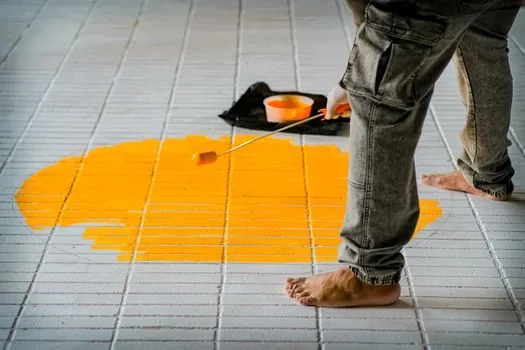
Specify an epoxy or urethane cleanroom coating system when the facility runs ISO Class 5–8, requires documented DFT, must pass GMP audits with manufacturer letters and warranty paperwork, and exposes the surface to repeated chemical wipe-downs [S1].
Do not specify standard epoxy in unconditioned exterior service, low-temperature freezers below its glass transition, or where UV-stable color retention matters. Specify polyurethane cement or urethane UV-resistant coatings instead, as listed in the Sika USA 2026 product catalog [S4]. Select ESD-capable coating systems, which are available as options for cleanroom wall and floor installations certified for ISO Class 5–8 environments.
For waterproofing below grade or at plaza decks that abut a cleanroom, route the spec to a waterproof coating system before tying into the wall/floor coating stack, because moisture vapor transmission through the slab will otherwise blister even a correctly applied epoxy topcoat.
Standards, QC, and Documentation Chain
ISO 14644-1 governs air cleanliness class, but the coating spec itself pulls from ICRI/SSPC surface profile standards for substrate prep, manufacturer DFT requirements for build coats, and pull-off adhesion testing (typically ASTM D7234) for QC closeout [S1].
Cleanroom coating installations close out with photo documentation, manufacturer letters, and warranty paperwork delivered at completion. This is the documentation chain that pharma and semiconductor audits verify [S1]. For thermal and waterproofing integration at the cleanroom envelope, see the thermal waterproofing and industrial coating reference pages for chemistry selection and substrate tolerance.
Film thickness verification on the topcoat is a separate QC line from adhesion testing, and a calibrated [coating thickness gauge reading at multiple points per square meter is the standard closeout practice, per process engineer consensus on cleanroom build documentation.
Limits, Constraints, and Trackable Signals

Two hard constraints shape 2026 cleanroom coating selection: cure window vs production downtime (MMA wins retrofit, epoxy wins newbuild), and disinfectant chemistry vs coating resistance (verify against the facility's actual IPA, H₂O₂, and quat rotation, not generic chemical resistance charts). A 7-day epoxy full cure is unacceptable for an operating aseptic fill line. [S2]
Trackable next signals: revised ISO 14644-1 particulate limits for ISO Class 5 cleanrooms under continuous VHP (vaporized hydrogen peroxide) exposure, and the migration of polyurethane cement into Class 5 sterile suites from its current Class 7–8 stronghold. For related chemistry selection on adjacent facility types, see the commercial waterproofing chemistry map and the residential waterproofing spec path.