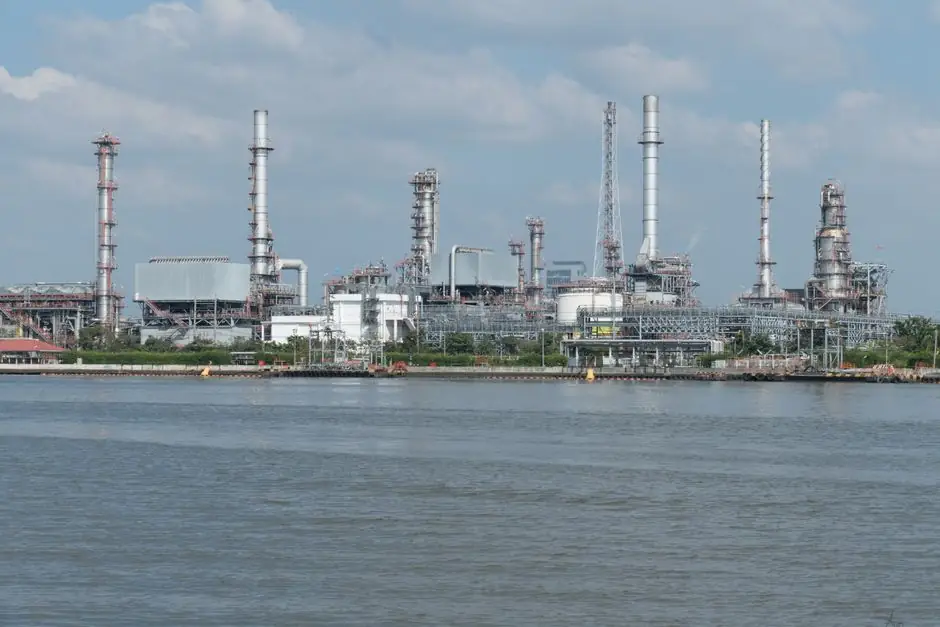
Specifying a waterproofing coating for an industrial facility is a chemistry-versus-substrate decision, not a brand decision, and the same balcony, potable-water tank or basement wall will reject a generic "best paint" recommendation and demand a system matched to water head, movement, temperature and chemistry [S4].
The 2026 industrial market splits into four mechanically distinct families: rigid cementitious slurries, polymer-modified cementitious composites, reactive liquid-applied membranes (PU, polyurea, acrylic), and pre-formed sheet membranes (SBS, APP, EPDM, PVC, TPO), each with documented thickness, elongation, and substrate windows [S2].
Substrate Profile: Concrete, Masonry, Steel, Timber as the First Cut
Concrete and masonry dominate below-grade and wet-area waterproofing because the cementitious matrix is chemically compatible with cement-based coatings; osmotic-crystallising cementitious powders use water as a carrier to drive active substances into the concrete capillary pore structure and form insoluble crystals that block water pathways [S4]. On steel reinforcement the same chemistry cannot bond directly, so an anti-corrosion primer plus a compatible membrane becomes mandatory, with water head and chloride exposure dictating whether a polyurethane or a bituminous system is layered on top [S4].
Substrate moisture content at the time of application is the second hard gate: most cement-based osmotic systems require a saturated-surface-dry condition, while solvent-borne bituminous primers tolerate damp substrates but reject standing water [S4]. For a primered steel deck the applied film thickness is field-verified with a coating thickness gauge, and continuity on metallic substrates is checked with a wet-sponge or high-voltage DC holiday detector at 100 V per 25 µm per ASTM D5162 / D5162M practice [S2].
Hydrostatic Exposure: Positive-Side vs Negative-Side, Head Pressure in Metres
Positive-side waterproofing, applied to the face that receives water pressure (tank interiors, basement walls against earth, swimming pools), is the more demanding application and is where cement-based osmotic crystalline materials dominate because the active chemistry is driven by water contact into the concrete capillary pore structure [S4]. Negative-side waterproofing (interior basement face where water presses against the back of the coating) requires systems engineered to resist back-pressure, typically epoxy-modified cementitious slurries or reactive polyurethane injection [S4].
Most polyurethane liquid-applied membranes carry a published maximum head rating between 10 m and 30 m of positive pressure at their standard applied film thickness, and below-grade construction in civil and mining sectors routinely specifies systems to 10 m head and above with detailing at construction joints and pipe penetrations treated as separate wet-film-thickness targets rather than a single overall DFT call-out [S4]. A 6 m-deep basement wall and a 0.3 m planter-box head are not the same specification, and the same coating datasheet will list two different maximum-head numbers depending on the system build-up [S4].
Movement Tolerance: Elongation, Crack-Bridging, Joint Detailing
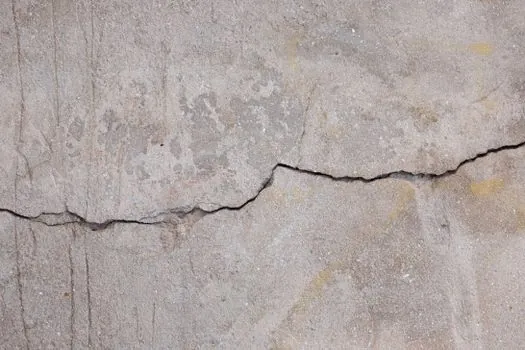
Crack-bridging ability is the single most quantitative spec line on a waterproof coating datasheet, expressed as elongation-at-break and crack-bridging width in millimetres at a defined film thickness; reactive polyurethane liquid-applied membranes run 400–800% elongation with 1.5–5.0 MPa tensile strength, while polyurea spray-applied at 2–4 mm reaches gel times under 30 seconds and elongation above 300% [S2]. Cement-based osmotic crystalline systems are rigid and rely on the substrate remaining crack-stable, so they fail on a moving timber deck or a vibrating steel plate where a liquid-applied PU with elongation above 300% will absorb seasonal movement without splitting [S4].
For floor applications, the substrate (concrete, screed, tile underlayment, or steel deck) drives family selection more than brand; a 1.5–3.0 mm dry-film polymer-modified cementitious composite applied in two coats bridges micro-cracks up to ~0.5 mm and bonds to brick, block, and existing tile screeds that rigid slurries cannot, which is why it is the typical floor specification under tile in wet rooms, balconies, and planter boxes [S2]. Field verification of the cured film uses a coating thickness gauge for DFT and a wet-sponge or high-voltage DC holiday detector for continuity, with the 100 V per 25 µm threshold per ASTM D5162 / D5162M applied where metallic substrates are in scope [S2].
Chemistry Family: PU, Polyurea, Cementitious, Bituminous
Reactive polyurethane waterproofing coatings conforming to GB/T 19250-2013, produced in both single-component and multicomponent (two-component) formulations, and cement-based osmotic-crystallisation coatings are the two binder families dominating 2026 industrial specification, with two-component PU products such as a 6 MPa formulation marketed for bridge-deck applications and tied to GB 55030-2022 General code for waterproofing of building and municipal engineering [S3]. Single-component moisture-curing PU (NRF-C801) cures from atmospheric water vapour and tolerates a slightly damp slab better than solvent systems, while two-component PU (NRF-C802) mixes an A-side prepolymer with a B-side curing agent at a fixed ratio to produce a higher-crosslink film for chemical-resistant tank linings and buried structures [S3].
Acrylic water-based coatings sit at the low-cost end of the liquid-applied group with 200–400% elongation, UV-stable but not trafficable, common on exposed concrete roofs in light-commercial builds [S2]. Pre-formed sheet membranes (SBS, APP, EPDM, PVC, TPO) carry factory-controlled thickness 1.0–4.0 mm with lap-welded seams, used on below-grade tanking, plaza decks, tunnels, and large flat roofs where the thermal waterproofing envelope must be installed in discrete rolls rather than sprayed in place [S2]. For the broader category that includes epoxies and polyurethanes used in tank and pipeline service, the industrial coating reference covers the chemistry overlap with these construction-grade systems [S3].
Certification and Use-Case Mapping: Potable Water, Fire, Root, Slip
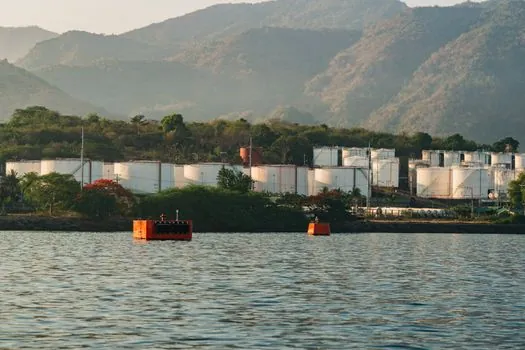
Australian protective-coating product lines for mining, heavy equipment, and above-ground metalwork are formulated under ISO 9001:2015 quality systems, with potable-water-contact approvals to AS 4020:2018, external above-ground waterproofing membrane compliance to AS 4654.1:2012, and slip ratings up to P5 per AS 4586:2013, all systems being VOC-free and suitable for enclosed or confined areas [S1]. On potable-water-safe roofing and rainwater-catchment systems the same product line is specified, while flexible coatings on transport carriages and enclosures accommodate vibration and movement that rigid systems would crack under [S1].
Use-case routing is direct: storage tanks and external pipework need rust-propagation prevention and coating longevity, industrial roofs and guttering must allow potable-water collection, and bridges, platforms, fencing, and load-bearing steel demand long-term UV and abrasion resistance with sound deadening on vehicle undersides [S1]. Non-curable rubber-modified asphalt waterproofing coating is codified under JC/T 2428-2017 (effective 2018-04-01) as the dedicated material for non-exposed building waterproofing and movement-joint detailing in viscous-paste form [S2].
Cost, Sourcing, and the 2026 Price Spread
Made-in-China.com listing snapshots from 2026-04 cluster brush-grade roof PU at US$1–1.5/kg at 500 kg MOQ, wood-grade PU at US$2.82–3.66/kg at 1000 kg MOQ, and spray-applied roofing systems at US$25–35/kg at 2000 kg MOQ, a roughly 25× spread that maps directly to solids content, certification depth, and substrate-prep tolerance [S3]. The high end of that range is occupied by spray-applied polyurea systems, whose 2–4 mm film and sub-30-second gel time command a cost premium justified by fast return-to-service and chemical resistance on secondary-containment bunds and tunnel linings [S2].
For prefabricated and modular builds where the same isocyanate chemistry feeds both PU foam insulation and PU waterproofing, the specifier's polyurethane insulation decision and the waterproofing coating decision share an upstream raw-material chain and should be reviewed together to consolidate MOQ and audit both GB/T 19250-2013 and the foam-side standard against the same supplier [S3]. Specifying a waterproof coating without first closing substrate, head, movement, chemistry, and certification gates will produce a system that passes shop inspection but fails the first hydrostatic test on site.
Trackable signals for the next quarter: revision status of GB 55030-2022 implementation guidance, any 2026-Q3 update to AS 4654.1 external-above-ground membrane test methods, and further consolidation of two-component PU and polyurea lines under the same manufacturer part numbers that currently split between 500 kg and 2000 kg MOQ tiers [S3][S1].