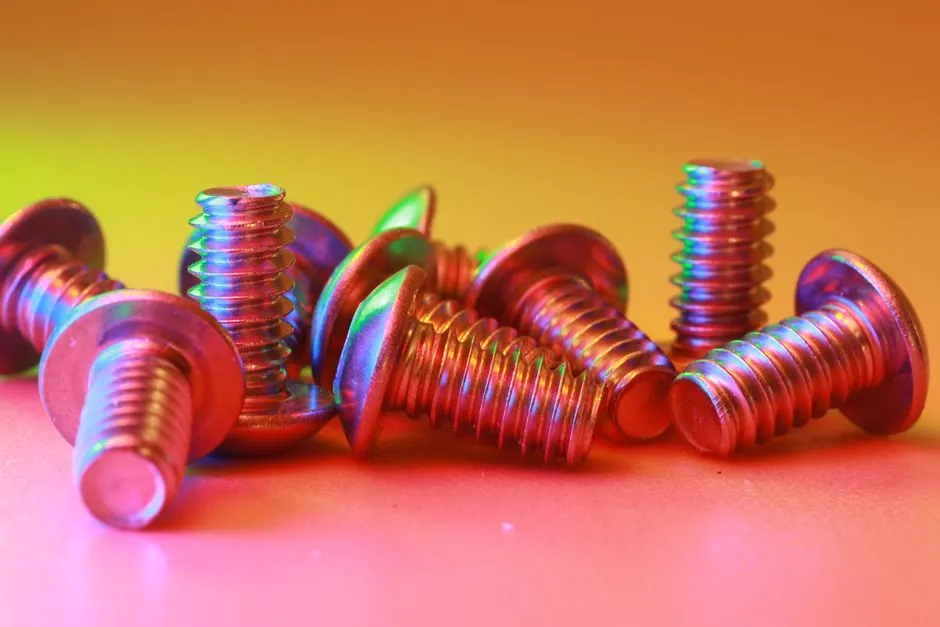
Cobalt remains the dominant binder phase in WC-Co cemented carbide cutting tools, but its chemical and thermal vulnerabilities now drive both tool-failure analysis and binder-substitution research published through 2025 [S3][S4].
Cemented tungsten carbide pairs tungsten carbide grains with a metallic cobalt binder, typically 3 to 20 wt% Co for cutting grades, and the composite is liquid-phase sintered into a dense metal matrix used in inserts, drills, end mills, and wear parts [S5][S3]. The same cobalt that wets and pulls grains together during sintering is the species that corrodes out of the finished tool under service exposure, producing a distinct degradation pathway that toolmakers and users have to design around.
Why cobalt is the default binder, and where it fails
Cobalt's value as a binder rests on a high melting point of about 1,493 deg C, effective liquid-phase wetting of WC grains during sintering, and high-temperature strength that resists deformation in the cut [S3]. That property stack is why cobalt, not nickel or iron, is the cementing phase in the bulk of WC-Co tooling shipped today. The trade-off is well documented: WC-Co shows high sensitivity to crater wear when machining steels because many workpiece materials dissolve into cobalt, and high-temperature operation can soften the binder enough to cause plastic deformation and tool fracture [S4].
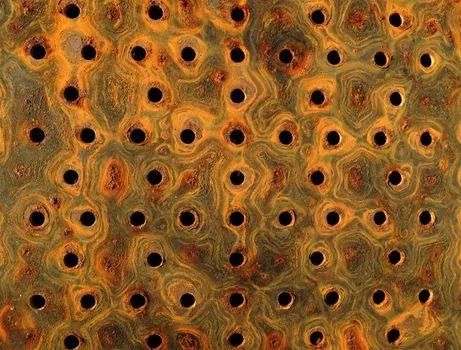
Corrosion behaviour is the second failure vector. Acidic coolant, contaminated grinding oil, and low-pH water-based fluids attack the cobalt binder at exposed surfaces; once the binder dissolves, unsupported WC grains flake off and the attack propagates inward, a chain reaction the industry calls cobalt leaching [S3]. Leaching rate rises with acidity and temperature, and once the binder is gone the structure collapses, accelerating further fluid ingress and grain loss [S3][S8]. A separate material-side effect, plastic deformation of the binder phase at elevated temperature, can independently cause tool failure even when corrosion is under control [S4].
Health and handling exposure on the shop floor
Grinding, sharpening, and re-sharpening of cemented carbide products generates dust and fines that carry both WC and Co, and OSHA-aligned SDS documents classify this dust as harmful if inhaled and as a respiratory, skin, and eye irritant [S2][S6]. The dust may also be combustible under the right particle-size and dispersion conditions, which is why coolant-fed grinding and proper local exhaust are specified rather than dry manual bench work [S2]. SDS guidance from MSC Direct and from NAPA's industrial supply line both flag the same hazard chain: inhalable Co-bearing dust produced by dry grinding, swarf handling, and tool reconditioning without adequate capture [S2][S6].
For shop-floor control, the practical lever is capture-at-source: wet grinding, mist collectors, and HEPA filtration on tool-sharpening cells. SDS documents also require PPE specification for eye and skin contact, and call out that ingestion and skin absorption routes exist alongside inhalation [S2][S6]. The exposure envelope applies to anyone re-sharpening brazed tools, handling crushed scrap, or doing metallographic prep on used inserts, not just to primary producers.
How to read a WC-Co grade for corrosion and heat risk
Co content, grain size, and the addition of grain-growth inhibitors like Cr3C2 or VC set the corrosion and deformation envelope of a given grade [S4]. Lower Co content and finer grain size raise hardness and wear resistance but reduce fracture toughness; higher Co content trades wear life for impact resistance. For wet machining of steels with water-based coolant, where leaching is the dominant wear mode, the conventional mitigation is a corrosion-resistant grade (sub-micron grain, low-medium Co, Cr3C2-inhibited), combined with neutral-pH coolant and short residence time of acidic tramp oils [S3][S8].
Ceratizit's own technical literature frames the trade-off directly: the lower the pH of the contacting fluid, the greater the cobalt leaching rate, which means coolant chemistry, not just grade selection, is part of the spec [S8]. The right side of this decision is qualitative, not numeric, because the research material gives factors and trends, not pH-threshold numbers or corrosion-rate tables that can be quoted verbatim.
Alternative binders and ceramic-bonded carbides
Researchers at Shandong University in China reported in 2022 that nano aluminum oxide (Al2O3), yttria-stabilized zirconium dioxide (ZrO2), and magnesium oxide (MgO) can replace cobalt as the binder phase in cemented carbide, with WC-6 wt% ceramic binder compositions hot-press sintered to near-full density [S4]. Their reported mechanical properties are competitive with conventional WC-Co on a per-binder-weight basis: WC-6Al2O3 hit 23.5 GPa hardness, 1,173.6 MPa flexural strength, and 8.13 MPa.m^(1/2) fracture toughness; WC-6ZrO2 reached 22.6 GPa, 1,229.7 MPa, and 9.35 MPa.m^(1/2); WC-6MgO came in at 21.1 GPa, 906.3 MPa, and 8.62 MPa.m^(1/2) [S4].
The toughening mechanisms are different from metallic binders: crack deflection, crack bridging, and crack branching dominate in the ceramic-bonded composites, and ZrO2 gains extra toughness from stress-induced transformation toughening [S4]. The pitch is that ceramic binders should resist the corrosion and high-temperature softening that cobalt cannot, though commercial availability of these compositions at insert scale is not yet established in the public literature, and traditional WC-Co production remains the volume standard. The historical binder-substitution arc runs through iron, nickel, and their alloys, then through intermetallics like titanium aluminide and aluminum nitride, and now into nano-ceramics [S4].
Quality control: measuring cobalt in finished tooling
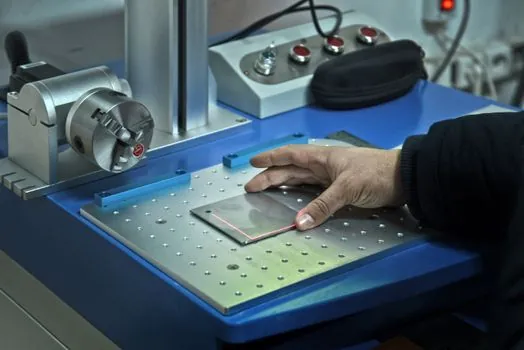
X-ray fluorescence (XRF) is the standard non-destructive technique for confirming cobalt binder content and detecting composition drift in finished WC-Co cutting tools, strip, and wear parts [S7]. This matters because binder content directly controls the hardness-toughness balance: under-binder parts fail from grain pull-out, over-binder parts from deformation. Inline XRF lets producers and users catch out-of-spec blanks before they reach the spindle, especially for indexable inserts where lot-to-lot consistency is critical.
For process engineers running hand tools re-grind cells or construction tools refurbishment lines that touch brazed carbide tips, the same XRF check on a finished brazed assembly is feasible, and the SDS hazard chain still applies whenever a wheel touches the carbide. The Co measurement is also a way to flag counterfeit inserts, since a sub-spec Co fraction is a common shortcut in cheap offshore blanks.
When cobalt is still the right choice, and when it is not
Cobalt is the right binder for general-purpose turning, milling, and drilling of steels and cast irons at moderate temperatures, where its wetting behaviour, fracture toughness, and predictable liquid-phase sintering outweigh corrosion drawbacks [S3][S5]. It is the wrong binder where the cutting zone runs hot enough to soften the binder (high-speed dry machining of tough alloys), where the coolant chemistry is acidic or uncontrolled, or where downtime from premature leaching cannot be absorbed, which is typical in high-volume automotive and aerospace cells [S4].
For those service envelopes, the spec should call out a corrosion-resistant grade (Cr3C2- or VC-inhibited, low Co), pH-controlled coolant, and a tool-life tracking protocol that distinguishes wear from leaching. Researchers are investigating the feasibility of nanoceramics as binder replacements for cobalt in cemented tungsten carbide tools, though long-term wear data and commercial supply chain documentation are not detailed in the public material available for this article. The reference machine tools and insulated tools pages on SourceBySpec cover the surrounding equipment context for specifiers building out a tooling and coolant control package around this decision.
Trackable signals for the next 6 to 12 months: (a) peer-reviewed wear-test data on the Al2O3, ZrO2, and MgO ceramic-bonded compositions beyond the initial Shandong University study, and (b) any OEM catalog additions of corrosion-resistant WC-Co grades with documented pH and temperature envelopes for wet machining service. For adjacent equipment decisions such as chromium and ferrochrome supply for stainless steel, the same corrosion-control logic that drives coolant chemistry in carbide machining drives alloy selection in stainless production, which is why Cr3C2-inhibited carbide grades and low-carbon stainless share a common metallurgical root.