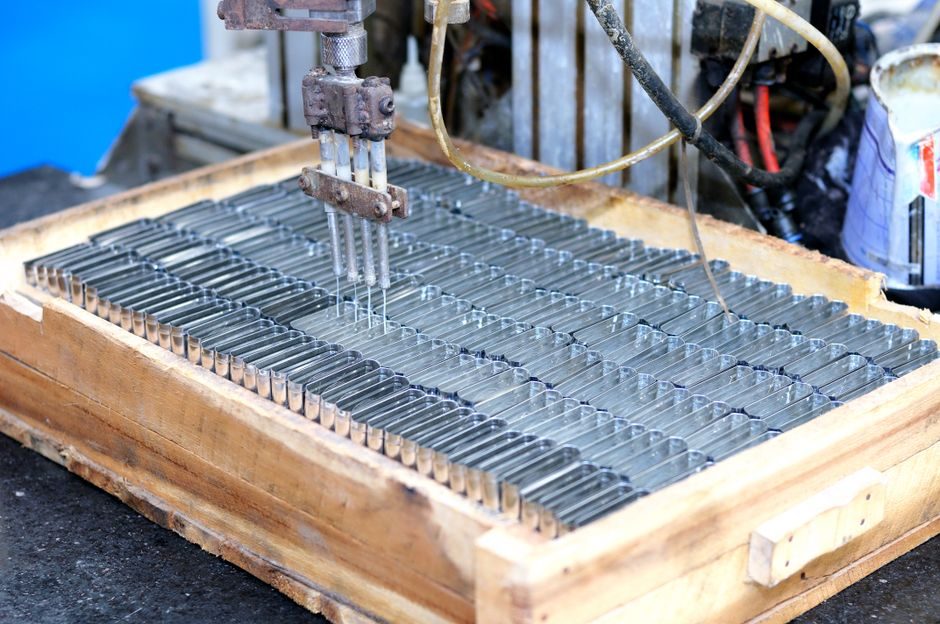
A cold box core shooter is sized by core weight, binder chemistry and parting-line count, not by machine footprint, and the 2026 Indian and Chinese OEM catalogs from Pune to Wuxi list six architectural variants — single-station horizontal parted, three-station vertical parted rotary, four-way parted, double-shoot tilting shell, one-half-fixed/one-half-moving, and amine-cured universal — for the same cold-box process [S1][S5].
The cold-box (ash) process uses a polyurethane binder system cured by vaporized tertiary amine (TEA/DMEA) passed through the sand core in a sealed box; the binder is two-part ( phenolic + isocyanate, Part 1 / Part 2 ) mixed in a high-speed cold box sand mixer immediately before shooting, and gas is injected via a dedicated gassing plate or port set after shooting [S3][S4]. Selection criteria therefore sit on the mechanical side (shot pressure, clamping force, core box clamping) and the chemical side (binder ratio, amine type, scrubber capacity), and buyers who optimise only the mechanical side routinely over-spec the amine scrubber and under-size the binder pump.
Spec Gate 1 — Core Weight and Platen Size
The single most disqualifying parameter is shot sand weight per cycle; cold box shooters below 5 kg shot weight are typically single-station horizontal-parted, 5–25 kg sits in the one-half-fixed/one-half-moving class, and 25 kg and above demands a three-station vertical-parted rotary because horizontal platens warp under the asymmetric blow load [S1][S5]. Lionstech Wuxi ships cold-box machines with manipulator sand-core extraction rated across this 5–50 kg band and pairs the shooter with a robotic core-take / core-finish / palletising cell [S4]. Buyers who try to push a horizontal single-station machine above 30 kg shot weight are buying warped platens and elevated scrap rates; the rotary index path exists precisely to avoid the asymmetric platen load that a horizontal parting line imposes on the tool half.
Platen size also drives the box size envelope: Indian catalogues (Pune-based coldboxcoreshooters.com and galaxymachine.com) group products by platen class rather than shot weight alone, and the platen class in turn dictates the heating, amine-line and exhaust port pattern on the core box [S1][S5]. Specifying platen size first — then shot weight, then cure gas flow — is the correct sequence.
Spec Gate 2 — Amine Binder System and Gassing Architecture
Two cold-box binder families dominate: phenolic-isocyanate (PUNB, the classical ash-process) cured by triethylamine (TEA) or dimethylethylamine (DMEA), and phenolic-ester/epoxy cold-box variants for lower-amine emissions [S3]. The amine gas must contact every sand grain, which is why cold-box cores are made in a sealed, clamped box — and the gassing port pattern, gas flow rate (typically 1–3 m³/h per kilogram of core, equipment-rated rather than tabulated here) and amine scrubber capacity are co-specified with the shooter [S1][S3].
Ritika Enterprises (India) pairs cold-box shooters with amine storage & distribution systems, amine scrubbers and binder calibration systems as a single vendor bundle, which is the correct architectural view — the shooter, the cold box core machine plumbing and the scrubber are one process line, not three independent purchases [S3]. Galaxy Machine (India) lists "Automatic Amine Cold Box Core Shooters" as a separate product line from "Automatic CO2 Cured Cold Box Core Shooters", confirming that the CO2-cured (sodium-silicate / CO2) variant is a parallel technology sharing only the cold-box machine footprint [S5]. Buyers mixing CO2-cured and amine-cured cores on a single shop floor should budget for two binder systems and two scrubber trains, not one.
Spec Gate 3 — Sand-Blow Pressure and Sand Tank Volume

Cold box shooters blow sand into the core box with compressed air at 4–6 bar typical, with shot times of 2–5 seconds for a 10 kg core; the cold box core machine sand tank above the blow head is pressurised from the shop air main, and tank volume should be sized at 1.5–2× the largest single core's sand weight to avoid mid-cycle refill interruptions [S1][S4]. Pneumatic sand conveying from the cold-milling-style sand mixer up to the shooter sand tank is the upstream link, and a starved tank halves cycle time by adding refill waits [S3].
For cores above 25 kg, the blow head must move on a vertical axis (three-station rotary) rather than a horizontal parting line, because gravity-assist on sand fill is the difference between a 3-second fill and a 7-second fill. Buyers who specify horizontal parted machines for large cores are buying extended cycle times even before they account for the platen warp risk in Gate 1 [S4][S5].
Spec Gate 4 — Parting-Line Count and Tooling Geometry
Core complexity maps to parting-line count: simple cylindrical cores use one horizontal parting line (single-station horizontal parted), cores with internal undercuts use two parting lines (one-half fixed, one-half moving), and cores with holes on multiple planes require three or more parting lines which only a three-station vertical-parted rotary or four-way parted machine can open [S1][S5]. The hot box core machine process uses the same parting-line logic but a thermoset binder cured in a heated box — a different process line, often confused with cold-box in procurement specs.
Tooling cost scales roughly with parting-line count squared (each additional parting line multiplies core-box face machining, alignment hardware and clamp force requirements), and the cold-box process tolerates more complex tooling than shell because the clamped, sealed box contains the gas pressure; the shell core shooter, by contrast, drops hot resin-coated sand onto a heated pattern and is limited to two parting lines for sand-flow reasons [S1][S4][S5]. Specifying a shell machine where you need a four-way core is a procurement error that shows up in scrap, not on the order form.
Spec Gate 5 — Cycle Time and Automation Interface

Cycle time on a single-station cold-box machine is dominated by shoot (2–5 s) + gassing (5–30 s, amine-contact time scales with core section thickness) + purge (3–10 s) + open/extract (5–15 s with manipulator), and 30–60 second cycles are typical for cores in the 5–15 kg band [S3][S4]. Three-station rotary indexers overlap these steps and cut wall-clock cycle to 20–40 seconds for the same core; the cost is roughly 2.5–3× the single-station capital cost, breakeven sits at roughly 200,000 cores/year for many Indian automotive and pump-foundry buyers.
Lionstech (Wuxi) ships its cold-box line with an integrated manipulator for core-take, core-finish and palletising, which is the same automation interface Indian buyers must specify to keep labour cost per core competitive [S4]. Buyers who spec a manual-extract cold-box machine in a 2026 high-mix / low-volume foundry should revisit the cycle-time math — manipulator integration is no longer optional at the volumes most Pune and Wuxi OEMs quote against [S1][S3][S4].
Spec Gate 6 — Standards, Emissions and After-Sales
No single ISO or IS standard universally governs cold-box core shooter selection; Indian buyers reference IS 5519 / IS 15997 patterns for foundry machine safety, and Chinese-built machines ship to GB foundry-equipment codes, while EU-bound cores from EU-bound foundries must meet IATF 16949 automotive process-control discipline and REACH-restricted binder chemistry [S3][S4][S5]. Buyers should require documented amine-scrubber efficiency, binder batch traceability and CE / IS / GB machine-safety marks before purchase — the equipment itself is mature, but the binder chemistry is the regulatory moving part.
After-sales scope (cold box sand mixers, amine scrubbers, binder calibration units, automatic core painting systems, sand core crushing machines and pneumatic sand conveying — all listed by Ritika as their in-house bundle) is the practical proxy for vendor capability [S3]. A shooter-only vendor that does not stock scrubber spares or amine-line filters is a single-point-of-failure in a 24/7 foundry; the cold-box process stops the whole line when the amine train is down, not just the core cell.
Comparison: Six Cold-Box Machine Types Against Five Selection Criteria
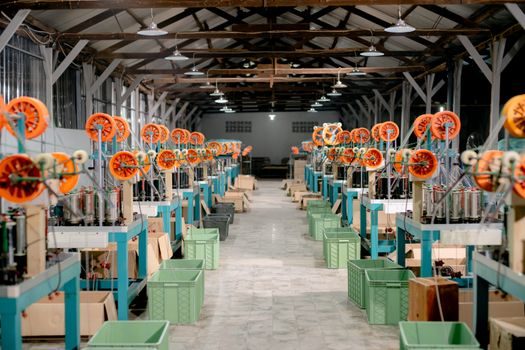
Buyer-fit comparison of the six architectural variants catalogued by Pune and Wuxi OEMs in 2025–2026 [S1][S3][S4][S5]:
Single-station horizontal-parted suits cores below 5 kg with one parting line and short cycle-time targets, but fails at platen size above 30 kg shot weight. One-half-fixed / one-half-moving extends to 5–25 kg and two parting lines, with cycle time 20% higher than the equal-weight three-station. Three-station vertical-parted rotary covers 25 kg and above, three or more parting lines, and delivers the lowest cycle time per core, but at 2.5–3× the capital cost of the single-station. Four-way parted addresses the most complex undercuts and is justified only at very high volumes of geometrically demanding cores. Double-shoot tilting shell shares the cold-box machine footprint but is a different process (thermoset resin on heated pattern) and should not be cross-quoted with amine-cured lines. Universal cold-box covers both amine and CO2-cured binder changeover, justified only for job-shop foundries running both chemistries on a weekly changeover [S1][S5].
For buyers cross-shopping with related industrial-spec decisions, the same spec-gate logic used in solenoid valve vs check valve selection and the format/throughput/cap-type gates in capping and sealing machine selection translate directly — name the five-to-six binding parameters first, then run the catalog against them, not the other way around.