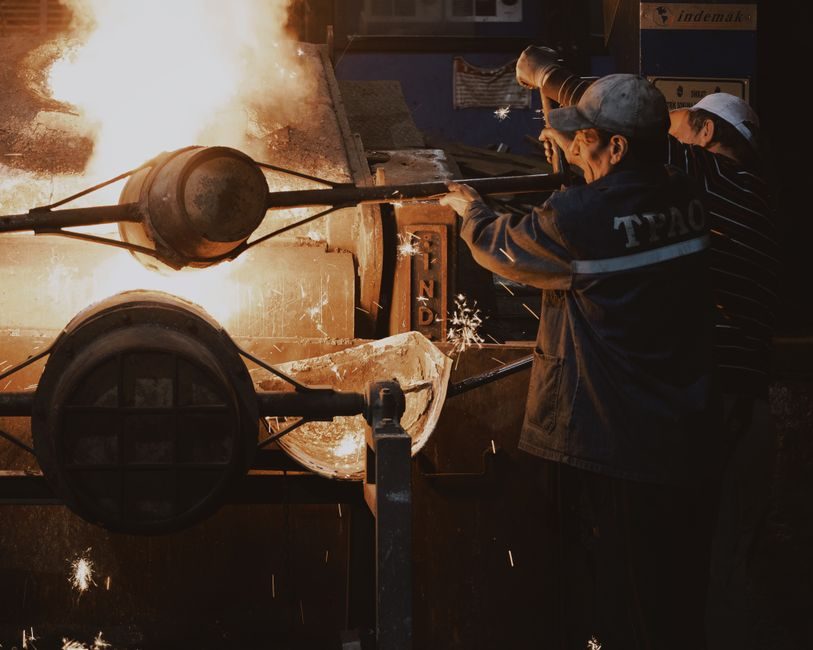
For cosmetic-grade castings — appliance panels, 3C enclosures, automotive trim — the cold chamber die casting machine is the go-to platform when the alloy is aluminum or magnesium, because the melt stays outside the shot system and never sits in contact with the steel plunger and gooseneck [S2].
For zinc and low-melting alloys, a standard die casting machine in its hot-chamber configuration is the typical choice, with the global Alibaba supplier count for hot-chamber units reported at 1,246 sources as of 2026-04 [S1]. The same machine family covers both, but the auxiliary shot hardware is what changes the surface-finish ceiling.
Why surface finish maps to chamber type, not machine class
Surface finish on a die cast part is degraded by oxide films, dissolved hydrogen, iron contamination, and thermal shock on the die wall — all four of these are amplified when molten metal sits inside a hot-chamber gooseneck for hours at a time [S3].
Cold-chamber designs pump the metal from a separate furnace into the shot sleeve only for the duration of each cycle, so the melt residence time in contact with the steel shot hardware is measured in seconds, not hours [S2]. That single mechanical difference is the reason surface-finish specifiers in the aluminum die casting machine class almost always route their work to a cold-chamber platform rather than trying to shoehorn aluminum into a hot-chamber unit.
Shot hardware, sleeve temperature, and the cosmetic ceiling
The hot-chamber die casting machine keeps the shot plunger and the gooseneck submerged in molten metal continuously, which delivers fast cycle times but introduces chronic iron pickup from the steel hardware into the melt — visible as grey streaks and micro-inclusions on polished or anodized surfaces [S3].
A cold-chamber die casting machine uses a fresh ladle pour for each shot, so the metal that touches the plunger and sleeve is replenished every cycle, and the cold sleeve itself acts as a thermal buffer that reduces die-wall chill rates [S2]. For cosmetic aluminum parts the practical effect is fewer cold-shut lines, fewer flow lines, and a measurably smoother as-cast surface that can skip secondary blasting in many decorative applications [S4].
Decision criteria: alloy, part size, shot weight, and cosmetic class
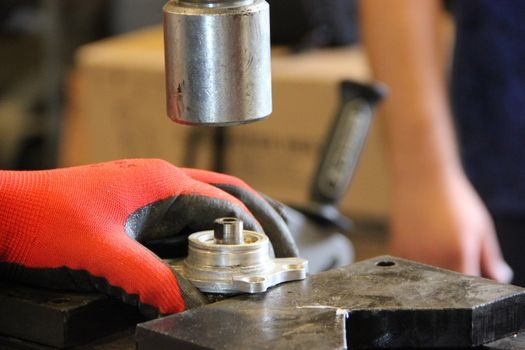
Engineers choosing between hot-chamber and cold-chamber platforms for surface-finish-sensitive work usually weigh four criteria: alloy (zinc vs aluminum/magnesium), shot weight (sub-1 kg vs multi-kg), cosmetic class (hidden structural vs Class A visible), and the cost penalty of secondary finishing [S1][S2].
On those axes the trade-off reads cleanly: hot-chamber wins on cycle time and per-shot cost for small zinc parts, but loses on the surface-finish ceiling for visible aluminum or magnesium castings [S3]. Cold-chamber wins on surface quality and on the die casting die life when running aggressive alloys at high injection pressures, but pays a penalty in cycle time and energy per shot [S2][S4].
Where each platform fits — and where it does not
Hot-chamber units fit thin-wall zinc hardware, small connectors, and decorative zamak fittings where the as-cast surface is acceptable with light tumbling and where cycle economics dominate the bid [S3]. They do not fit aluminum or magnesium structural castings, parts with shot weight above roughly 1 kg, or any application where the iron signature from a submerged plunger would telegraph through a Class A paint or anodize layer [S1].
Cold-chamber units fit automotive structural castings, consumer-electronics mid-frames, and any visible aluminum or magnesium die casting machine work where surface-finish inspection rejects would otherwise kill the part [S2]. They are not a good fit for high-volume, sub-100 g zinc hardware, where the cold-chamber cycle time penalty outweighs any surface-quality gain [S1][S3].
Magnesium and the cold-chamber finishing edge
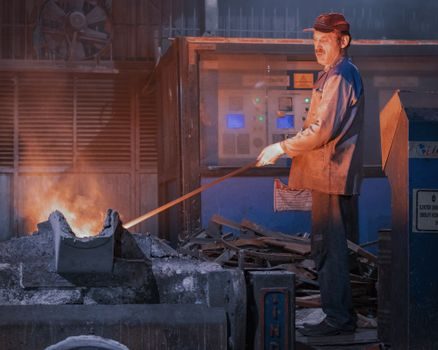
Magnesium castings are especially sensitive to oxide inclusions and to iron contamination, both of which show up as dark spots on a polished or painted surface — a defect class that is essentially unrepairable downstream without re-machining [S2].
Cold-chamber processing keeps the melt in a closed ladle-and-sleeve path rather than a permanently open gooseneck, which limits the oxide skin formation that drives the visible defect rate on magnesium cosmetic parts [S2]. For that reason, the gravity die casting machine — which is sometimes brought in for low-pressure cosmetic runs — is treated as a secondary option rather than the primary route when the volume justifies cold-chamber capital cost [S4].
Process control: vacuum, sleeve pre-heat, and shot profile
Beyond the chamber choice itself, the surface-finish ceiling is set by three process variables that engineers can actually dial: vacuum level on the shot sleeve, sleeve pre-heat temperature uniformity, and the second-phase intensification profile in the shot curve [S2][S4].
Cold-chamber platforms are easier to fit with integrated sleeve vacuum and pre-heat jackets because the sleeve is a discrete component that can be serviced, instrumented, and replaced — unlike the integrated gooseneck of a hot-chamber unit, which makes the same retrofits mechanically awkward [S2]. On the published 3C-industry case material, cold-chamber processing with controlled vacuum and pre-heat is what closes the as-cast surface finish gap to within roughly 30–50% of an equivalent gravity-cast reference part, based on qualitative supplier reports [S4].
Failure modes and the limits of each approach
Hot-chamber units fail surface-finish audits through iron streaks, oxide skins, and dissolved-gas porosity that surfaces only after polishing or anodizing — defects that are often invisible on the raw part and only appear after the cosmetic finishing step is already paid for [S3].
Cold-chamber units fail through cold-shut and flow-line defects when the shot profile, sleeve temperature, or vacuum level is not controlled tightly enough, and the cycle-time penalty versus hot-chamber processing can erode the cost case on small cosmetic parts even when the surface itself is acceptable [S2][S4]. Neither platform is a substitute for proper die venting, die temperature control, and a stable melt-cleaning practice on the furnace side [S2].
For procurement, the practical tracking signals are simple: watch the new hot-chamber Alibaba supplier count, which held at 1,246 active sources as of 2026-04-20 [S1], and watch whether cold-chamber OEM catalogs continue to add integrated sleeve-vacuum and pre-heat packages in their 2026 model-year updates [S2]. Either shift is a leading indicator of where the cosmetic-grade casting volume is migrating.