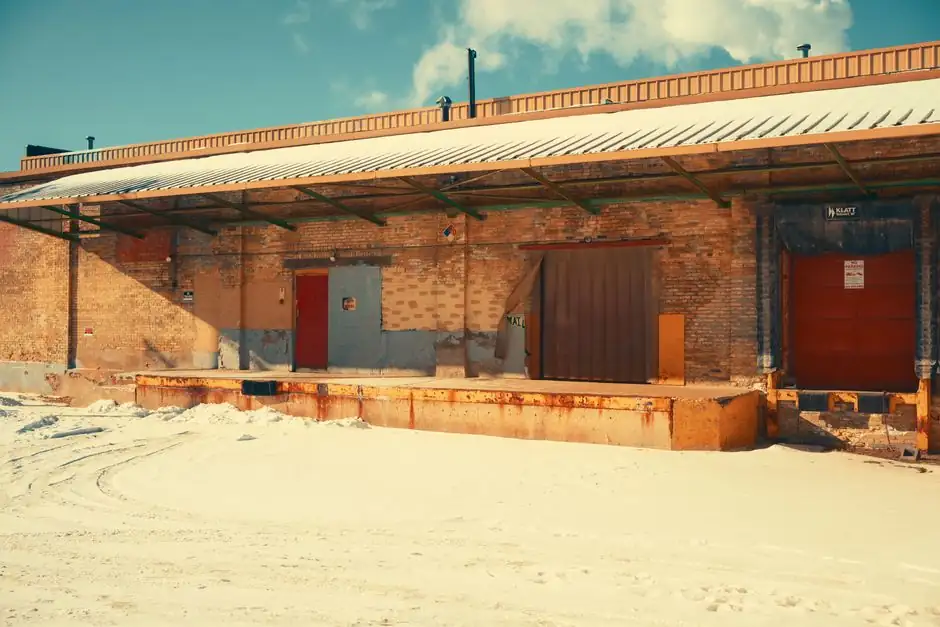
Refrigerated warehouses run some of the highest energy-use intensities in commercial building stock, with refrigeration equipment consuming up to 70 percent or more of total building electricity according to National Renewable Energy Laboratory data cited in June 2026 architectural guidance [S1]. In that envelope, the waterproof membrane is not a standalone product, it is one of four control layers (liquid water, air, water vapor, thermal) that must run continuous from roof to foundation wall to slab.
The dominant single-ply chemistries in current cold storage roofing are PVC, TPO, and EPDM, offered by both Carlisle SynTec and Versico Roofing Systems in mechanically fastened, self-adhered/quick-applied, and adhesive-free RapidLock attachment variants [S3][S4]. Below-grade, fully adhered blindside membranes are typically chosen where the below-grade space holds sensitive equipment or critical infrastructure [S2].
Why Membrane Choice Alone Is Not the Problem in Cold Storage
The primary threat to a cold storage facility is warm, humid indoor or outdoor air migrating toward cold surfaces, which produces condensation, frost, or ice inside the assembly [S1]. A break in continuity across any one of the four control layers can trigger ice lens formation behind the vapor retarder or frost heave at the slab, and either failure can disrupt operations and spoil inventory [S1]. WJE/IIBEC building-enclosure guidance repeatedly emphasizes that the four layers (liquid water, air, water vapor, thermal) should be designed and installed for continuity, not in isolation [S1].
Transitions concentrate the risk: roof-to-wall, wall-to-foundation wall, foundation wall-to-slab, every roof penetration, edge and termination details, and any retrofit tie-in to an existing assembly [S1]. Box-in-box cold rooms and multi-temperature facilities make this worse, because interior partitions and structural penetrations force the four control layers to be re-established at every partition line [S1]. Existing facilities compound the problem with older roof assemblies, penetration flashings, and outdated details that no longer meet modern thermal or vapor-control expectations [S1].
Membrane Chemistry Comparison: PVC vs TPO vs EPDM
All three single-ply chemistries (PVC, TPO, EPDM) are available from the major U.S. cold-storage system suppliers in fully integrated assemblies, meaning the membrane is qualified together with specific polyiso insulation, cover boards, adhesives, and metal components rather than as a standalone sheet [S3][S4]. This qualification is what preserves the integrated warranty, and it is the reason generic cross-brand substitution is risky.
Mechanically fastened assemblies remain the most widely installed system in commercial roofing and are typically appropriate for moderate wind exposures [S3][S4]. Self-adhered or quick-applied systems remove adhesive flash-off times and low-temperature restrictions, which matters in cold-weather construction schedules [S3][S4]. RapidLock is described by both Carlisle and Versico as a membrane attachment method that delivers a fully-adhered system without liquid adhesives, which simplifies jobsite logistics and removes a chemistry that can be sensitive at low ambient temperatures [S3][S4].
Insulation and Cover Board Integration
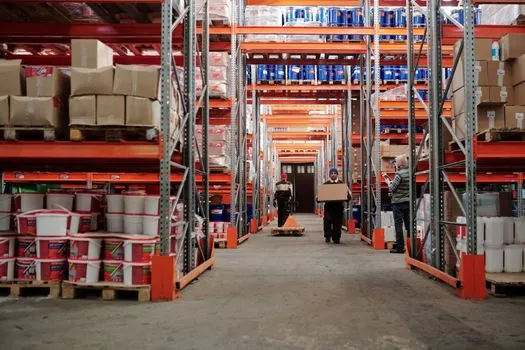
Insulation thickness and continuity drive the thermal layer. Carlisle positions its ThermaThin 7 polyiso insulation as delivering industry-leading thermal performance per inch, which is the metric that matters when the goal is minimizing heat transfer through the roof and cutting refrigeration demand [S3]. Field case studies from Carlisle cite installations using 16-foot-wide TPO sheets combined with 4-inch polyiso insulation at food-processing facilities, where the wider sheet reduced seam count, time, and complexity on site [S3].
Versico's ImpactR-7 product line is marketed for cold storage as a way to lower operating costs, maintain thermal stability, and protect the facility investment year over year, and the company frames its role as part of the below-grade-to-roof envelope defense against warm-air infiltration [S4]. For sandwich-panel cold room construction, LIAOHE specifies PU or PIR cores with tongue-and-groove joints, color-coated steel facings, and panel thicknesses up to 250 mm, oriented toward refrigerated warehouses, frozen storage, food processing, refrigerated logistics, and pharmaceutical storage [S5].
Below-Grade and Blindside Considerations
Fully adhered blindside waterproofing membranes are commonly selected where the below-grade space contains sensitive equipment or critical infrastructure, because bond to the structural concrete prevents water migration between the membrane and the substrate [S2]. In cold storage this is particularly relevant at freezer slabs and foundation walls, where any moisture that reaches the cold side of the assembly can refreeze and progressively damage the structure.
Below-grade detailing must tie into the same four control layers as the roof. A blindside membrane handles liquid water and (when properly selected) vapor, but air and thermal continuity still depend on careful transitions at the wall-to-slab cold joint and at any penetrations for refrigeration piping or electrical conduit.
Sealants, Sanitary, and Food-Processing Touches

NSF-certified sealants are a frequent specification point in food processing and cold storage facilities, where temperature ratings and material compatibility with both the membrane chemistry and the sanitary cleaning regime need to be verified [S6]. The sealants used at termination bars, penetration flashings, and panel joints should be checked against the membrane manufacturer's compatibility list, because the wrong sealant chemistry can degrade certain single-ply sheets over time.
Who This Spec Map Is For, and Who It Is Not For
This map applies to facility owners, architects, envelope consultants, and roofing contractors selecting single-ply membrane systems for new construction or major retrofit of refrigerated warehouses, freezer rooms, food processing plants, and cold chain logistics centers operating continuously at low temperatures [S1][S3][S4][S5]. It is less applicable to ambient-temperature warehouses, dry goods storage, or buildings without a meaningful vapor drive from warm to cold.
Continuity-first design and pre-qualified integrated assemblies also push this map toward projects that have an envelope consultant or manufacturer technical representative involved early, rather than commodity bid situations where membrane, insulation, cover board, and attachments are sourced from multiple unvetted suppliers [S3][S4]. For sandwich-panel cold rooms, the spec flow shifts toward PU/PIR cores, panel thickness, joint design, and steel facing selection rather than single-ply sheet chemistry [S5].
Decision Criteria Summary for Cold Storage Membrane Selection

On four selection criteria that recur in the source material, the three single-ply chemistries line up as follows. Attachment method: PVC, TPO, and EPDM each support mechanically fastened, self-adhered/quick-applied, and RapidLock variants, so attachment is decoupled from chemistry at the major U.S. suppliers [S3][S4]. Continuity and warranty: all three chemistries are offered as part of fully integrated, tested assemblies by Carlisle and Versico, with system-level (not just membrane) warranties [S3][S4]. Cold-weather constructibility: self-adhered and RapidLock systems specifically remove adhesive flash-off and low-temperature restrictions, which is a direct advantage during cold-season construction [S3][S4]. Below-grade compatibility: single-ply roofing membranes are not interchangeable with blindside waterproofing, and below-grade applications should default to fully adhered blindside systems designed for that exposure [S2].
Limitations, Failure Modes, and Standards Caveats
The research does not publish a single governing standard number (for example, a specific ASTM or EN clause) for cold storage membrane selection, so any reference to a named clause should be checked against the membrane manufacturer's current technical datasheet and the project-specific building code. Refrigerated warehouses can consume 70 percent or more of total building electricity on refrigeration, meaning a small continuity defect (a missed fastener line, a poorly terminated vapor retarder, a wet insulation pocket) can scale into large operating-cost penalties over the life of the building [S1]. Older existing facilities carry the additional risk of tie-in details to prior materials that no longer meet current thermal or vapor-control expectations, so retrofit scope should always include a continuity audit at every transition [S1].
For facility safety, the worker side of cold storage also deserves mention: insulated PPE, frostbite prevention protocols, and controlled access procedures are a parallel track to envelope design, and they interact with membrane selection through the choice of rooftop walk pads, penetration hardware, and fall-protection anchor detailing [S7].
The 2026 trend to watch is the continued migration of cold storage projects toward pre-qualified, fully integrated single-ply assemblies (membrane + polyiso + cover board + qualified attachment) over field-assembled commodity builds, because integrated assemblies are how the four control layers are kept continuous at scale [S3][S4]. Two trackable signals over the next planning cycle: the share of cold storage specifications that call out a named integrated assembly rather than separate component specs, and the rollout of additional RapidLock SKUs from the major U.S. single-ply suppliers, which removes one more liquid-chemistry variable from cold-weather installation. A related reference for envelope continuity in adjacent facility types is the broader thermal waterproofing and modified bitumen membrane discussion, which becomes relevant when cold storage retrofits interface with legacy bituminous roofs. For sandwich-panel cold rooms, also see the broader insulation board selection for prefabricated construction spec map for comparison.