
Specifying a combustible gas detector is fundamentally a four-axis decision: pick the LEL sensing technology against the target gas, set mounting height by gas density, choose fixed versus portable form factor, and lock the alarm threshold to a defensible percentage of LEL [S2][S3].
For methane (CH4) specifically, the industrial default is to alarm at 10% LEL, well below the 5% by-volume lower flammable limit, to give occupants measurable escape time [S1]. The same selection logic applies to LPG (propane/butane), hydrogen, and CO, but the LEL values and sensor chemistries differ, and a detector good for one duty is frequently wrong for another [S3][S5].
LEL Sensor Technologies: Catalytic Bead, Infrared, and Semiconductor
Catalytic bead (pellistor) sensors oxidize combustible gas on a heated catalyst and read the resulting temperature rise against a reference bead; they are the workhorse for general-purpose hydrocarbon detection and respond to a wide range of flammable gases, but they can be poisoned by silicones, lead, and sulfur compounds, and they consume oxygen in the diffusion path [S2].
Infrared (NDIR) sensors read gas concentration by absorption at a hydrocarbon-specific wavelength, so they fail safe (no false negative from oxygen starvation) and resist chemical poisoning, which makes them a strong fit for low-oxygen or high-humidity enclosures [S2]. Semiconductor (metal-oxide) sensors are lower cost and adequate for residential natural gas alarms but drift more, draw higher power, and are sensitive to humidity swings, so they are rarely used in fixed industrial loops [S1][S2].
For a single-gas methane or LPG duty with a healthy oxygen background, a catalytic bead LEL sensor is the lowest-cost, well-understood option [S2]. For solvent vapors, refrigerant leaks, or any environment with possible oxygen displacement, IR is the safer engineering choice despite higher unit cost [S2].
Mounting Height Is Set by Gas Density, Not Detector Type
Lighter-than-air gases (methane, hydrogen) rise; heavier-than-air gases (propane, butane, LPG) sink; gases near air density (CO) sit at breathing height. A detector installed in the wrong zone is effectively a passive device until the cloud drifts down to it, which is too late for alarm purposes [S3].
Working heights per gas density are: 30-60 cm below the ceiling for methane/hydrogen, 30-60 cm above the floor for propane/LPG/butane, and 1.5-1.8 m (breathing zone) for CO [S3]. Place sensors near likely leak sources (valves, flanges, compressor rooms, storage-tank connections) but never directly in the gas jet, where high concentration can blind or poison the sensor [S3].
Avoid strong drafts, steam pipes, heaters, and other EMI sources that produce false readings; route cabling so the detector remains accessible for bump test and calibration, since accessibility drives the long-term reliability of the loop [S3].
Fixed vs. Portable: Match the Form Factor to the Duty Cycle
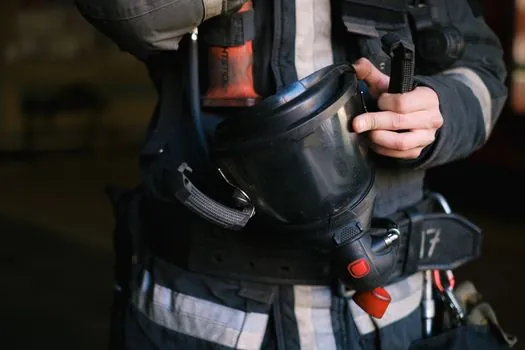
Fixed combustible gas detectors live on a wall or column, run on loop power (typically 24 VDC with a 4-20 mA output plus relays), and feed a control panel with horns and strobes; they are the right answer for continuously occupied or unmanned process areas, boiler rooms, and hazardous-area zones where regulatory codes mandate permanent monitoring [S2][S3].
Portable gas detectors clip to a worker's breathing zone (collar, lapel), run on internal batteries lasting hours to days, and are the right answer for confined-space entry, turnaround work, and leak survey by field crews [S5]. Single-gas portables are common for H2S or CO-only duties; four-gas (multi-gas) portables stack LEL, O2, CO, and H2S sensors and dominate turnarounds, sewer work, and refinery entry [S5].
For leak pinpointing rather than safety alarm duty, handheld combustible gas leak detectors (Bacharach Leakator 10, TIF 8800, and similar) sniff for ppm-level fugitive emissions at threaded joints, valves, and appliance connections; they are survey tools, not life-safety alarms [S4].
Alarm Threshold, Calibration, and Output Signal
Most industrial LEL detectors are wired with two alarm setpoints: a low alarm at 10% LEL and a high alarm at 20% LEL, with the sensor output mapped to a 4-20 mA loop where 4 mA equals 0% LEL and 20 mA equals 100% LEL [S2]. The 10% LEL threshold gives roughly 11 minutes of additional escape time compared to a 25% LEL setpoint in typical residential methane release scenarios, which is the safety margin the codes are built around [S1].
Bump test and calibration cadence is non-negotiable: catalytic bead sensors should be challenged with calibration gas on a documented interval (commonly every 30-90 days for fixed, before each shift for portables in hazardous work), and the result logged either on the device or in a docking station that records the bump automatically [S5]. IR sensors drift less but still need periodic zero/span checks [S2].
Output options: 4-20 mA analog with relay contacts is the dominant fixed-instrument interface; HART, Foundation Fieldbus, and PROFIBUS PA appear on higher-end fixed units where the DCS already runs those protocols, and RS-485 Modbus is common on multi-point fixed systems [S2].
Selection Comparison: Catalytic Bead vs. IR vs. Semiconductor
Choosing between the three sensing families comes down to four engineering criteria: target gas, poison resistance, oxygen requirement, and unit cost. A catalytic bead LEL sensor costs the least, detects a wide range of hydrocarbons, but needs oxygen in the sample and is vulnerable to silicone/lead poisoning; IR costs more but reads only hydrocarbons at a specific absorption band, ignores oxygen, and resists poisons, which makes it the right pick for solvent, refrigerant, or low-O2 service [S2]. Semiconductor sensors sit at the bottom of the cost curve and dominate residential plug-in and battery-powered natural gas alarms, where drift and humidity sensitivity are acceptable for a 5-10 year service life [S1].
For a fixed methane detector in a boiler room with clean air and a 4-20 mA loop, specify catalytic bead. For a fixed LPG detector in a vehicle repair shop with possible refrigerant or solvent cross-sensitivity, specify IR. For a residential natural gas alarm near a sleeping area, a semiconductor unit with a 10% LEL methane setpoint and a sealed 10-year lithium battery covers the use case at the lowest cost [S1][S2][S3].
Who Should NOT Pick the Cheapest Detector
Property managers and process engineers should not default to a residential plug-in or battery semiconductor alarm in any of the following cases: the space contains solvents, refrigerants, or any gas that is not methane (cross-sensitivity will produce false negatives on IR-only residential units); the area is unventilated and could reach oxygen displacement (catalytic bead will under-read); or the installation is in a classified hazardous area requiring ATEX/IECEx-certified equipment with documented explosion-proof enclosures [S2][S3].
For these duties, the engineering-correct choice is an ATEX/IECEx-rated fixed LEL detector with a 4-20 mA output, redundant relays, and a documented bump-test cadence, even though the unit cost is several times that of a residential alarm [S2]. A fixed gas detector specified to the actual hazard zone, not the budget, is the difference between a code-compliant install and an incident report.
Sourcing, Standards, and Sizing Logic

Codes to anchor the spec against include NFPA 715 for residential natural gas alarm placement (referenced as the mounting-near-ceiling rationale for lighter-than-air gases) and the relevant fire/building codes governing the occupancy, which vary by state and jurisdiction [S1][S2]. For industrial hazardous-area work, ATEX 2014/34/EU and the IEC 60079 series govern equipment certification; for life-safety integrators, ISA, NFPA, and the local authority having jurisdiction set the alarm setpoint, response time, and redundancy rules [S2].
For multi-gas or confined-space work, a multi-gas detector sizing spec covers the sensor-stack and sampling logic that this article assumes but does not derive, and the fixed gas detector sizing working spec goes deeper on loop power, relay count, and enclosure rating. Two practical shortlist filters tighten the vendor list fast: ATEX/IECEx certification on the certification plate (not just "EX-rated" marketing copy), and a published response time T90 under 30 seconds for catalytic bead and under 20 seconds for IR on methane at the stated flow rate.
For a wider multi-gas detector sourcing map, the 2026 supplier reference covers the brand and model families worth quoting on the bid sheet.
For component-level specifications, see combustible gas detector, and gas detector.