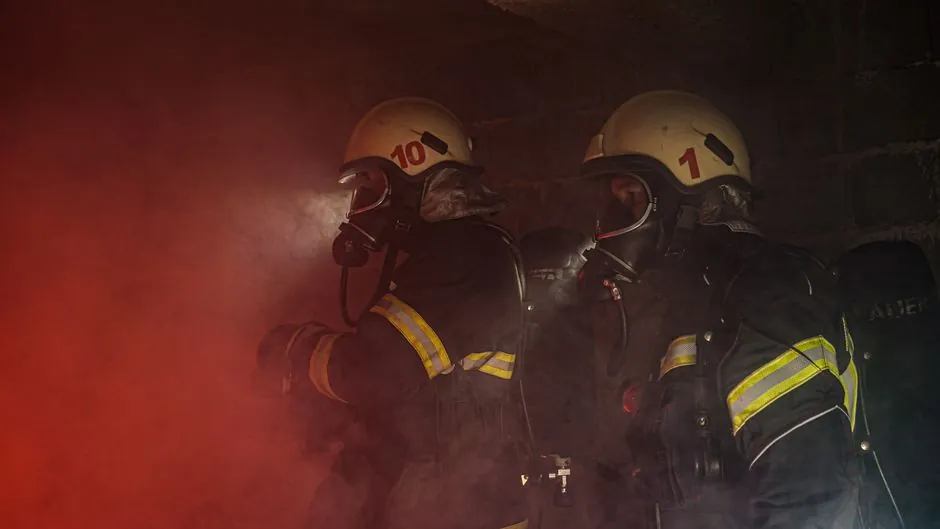
A four-gas configuration (O2, %LEL, CO, H2S) covers the three primary atmospheric killers in confined-space and industrial work, but it is a starting prompt, not a safe-atmosphere finding [S1][S2]. Sensor selection must start from current SDS, process chemistry, and previous-content review, then be reconciled against the selected instrument manual and correction factors [S1].
Personal portable units typically weigh 150 to 350 grams, log peak and time-weighted readings, and increasingly stream live data to a supervisor over wireless mesh or cellular link [S2]. Fixed systems add sensor heads feeding a central controller that drives ventilation and shutdown interlocks for plant-wide alarm logic [S2].
Four-Gas Baseline: O2, LEL, CO, H2S
O2 is almost always an electrochemical cell with a usable range centred on 20.9% volume, flagging both deficiency and enrichment conditions [S2]. The combustible channel is reported as %LEL against the lower explosive limit of the calibration gas, with catalytic bead (pellistor) and non-dispersive infrared (NDIR) as the two mainstream sensing principles [S2][S3]. CO and H2S are electrochemical toxic cells, with H2S cells typically rated 0 to 100 or 0 to 500 ppm depending on the application [S2].
CO2 is a frequent blind spot in this stack. O2 readings do not identify the displacing gas, so a falling O2 trend in a dry-ice, purge, or fire-suppression atmosphere can be confirmed only with an explicit CO2 or inert-gas channel [S1]. Treat the four-gas screen as a coverage prompt, then reconcile it against instrument manual, calibration gas, and bump/cal records before any entry authorisation [S1].
When to Add a Fifth or Sixth Channel
Review a PID (photoionization detector) when SDS, process, or previous-content information lists solvents, fuels, monomers, chemical intermediates, or unknown vapours, because LEL and toxic cells do not see VOCs at health-relevant ppm levels [S1]. PID response depends on lamp energy (commonly 10.6 eV), calibration gas isobutylene or equivalent, and compound-specific response factors that are published per instrument [S1][S2].
Specific toxic channels such as SO2, NO2, NH3, Cl2, and HCN should be added only when a credible source exists, with sensor range, cross-sensitivity, exposure-limit context, and alarm policy documented in the employer program [S1][S5]. Don't infer a channel from an industry label, and avoid over-configuring: extra sensors add cost, calibration burden, and false-alarm risk without protecting against hazards that aren't actually present [S5].
Sensing Technologies: Strengths and Failure Modes

Catalytic bead LEL sensors are cheap and respond across a wide flammable range, but they can be poisoned by silicone vapours, lead compounds, and high concentrations of certain halogenated hydrocarbons, which depress the reading and create a false-safe condition [S2][S3]. NDIR combustible sensors resist several of these poisoning agents and will not operate in oxygen-deficient atmospheres because they measure IR absorption rather than catalytic oxidation, so the two are not drop-in equivalents [S2][S3].
Electrochemical toxic cells drift with temperature and humidity, lose sensitivity at end of life, and cross-react with chemically similar species; manufacturer response-factor tables are mandatory reading for any non-target gas environment [S1][S2]. PID lamps lose intensity with use, so lamp-cleaning interval and lamp-life hours are real spec items, not marketing bullet points [S2]. Selection against lamps and light fittings matters less, but the lamp-ageing logic mirrors UV-source spec discipline in those product families.
Sampling Method: Diffusion, Pump, and Sample-Line Delay
Diffusion monitoring suits a worker-worn personal unit in continuous breathing-zone exposure; pumped sampling is required for pre-entry confined-space checks, remote sample points, and any application with a sample line longer than a few metres [S1][S3]. Sample-line length, tubing material, filters, condensation, and probe position all add response-time delay that must be subtracted from the instrument's T90 specification, or the worker will read a stale atmosphere [S1][S2].
Stratification is a recurring failure mode in vessels and manholes. A single point measurement at chest height can miss a heavier-than-air gas pooling at the bottom or a lighter-than-air gas collecting at the crown, so the entry procedure should specify multiple sample points and a defined sample sequence [S1]. This is the same sort of pre-entry protocol logic that governs construction machinery and equipment confined-space work, where pre-use checks are written into the procedure rather than left to operator judgement.
Alarms, Setpoints, and Hazardous-Area Approval
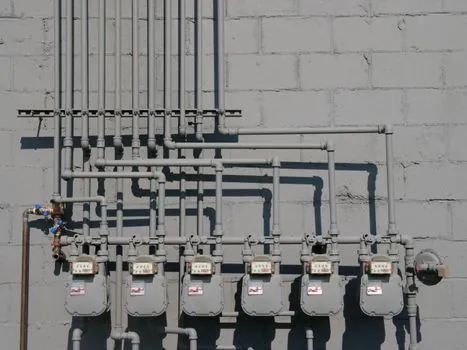
Multi-gas detectors carry at least two alarm levels per channel (low and high), plus TWA and STEL toxic-exposure alarms on instruments that log time-weighted data [S2][S3]. Default setpoints vary by manufacturer and region: common H2S low-alarm presets sit at 10 ppm with high at 15 ppm, but employer programs may tighten or relax these against OSHA PEL, ACGIH TLV, and NIOSH REL values that are referenced in instrument documentation [S1][S2].
Hazardous-area certification is non-negotiable in flammable atmospheres. Portable units are typically rated to ATEX 2014/34/EU and IECEx schemes, with performance of combustible-gas detectors covered by EN/IEC 60079-29-1 and the related 60079-29-2 guidance [S2]. Selection against lighting equipment and electric lamps shares the same ATEX/IECEx certification framework, which is useful when an EHS team is harmonising explosion-protection purchasing across detector and lighting lines.
Selection Decision Sequence: From Hazard to Instrument
Step one: list credible atmospheric hazards from SDS, process, previous-content, and site history; this is the hazard prompt, not the channel list [S1][S4]. Step two: map each hazard to a sensing principle (electrochemical toxic, catalytic bead or NDIR combustible, PID for VOC) and check range, cross-sensitivity, and response factor against the candidate instrument manual [S2]. Step three: decide diffusion versus pumped sampling based on the work pattern, and if pumped, document tubing length, filter, and probe material against response-time budget [S1][S3].
Step four: confirm ATEX/IECEx zone rating, alarm setpoints, and datalogging for the regulator and program needs. Step five: reconcile with calibration gas certificate, bump/cal interval, sensor part numbers, correction factors, and employer program, and require qualified safety or manufacturer review before purchase authorisation [S1][S4]. This sequencing is consistent with the spec-first approach used in linear guide or crossed roller guide selection, where load case, duty cycle, and certification scope drive the part number rather than the reverse.
Who Should NOT Pick the Stock Four-Gas Configuration
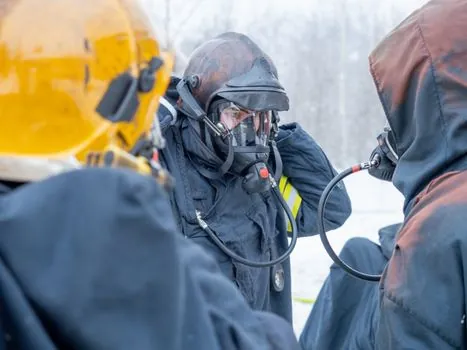
Anyone working around VOC solvents, fuels, or chemical intermediates should not rely on a stock four-gas unit, because LEL catalytic bead sensors do not see VOC at sub-LEL health concentrations and the CO/H2S cells ignore solvents entirely [S1][S5]. Anyone entering a space with credible inert-gas, CO2, or refrigerant displacement should not rely on O2-only confirmation; the O2 reading cannot identify the displacing gas, so an explicit CO2 or low-O2-alarm policy is required [S1].
Anyone in a high-temperature, high-humidity, or sensor-poisoning environment (silicone exposure, halogenated solvents, leaded fuels) should specify NDIR over catalytic bead for the combustible channel, and budget for shorter sensor-replacement intervals documented in the maintenance plan [S2][S3]. Fire and rescue work follows a separate spec stack that prioritises size, weight, and sensor count over datalogging depth, and that use case is mapped separately [S6].
Track the next procurement cycle against ATEX/IECEx certificate validity dates on each shortlisted model, and confirm that calibration gas cylinder certificates, sensor end-of-life indicators, and bump-test records are aligned with the employer's written program before the unit is issued [S1][S2][S3]. Sensor supplier product-change notices and lamp-life specifications for the PID channel are the two leading indicators of mid-life spec drift that procurement should monitor alongside price.
For related coverage, see Multifunction Power Meter Sizing and Selection Guide.