
Combustible gas detection is not one product category but four, and the four are governed by different sensor principles, mounting conventions, and certification regimes — picking the wrong one is the most common spec error on small plant retrofits [S1][S2][S3][S5].
For a process engineer, the practical taxonomy reduces to: domestic AC-powered CO alarms (Hanwei GT/GK families), fixed industrial analog-output combustible detectors (G-series), portable single-gas LEL detectors (TC-BO3-3), and portable multi-gas detectors carrying ATEX/IP67 ratings (New Cosmos XP-3000II series) [S1][S2][S4][S5][S3].
Domestic CO/CH4 Wall-Mount Alarms: Sensor, Response and Power
The Hanwei GT AC Powered Carbon Monoxide Detector specifies a response time of ≤30 s with automatic resume, supports both AC and DC power input, and exposes both valve output and relay output for shut-in actuation, with a swappable sensor module [S1]. The companion GK CO Alarm runs on AC220V or AC110V mains, is wall-outlet mounted, and combines audible plus visual alarms aimed at residential CO protection [S2]. Both are positioned for houses, apartments, boats and caravans rather than for classified hazardous-area industrial service [S1][S2].
For spec purposes the defining facts are: detected entity = combustible gas (CO specifically), detection principle = electrochemical for CO targets, alarm outputs = audible + visual plus relay/valve driver, and form factor = wall outlet or wall plate with battery backup option [S1][S2]. The JT-KL indoor high-sensitivity variant and the F1 CH4 natural gas detector extend the same wall-mount form factor to methane service in the same Hanwei product family [S1]. This whole class maps to the residential end of the portable gas detector and combustible gas detector categories in industrial purchasing terms, but with residential certification expectations rather than ATEX/IECEx.
Fixed Industrial Combustible Detectors: Analog Output and Target Gas Lists
The G-series Combustible Gas Detectors with Analogue Output are wall-mounted fixed instruments that target methane (CH4) and LPG in industrial process and boiler-room service, with an analog current/voltage output intended for direct tie-in to a PLC, DCS or dedicated gas controller [S4]. The "analog output" descriptor in the model name is the practical clue that this is a fixed transmitter class, not a self-contained alarm, and is wired into a host controller that handles relays, lights and shut-down logic.
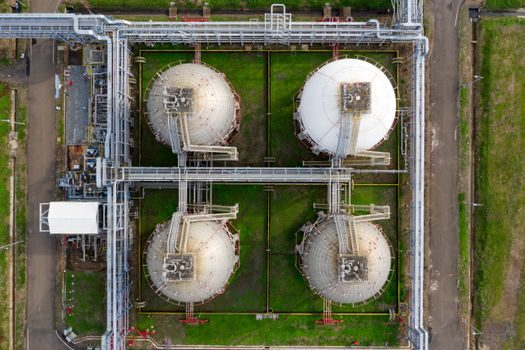
Selection criteria for this class are: target gas (CH4, LPG, propane, butane, gasoline vapor, solvent vapor), sensor type (typically catalytic-bead or NDIR for combustibles), analog signal range (commonly 4–20 mA, sometimes 0–10 V or 0–5 V), response time T90, and zero/span drift per year. This class overlaps heavily with the fixed gas detector and combustible gas detector encyclopedia entries and is the default specification for mechanical rooms, LNG/LPG storage sheds, paint booths and tank-farm perimeter monitoring.
Portable Single-Gas LEL Detectors: Intrinsic Safety and Field Form Factor
The TC-BO3-3 Portable Combustible Gas Detector is built for handheld spot-check and confined-space entry, with a protection form described as "intrinsically safe explosion-proof" and a target gas list covering combustible gases and organic solvent vapors [S5]. The product ships as the detector module with original packaging and datasheet, and is positioned for technicians sampling headspace in tanks, manholes and process vessels before hot work or entry [S5][S3].
Key spec gates on this class are: LEL range (commonly 0–100% LEL), resolution (1% LEL typical), response time T90, battery runtime on a charge (commonly 8–24 h), IP rating, and intrinsic-safety certification. The same product family lines up with the portable gas detector reference category. Total cost of ownership for this class is dominated by calibration gas, sensor replacement at end-of-life (typically 2–4 years for catalytic bead, longer for NDIR), and bump-test discipline, which is detailed in the multi-gas detector TCO cost levers reference.
Portable Multi-Gas Detectors: ATEX, IP67 and Sensor Channel Count
The New Cosmos XP-3000II series is the modern replacement for the XP-3110 and XP-3160 portable detectors, supports conversion across 32 target gases, and carries ATEX certification plus IP67 ingress protection, with an LCD, audible/visual alarms, data logging, and LEL measurement channel [S3]. Up to five combustible gases can be pre-set as target gas as a factory option, and the unit is powered by four AA cells — either alkaline or rechargeable nickel-metal-hydride — with a 1 m sampling hose, shoulder strap, drain filter and filter element in the standard kit [S3].
Selection here is dominated by: number of sensor channels (1, 2, 3, 4 or 5), sensor mix (LEL, O2, CO, H2S, VOC, plus specialty channels), ATEX/IECEx zone rating, IP rating (IP67 minimum for water-jet survival in field decontamination), battery chemistry and runtime, and data-logging format for incident reconstruction. This class maps directly to the multi-gas detector and the deeper multi-gas detector advantages, limits and spec gates breakdown.
Sensing Principles Across the Four Classes

The four classes do not share a single sensor technology. Domestic CO alarms in the Hanwei GT/GK family use electrochemical cells for CO specificity [S1][S2]. Fixed industrial combustible detectors in the G-series family typically use catalytic-bead (pellistor) sensors for combustible gas, with NDIR as the alternative for non-poisoning environments and where higher hydrocarbon selectivity is needed [S4]. Portable single-gas LEL meters such as the TC-BO3-3 default to catalytic-bead or, in newer designs, NDIR for methane [S5]. Multi-gas portables like the XP-3000II rely on a mix: semiconductor for some channels, catalytic-bead or NDIR for LEL, and electrochemical cells for O2 and toxic-gas channels [S3].
The practical consequence is that a sensor that works in a residential wall-mount (electrochemical CO cell with 5–10 year life) is the wrong sensor for an LNG pump room (catalytic-bead or NDIR with poison-resistant construction and ATEX rating), and the wrong sensor again for a pharmaceutical solvent vapor survey (NDIR with the right optical filter). Cross-comparing the four classes on three decision criteria:
Class | Sensor (default) | Mounting / power | Certification target: Domestic CO/CH4 alarm — electrochemical or semiconductor; wall-outlet or wall plate, AC mains with battery backup; residential/EN 50291 type approval. Fixed industrial combustible transmitter — catalytic-bead or NDIR; wall/pipe-mounted, 24 VDC loop-powered; ATEX/IECEx zone 1 or 2 typical. Portable single-gas LEL — catalytic-bead or NDIR; handheld, AA or Li-ion; ATEX/IECEx zone 0 or 1 intrinsically safe. Portable multi-gas — mixed sensor cartridge (CatEx, NDIR, EC, semiconductor); handheld, AA or Li-ion; ATEX/IECEx zone 0/1 plus IP67.
Selection Criteria and Who Each Class Is For
Pick the domestic wall-mount class when the risk is residential CO poisoning from a fuel-burning appliance, when a self-contained alarm with relay/valve output is acceptable, and when no hazardous-area certification is required — the Hanwei GT and GK are direct fits [S1][S2]. Pick the fixed analog-output class when the detector must feed a plant PLC/DCS, when target gas is methane or LPG at percent-LEL concentrations, and when wall or post mounting in a non-classified or zone 2 area is acceptable — the G-series is a representative [S4]. Pick the portable single-gas LEL class for confined-space entry and hot-work permitting on tanks, manholes, tunnels and process vessels, where intrinsic safety is mandatory [S5]. Pick the portable multi-gas class for simultaneous LEL/O2/CO/H2S monitoring on contractor or refinery turnaround work where ATEX zone 0/1 plus IP67 and data logging are contractual requirements [S3].
The four classes are not substitutes for each other: a domestic CO alarm is not legal for zone 1 service, a fixed combustible transmitter is not a portable, a portable LEL meter is not a four-gas personal monitor, and a four-gas monitor is overkill for a boiler-room methane check. Buyers that treat them as interchangeable pay for it in rejected audits and in sensors that poison within months.
Failure Modes, Limits and Field-Trackable Signals
Catalytic-bead sensors in fixed and portable LEL instruments are poisoned by silicones, lead, sulfur and phosphate compounds — a documented failure mode in compressor rooms and paint-booth service that the source material does not quantify but that any spec engineer working with pellistors has seen [S4][S5]. Electrochemical CO cells in residential alarms typically drift in humid environments and fail low at end-of-life, which is why EN 50291-style products publish an end-of-life indicator; the Hanwei GT and GK both expose this through a swappable sensor module [S1][S2]. Multi-gas portables add a cross-sensitivity failure mode: high concentrations of one gas can read on an adjacent sensor channel, and only routine bump testing with calibration gas catches it [S3].
Trackable signals in 2026: published bump-test intervals moving from 30 to 90 days on some multi-gas portables, ATEX zone 0/1 portable demand rising with EU offshore-wind hydrogen service, and fixed-transmitter migration from catalytic-bead to NDIR for methane in garbage and biogas service to extend calibration intervals. The XP-3000II series positions for exactly that multi-gas portable demand, with its 32-gas conversion and ATEX/IP67 rating [S3]. For deeper selection logic, the multi-gas detector types and classifications map lays out the sensor-by-sensor trade-offs in more detail, and the broader gas detector and toxic gas detector reference pages cover adjacent classes.