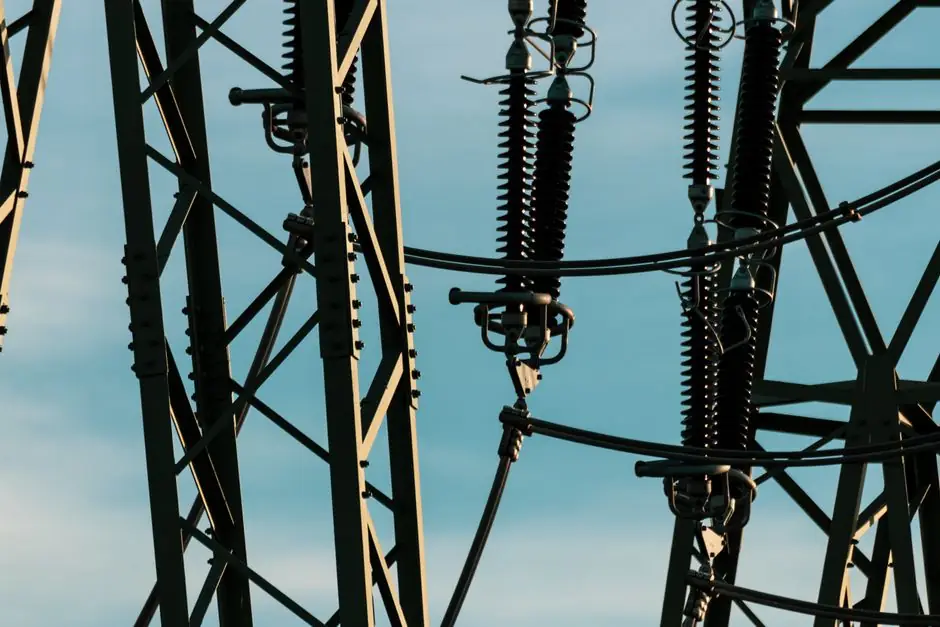
In 2026, solar pricing is evaluated on a comprehensive cost-per-watt basis that captures both hardware and system-wide expenses rather than equipment costs alone [S2].
The comparison covers installed solar-system cost, not inverter retail price alone, because residential labor, permitting, interconnection, and customer acquisition sit alongside hardware, while utility projects use centralized string or inverter blocks at much higher scale [S2][S3].
Residential and Utility-Scale Cost Baselines
Solar pricing varies by project size, system type, and location [S2]. A separate 2026 home-solar benchmark is $3.36/W, with most fully installed systems costing $20,000–$27,000 before incentives [S4].
Utility-scale solar generally means a grid-connected solar farm of 1 MW or larger that sells electricity into the power grid instead of powering one building [S3]. The cost comparison is therefore dominated by scale: utility-scale projects spread fixed engineering, grid, and installation costs across substantially more DC capacity than a 6–8 kW home [S3][S4].
Inverter-Only Price Versus Installed Project Price
This equipment figure cannot be divided directly into the $0.90–$1.30/W utility budget without other plant costs, including modules, transformers, collection system, substation, engineering, and interconnection [S3].
For a residential comparison, a 7 kW system at the $3.36/W national benchmark costs $23,520 [S4]. Applying the inverter range alone produces $700–$1,750 before installation, and the 10 kW example at $2.60/W costs $26,000 [S5]. These are screening calculations, not quotations, because the inverter may be paired with different module architectures and site constraints.
Option Comparison by Scale, Architecture, and Risk
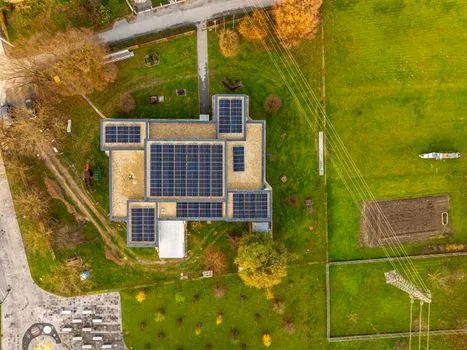
Hybrid inverters target systems with batteries or backup requirements, so their comparison is not valid against grid-tied string equipment without checking the storage specification.
Hardware cost alone does not settle the choice: roof complexity, shade, service access, and ownership structure determine total installed cost.
For procurement, the correct residential baseline is a quote in $/Wdc for the complete installation, plus a separate inverter schedule in model numbers, power ratings, phase, voltage, warranty, and monitored functions. For utility procurement, specify $/Wdc for inverter blocks and request a plant bill of materials so that AC collection, transformers, protection, grid interface, and commissioning are not hidden inside the inverter price [S3].
What Each Market Is For
The typical residential system is 6–8 kW [S4]. Utility-scale inverters are designed to convert plant-level DC into grid-compatible AC before transformers raise voltage for transmission or distribution [S3].
A homeowner should use installed $/W to compare proposals, but should not use a utility-scale $/W target as a shopping expectation. The utility range reflects procurement volume, standardized plant architecture, centralized maintenance, and direct grid-sale economics [S2][S3]. Conversely, a utility developer should not price a project from a residential inverter catalog. The DOE representative benchmark is 100 MWdc, and the EIA-derived plant average is $1,865/kW for plants installed in 2024 [S1][S3].
Cost Variables That Change the Comparison
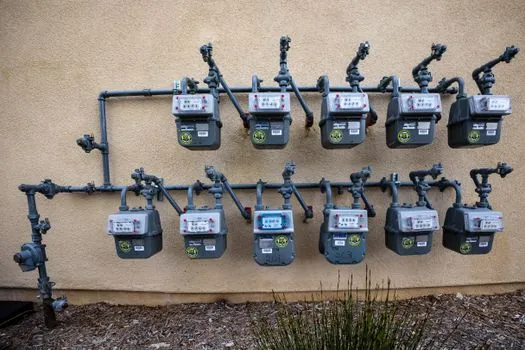
Residential system prices vary with location, roof direction, shading, roof complexity, equipment selection, and installer competition [S4]. At the $3.36/W national benchmark, a 4 kW system costs $13,440, an 8 kW system costs $26,880, and a 12 kW system costs $40,320 [S4]. A 12 kW EnergySage installation ranged from $27,526 to $33,869, with an average of $31,135 before incentives [S5].
Utility-scale costs also depend on location, grid access, and equipment choice. EIA 2024 data indicated that a 100 MW plant in the South cost about $130 million less to build than the same capacity in the Midwest [S3]. Capacity must also be stated on the correct side of the conversion: MWdc describes module capacity, while MWac describes inverter output, so a $/Wdc comparison must not be mixed with a $/Wac quotation without conversion [S3].
Incentives also affect the customer-facing number, not the physical inverter. Homeowners buying solar can no longer claim a 30% federal tax credit for systems installed in 2026 or later, while third-party-owned systems such as prepaid leases and traditional leases may remain eligible for a business-claimed federal credit [S4].
Sourcing and Measurement Discipline
Record the price basis with every comparison: currency, year, country, system boundary, DC or AC basis, tax treatment, incentives, and whether labor is included [S2].
For residential purchases, request the inverter model, unit price, quantity, rated output, warranty, and installation scope. For utility projects, compare inverter blocks by $/Wdc, conversion efficiency data, AC rating, transformer interface, protection, communications, grid-compliance requirements, and maintenance terms. The global utility-scale PV inverter market was valued at $14.29 billion in 2026, but market value does not establish a project quotation [S6].
Track two measurable signals for each bid: the inverter allowance in $/Wdc and the all-in installed project cost in $/Wdc. A bid cannot be ranked unless both use the same capacity basis and scope, and a residential quote should retain its labor, permitting, and interconnection detail while a utility estimate should separate plant hardware from balance-of-system work [S1][S3].