
Bentonite, silica and kaolin are moving into 2026 with measurable demand expansion, but buyers should separate rising market values from transaction-price evidence, which is limited for the clay and silica PPI series [S3].
Kaolin was valued at USD 5.00 billion globally in 2026, bentonite at USD 1.60 billion, and the wider specialty-minerals market at USD 62.8 billion, with each forecast tied to construction and processed-material demand [S2][S4][S6].
What the 2026 market figures actually establish
The global specialty-minerals market was estimated at USD 62.8 billion in 2026 and forecast to reach USD 96.4 billion by 2036, a 4.4% compound annual growth rate, while calcium carbonate leads by mineral type [S2]. These are market-value estimates, not quoted prices for bentonite, silica or kaolin, so they indicate demand direction rather than contract-price escalation.
Bentonite was estimated at USD 1,600 million in 2026 and forecast to reach USD 2,405 million by 2033 [S6]. Kaolin was calculated at USD 5.00 billion in 2026, with a forecast of about USD 7.50 billion by 2034 and a stated 5.19% CAGR from 2026 to 2034 [S4]. Separately, a performance-minerals additives study placed its wider market at USD 2.629 billion in 2025, forecast USD 4.882 billion by 2035 and projected 6.39% CAGR for 2026–2035 [S5].
Industrial minerals are functional inputs rather than interchangeable bulk commodities. Relevant properties include particle-size distribution, brightness, oil absorption, surface area and chemical reactivity, while construction, plastics, coatings, automotive, electronics and EV batteries are identified demand sectors [S2]. For specification work, the relevant distinction between raw mineral and processed grade is also covered in the industrial ceramic reference.
Price direction by mineral and end use
Bentonite is used in drilling fluids for oil and gas extraction, test borings, construction projects, water wells and groundwater monitoring, as well as in iron and steel molds and pet absorbents [S1]. Its purchasing case is therefore driven by drilling activity, civil works and absorbent-product demand, while qualification depends on functional behavior rather than a generic mineral label.
Silica sand is used to make glass, ceramics and abrasives [S1]. Within specialty minerals, precipitated silica is associated with tire rubber, where it lowers rolling resistance and improves wet grip [S2]. The industrial ceramic and alumina ceramic references distinguish ceramic material families, but industrial silica and bentonite should not be treated as ceramic commodities without grade-level review.
Kaolin is a white, porous clay composed mainly of kaolinite, with crystal dimensions commonly described from 0.1 microns to 10 microns or more; industrial processing may include chemical bleaching and water washing [S4]. Its applications include paper coating, where it contributes brightness, smoothness and gloss, as well as ceramics, paints and coatings, plastics, rubber, construction, refractory materials and specialized chemical applications [S1][S4].
Bentonite, silica and kaolin compared
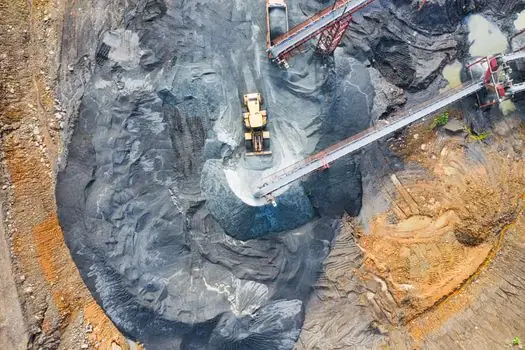
Bentonite should be compared by rheological performance in drilling fluids, swelling and sealing behavior, and absorbent capacity. Silica should be compared by purity, particle size, surface chemistry and application performance, including glass, ceramics, abrasives or rubber reinforcement. Kaolin should be compared by brightness, viscosity, plasticity, whiteness, particle-size distribution and whiteness after iron removal, particularly for paper, ceramics and coatings [S1][S2][S4].
The main decision criteria differ sharply. Bentonite has the clearest drilling-fluid exposure, but its end markets are also tied to construction and absorbent products. Silica serves multiple industrial uses, while its market value depends on factors such as the required grade. Kaolin has the strongest documented 2026 market value, USD 5.00 billion, and the broadest stated end-use set, including paper, ceramics, coatings, rubber and plastics [S4].
None of these three minerals is interchangeable in a qualified formulation. Changing grade can alter rheology, thickening, opacity, reinforcement, surface finish or filtration behavior, so an apparent bulk-price advantage can be offset by reformulation, yield loss and qualification time.
Demand drivers visible in 2026
Construction remains a broad demand engine because cement, concrete, insulation, coatings, adhesives and flooring consume large volumes of calcium carbonate, kaolin, talc, silica and bentonite [S2]. Kaolin demand also benefits from paper, ceramics, paints and coatings, plastics, rubber and construction, with Asia Pacific accounting for more than 47% of 2026 revenue [S4].
Advanced-material demand provides a second channel. High-purity engineered minerals and precipitated silica are identified for rapid expansion, while electronics and EV batteries are named end-use sectors for specialty minerals [S2]. Kaolin differentiation is moving toward high-purity, calcined and engineered grades, including products for advanced materials and specialty chemicals [S4].
Industrial minerals also support renewable-energy and infrastructure systems. One 3 MW wind turbine is described as containing 1,200 tons of concrete, 13 tons of fiberglass and 3 tons of aluminum, linking limestone, silica sand, soda ash and bauxite to energy equipment [S1]. This is demand context rather than direct evidence of a 2026 price change.
Cost drivers and total ownership
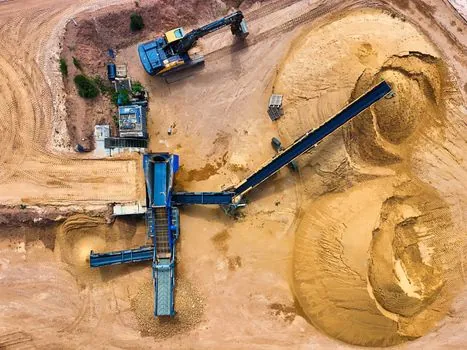
Raw material price is only one purchasing variable. Processing adds cost where the application requires washing, bleaching, calcining, grinding, classification or surface treatment. Kaolin production can require chemical bleaching to remove iron pigment and water washing to separate other minerals, while water-washed kaolin is forecast to dominate the segment from 2026 to 2034 [S4].
Volume tier affects unit economics because fixed processing, QA and logistics costs are spread over more tonnes, but large contracts also carry take-or-pay, quality, storage and transport exposure. Certification adds cost when a material is used in a qualified process, particularly for automotive, electronics, pharmaceutical or high-purity applications, although the research provides no universal testing or certification fee.
Total cost of ownership should include freight, receiving, storage, energy used in processing, yield loss, reformulation, line trials and maintenance. For coatings and adhesives, the performance of industrial coatings and industrial adhesives depends on more than delivered mineral cost because filler grade, dispersion and cure behavior affect processing and finished-product quality.
Sourcing limits and price-index discipline
The Federal Reserve Bank of St. Louis producer-price series for kaolin, clay, ceramic and refractory minerals was marked discontinued on October 16, 2026, with the bentonite entry also discontinued, so the series cannot support a clean October 2026 price comparison on its own [S3]. Procurement teams should not turn that gap into a claim that prices rose by any particular percentage.
Each mineral also needs an application-specific specification. Bentonite drilling-fluid grades require performance data, kaolin grades may require brightness and whiteness controls, and industrial silica grades may require purity and particle-size limits. Procurement should request the processed grade, delivery basis, packaging, Incoterms, annual consumption, and tolerance limits before comparing quotations.
Kaolin requires specific attention to iron content, brightness, viscosity, plasticity and particle-size distribution, while bentonite and silica should be qualified against the end process rather than against generic industrial-mineral benchmarks [S1][S2][S4]. The industrial ceramic and industrial coating references help frame those performance checks.
How buyers should assess the 2026 trend

The defensible 2026 direction is expanding value and demand for processed bentonite, silica and kaolin, not a verified uniform spot-price increase. Market values of USD 1.60 billion for bentonite, USD 5.00 billion for kaolin and USD 62.8 billion for specialty minerals support positive demand conditions, while the discontinued PPI entries limit direct price validation [S2][S3][S4][S6].
The next trackable signals are supplier quotations for specified grades, freight-adjusted delivered costs, kaolin brightness and viscosity results, silica purity and particle-size data, bentonite fluid-performance results, and contract volumes. The 2026 Metals and Energy Price Index Signals for Buyers article provides a broader cross-commodity context, but each mineral purchase should still close on grade-specific technical data.