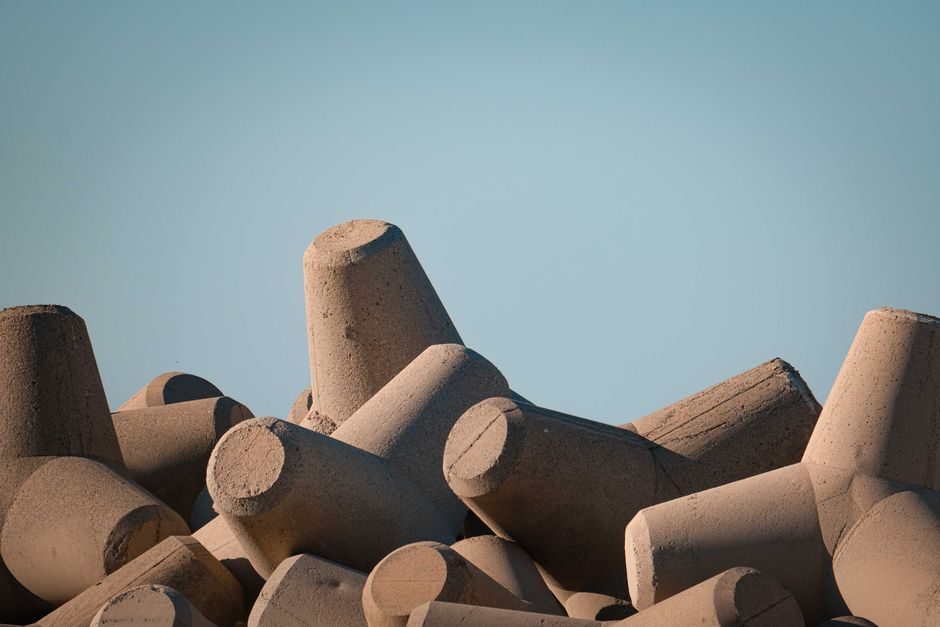
Admixtures are now treated as a core component of a seven-ingredient mix design—water, cementitious material, sand, gravel, chemical admixture, additive, and fiber—rather than an optional extra, reflecting their role in modern high-performance concrete [S3].
EN 934-1:2008 is the umbrella standard governing common requirements for admixtures used in concrete, mortar and grout across the European market, while EN 480-15 specifies the reference concrete and test method for viscosity-modifying admixtures [S4][S5]. For procurement and quality teams, the practical question is not "should we dose admixtures" but "which family fits this pour, this climate, this exposure class, and what failure mode are we accepting."
Water-Reducers and Superplasticizers: Slump Gain vs. Robustness
Sika cites over 6 billion liters of concrete-mix water saved annually through its water-reducer range, with 110 million tons of cement saved through SikaGrind® clinker substitution [S3].
For ready-mix and long-haul pours, the operational risk is retempering on site: re-dosing at the jobsite to recover slump is restricted by EN 934 limits on total chloride and alkali content, and a mix that "looks wet" on arrival may still be entraining unintended air [S5]. The selection question is slump-retention curve (30, 60, 90 min) versus ambient temperature, not just label price per kilogram.
Retarders and Set-Control: Hot-Weather Use vs. Strength Lag
Retarders (lignosulfonates, sugar-based, hydroxycarboxylic acid families) extend workability for mass concrete, slip-form paving and long-haul deliveries; the cost is delayed early strength, which can lengthen form-stripping cycles and require steam-curing compensation in precast [S3]. A related observation in partially-prestressed design notes that excessive upward deflection and time-dependent creep are the structural analogue of the same time-dependent chemistry [S1].
The dose-response is highly cement-specific: a retarder dosage calibrated to a Type I/II Portland may over-retard a blend with high belite or high limestone-filler content, so plant trials should re-validate initial and final set at production temperatures, not just lab temperature. ASTM C494 Type B (retarding) and Type D (retarding + water-reducing) define the performance envelope, with EN 934-2 Table 5 setting the European equivalent [S5].
Accelerators: Stripping Speed vs. Corrosion and Carbonation
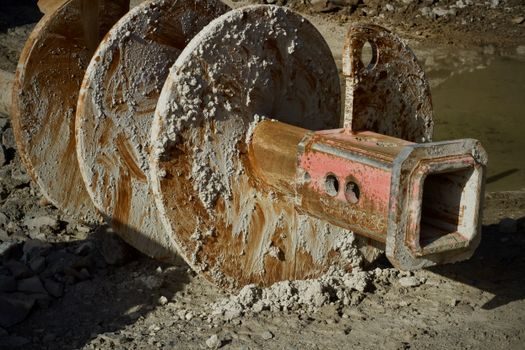
Chloride-bearing accelerators (calcium chloride) shorten time to form stripping but introduce chloride that accelerates rebar corrosion; non-chloride accelerators (calcium nitrate, sodium thiocyanate, C3A-rich blends) are now the default for reinforced concrete, with trade-offs in cost and dose efficiency [S3]. The precast industry relies on this class—SikaRapid® is cited for fast cycle times in wet precast production [S3].
Mineral admixtures, although not "accelerators" in the EN 934 sense, are often co-dosed to manage heat and carbonation: a 2023 review of high-volume mineral admixture (HVMA) concrete confirms that fly ash, ground granulated blast-furnace slag (GGBS) and silica fume reduce cement content and embodied CO2, but high replacement levels measurably increase carbonation depth relative to OPC controls under accelerated testing [S2]. For structural designers, the lever is not "admixture yes/no" but replacement percentage capped against the exposure class in EN 206.
Air-Entrainers: Freeze-Thaw Defence vs. Strength Penalty
The system is fragile: extended mixing, high temperatures, or vibration can collapse air, leaving the structure unprotected with no visible sign on site.
For comparison, the four main admixture families line up against the most common selection criteria as follows: water-reducers win on water/cement ratio and strength but lose on slump retention; retarders win on hot-weather placement but lose on schedule; accelerators win on stripping speed and cold-weather continuity but lose on corrosion risk; air-entrainers win on freeze-thaw durability but lose on strength and dosing sensitivity.
Mineral Admixtures: CO2 and Heat Reduction vs. Carbonation Trade-off

Mineral admixtures—fly ash, GGBS, silica fume, calcined clay—operate on both the fresh and hardened side: they reduce heat of hydration (critical for mass pours), refine the pore structure, and lower clinker demand, but their CO2-reduction benefit must be balanced against carbonation-rate increases documented for high replacement levels [S2]. The same review notes that HVMA concrete's carbonation resistance depends on the mineral type, replacement ratio, water/binder ratio, and exposure condition, and that several accelerated test methods disagree on ranking [S2].
EN 197-1 classifies common cements by clinker content and mineral addition, and EN 206 sets minimum replacement-free cement content for given exposure classes; in practice, designers working to XC, XD or XS exposure need to check that a 50% GGBS blend still meets cover and crack-width requirements, not just strength class. When the question is "how much mineral is too much," the answer is exposure-class driven, not sustainability-driven alone.
Selection Criteria and Sourcing Reality
For procurement and process engineers, the working checklist is: EN 934 / ASTM C494 classification on the data sheet, declared chloride and alkali content, dosage range, compatibility statement with the project's cement and supplementary cementitious materials, and—critically—the local technical support available when a set or slump anomaly appears on the batch [S5]. EN 480-15 gives the reference mix for viscosity-modifying admixtures, a class that has grown in self-compacting concrete (SCC) and underwater pours [S4].
The most common failure modes reported in plant practice are: (1) admixture-cement incompatibility that shows up as flash set or no set, (2) air loss during long pump lines, (3) color drift in architectural pours, and (4) retempering at the jobsite that pushes total admixture dose above the design limit. Each is a process-control problem, not a product defect, and the cure is qualified plant trials, not a label switch.
EN 934-1:2008 plus EN 934-2/3/4/5/6 (covering specific admixture types) and EN 480 test-method standards form the European compliance framework; ASTM C494, C260, C1017 and C618 are the parallel U.S. system, and the two frameworks are not interchangeable on declared performance numbers [S5]. Buyers should treat the data sheet as a legal compliance document, not marketing copy, and verify that the declared composition (e.g., "lignosulfonate-based" vs. "PCE-based") actually appears on the certificate.
For application guidance in adjacent works, see the selection map for concrete admixture types, the role of concrete fiber reinforcement when admixtures alone cannot resolve crack control, and how the concrete curing compound stage locks in the benefit that admixtures have bought in the plastic phase. Upstream of all of this, concrete batching plant accuracy and concrete vibrator practice determine whether the designed air void and dispersion are actually delivered to the form. Track EN 934 revision drafts via the national standards body, confirm the next ASTM C494 re-affirmation date, and watch for any local exposure-class amendment that would change the mineral-replacement ceiling.
For related coverage, see Portable Gas Detector Install Guide: Sensor Match, Bump Test and Zone Wiring.