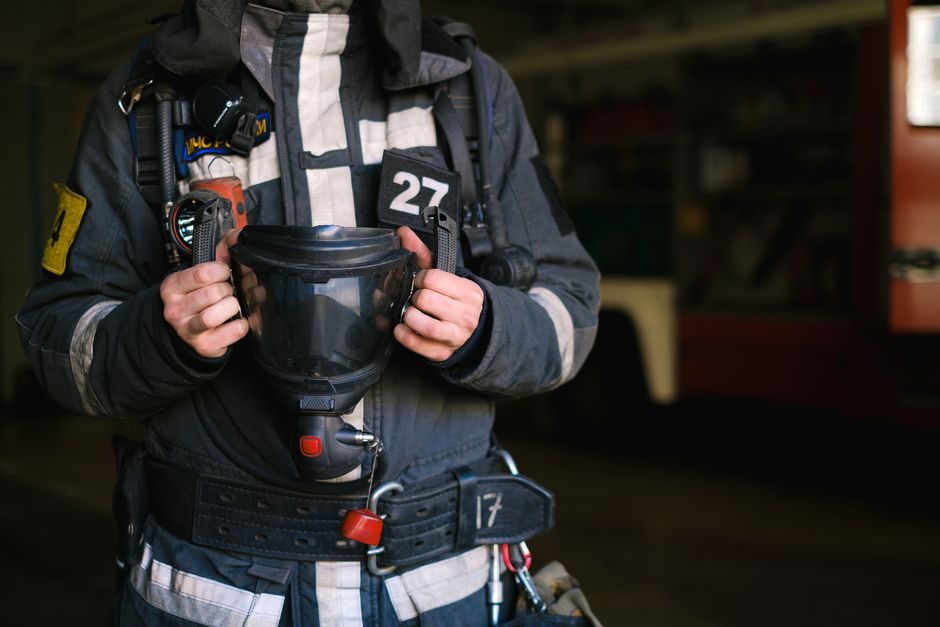
Three sensor families cover virtually every portable gas detector shipped in 2026: catalytic-bead (pellistor) for combustible gas LEL, electrochemical cell for toxic gases and O2, and NDIR (non-dispersive infrared) for CO2 and hydrocarbon-selective combustible readings [S1][S5].
On a typical confined-space entry, a four-gas portable monitor carries one of each plus a photoionization detector (PID) option for VOCs, and the specifier's first job is to map the target gas list to the right cell chemistry before the unit ever powers on [S2][S6].
Step 1 — Classify the Space, Then Pick the Detector
ATEX 2014/34/EU Zone 0/1 hazardous areas require an intrinsically safe (Ex ia IIC T4 Ga typical) portable; Zone 2 mining or general industry often accepts Ex db or Ex e, but a portable that drops into a Zone 1 pit must still carry the Ga marking [S5].
IP rating tracks dust/water: IP65 is the floor for outdoor construction, IP66/67 for wash-down food plants and offshore, and IP68 only for submergence-rated units that several Chinese OEMs now list as a configurable option [S6].
For comparison, the GD200 portable line ships a 0–10,000 ppm CH4 range on a catalytic sensor with an extension probe option, and the WASP-D1 diffusion single-gas unit targets personal CO/H2S/O2 monitoring with USB-rechargeable Li-ion and a color LCD — a useful contrast between pumped and diffusion form factors [S2][S6].
Step 2 — Sensor-Type Decision Map: Pellistor vs EC vs NDIR vs PID
Catalytic-bead (pellistor) sensors read LEL 0–100% on combustible hydrocarbons, respond in 15–30 s, and are poisoned by silicone, lead, and halogens — a hard failure mode in paint booths and some refinery streams [S5].
Electrochemical cells cover CO 0–500/1000 ppm, H2S 0–100 ppm, NH3 0–100 ppm, O2 0–30% vol, with 30 s to 90 s T90 response and a 12–24 month operating life; cross-sensitivity to other reducible gases is the dominant spec error in field retrofits [S1][S6].
NDIR is the only viable chemistry for CO2 (0–5000 ppm to 0–5% vol) and for selective HC combustible work in inert backgrounds where pellistor O2 dependence would zero the reading; the trade-off is unit cost roughly 2–3× a pellistor [S1].
PID with a 10.6 eV lamp covers VOCs 0–1000/2000 ppm at ppb resolution but needs periodic lamp/electrode-stack cleaning — the most maintenance-heavy cell on a four-gas unit [S1][S2].
Step 3 — Pre-Install: Bump Test, Calibration Gas, and Sensor Zero

A bump test feeds a known gas concentration (typically 50% LEL CH4 = 2.5% vol, or 50 ppm H2S, or 100 ppm CO) and confirms the unit alarms within the manufacturer's window — usually 90% of target within 30 s — before every confined-space entry [S1][S3].
Full calibration adjusts span with a certified calibration gas (typically ±2–5% certified accuracy) and re-zeroes on clean air or N2 for the O2 cell; many 2026-era portables auto-zero on power-up and auto-span on cradle contact [S3].
Calibration interval: 30 days for EC toxic sensors, 90 days for pellistor and NDIR, and a documented bump test before each shift is the de facto standard for offshore FPSO and refinery turnaround work [S3].
Step 4 — Mounting, Carry Position, and Sample Draw
Personal monitors clip to the lapel or chest pocket, in the breathing zone within 25 cm of the nose and mouth — a placement rule that is the single most violated spec on a refinery turnaround [S1].
Diffusion units (WASP-D1 type) need calm air movement to function; pumped units (typical 0.3–0.5 L/min draw) need a sample line no longer than 15 m with a hydrophobic filter and water trap on humid entries [S6].
Pre-entry testing demands a sampling tube run from the attendant outside the space to the worker's chest level, with a 5–10 s line-clear lag factored into the alarm timing [S1][S3].
Step 5 — Alarm Setpoints, TWA/STEL, and Latching Logic
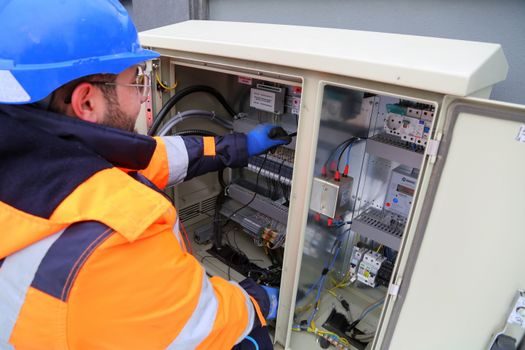
Default low/high alarms on a four-gas monitor: CO 25/100 ppm TWA, H2S 10/15 ppm, O2 19.5/23.5% vol, LEL 10/20% — values that mirror OSHA PEL and most EU OEL frameworks without the spec engineer needing a custom set [S1][S3].
TWA (8 h time-weighted average), STEL (15 min short-term exposure limit), and peak hold should all be configurable; a latching alarm that requires manual reset is mandatory for confined-space use so a recovered worker does not re-enter a re-alarming atmosphere [S3].
For a deeper trade-off between the four-gas portable and a fixed-point network, see the fixed detector install walkthrough — portable complements a fixed network, it does not replace it.
Step 6 — Power, Charging, and Run-Time Discipline
Rechargeable Li-ion (3.7 V nominal, 2000–6000 mAh) now dominates; 8–24 h continuous run is typical, and USB-C charging has replaced proprietary cradles on most 2026 units including the WASP-D1 and GPT100 series [S5][S6].
Spare battery discipline: a hot-swap pack or a second charged unit on the attendant's bench is the only reliable answer for a 12 h shift — a 50% reading at hour 11 is useless [S1].
Data logging onboard stores 100,000+ point logs at 1 s resolution on most professional units, downloaded via USB or Bluetooth to a compliance database for OSHA/EU exposure-record retention [S6].
Step 7 — Failure Modes and What a Spec Sheet Will Not Tell You
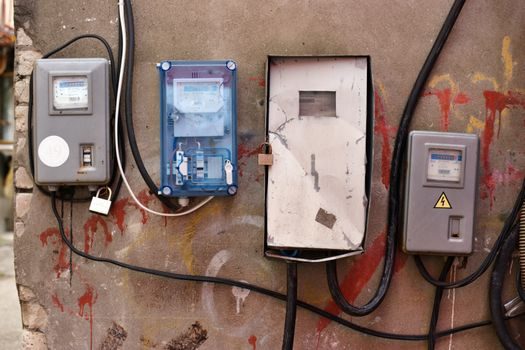
Pellistor poisoning is silent: the sensor reads zero in a poisoned atmosphere. A bump test with methane catches the failure; bump tests with pentane or isobutane mixtures catch only partial poisoning [S3].
EC sensors fail to low: an H2S cell that goes to zero mid-shift is more dangerous than one that alarms high — a 30-day calibration cycle with a documented span check is the only mitigation [S1][S3].
NDIR and PID fail to low on lamp aging; both need an annual factory recertification plus a 90-day bump test, and the spec sheet rarely states the lamp-life hours explicitly [S1].
For a balanced view of where portables win and lose against fixed systems, the gas detector trade-off map lines the same sensor chemistries against cost, coverage, and maintenance burden.
Selection Criteria: Who a Portable Is For — and Who It Is Not
Portable gas detectors fit: confined-space entrants, mobile workers, leak-hunt crews, fugitive-emission surveys, and short-term turnaround hot work where fixed coverage is incomplete [S1][S3].
Portable gas detectors do NOT fit: 24/7 area monitoring in a Zone 1 process unit (use a fixed gas detector with loop-powered 4–20 mA or a combustible gas detector head), large open plant perimeter coverage, or life-safety fire-and-gas systems where SIL 1/2 logic solvers are required [S3].
For a broad detector taxonomy the portable gas detector and gas detector encyclopedia pages give the cross-reference.
Sourcing and Standards Map
Approval stack to demand: ATEX 2014/34/EU (EU), IECEx (international), UL 913 (US intrinsic safety), and CSA C22.2 for the North American portable market [S1][S5].
Functional standards: IEC 60079-29-1 covers combustible gas detector performance, IEC 60079-29-2 covers selection, installation, use, and maintenance of detectors for flammable gases and oxygen — the install guide to anchor the written procedure against [S1][S3].
Toxic-gas performance lives in IEC 60079-29-3, IEC 60079-29-4, and the working-group documents for H2S/CO/NO2; an installer who names these on the job travelers is the one an inspector accepts [S1].
Trackable signals to watch: (a) consolidation of USB-C charging across all major OEM portables, (b) tighter 30-day bump-test windows for EC toxic sensors on offshore FPSO work, and (c) the slow migration from pellistor to NDIR for methane/LPG where silicone-poisoning risk exists in paint and lube plants [S1][S2][S3].