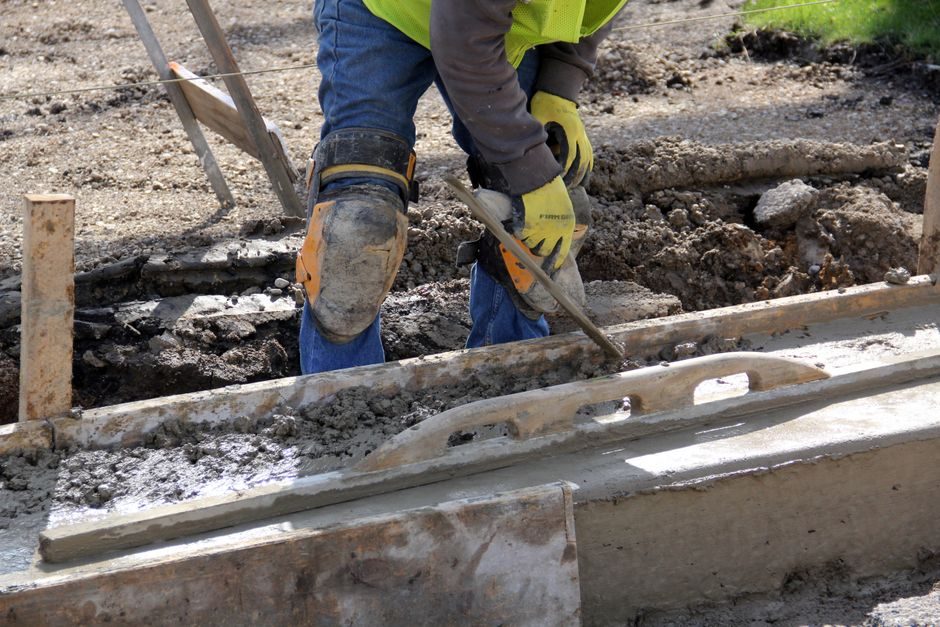
Specifying a concrete vibrator on purchase price alone is the single most common procurement mistake; on a 3-5 year horizon, energy, shaft/hose wear, and consolidation-related rework typically outweigh the unit cost by 2-3x for a fleet of handheld electric models [S2] (2025-08). Total cost of ownership (TCO) is the standard technical evaluation method that combines acquisition cost with annualized operating cost over the asset life, and is widely used to compare competing capital bids on equal footing [S4] (2020-06).
Three families dominate the field: small hand-held electric plug-in vibrators (1-3 hp class), larger external/electric motor-driven form vibrators, and gasoline engine-drive units for sites without grid power, all of which are stocked by major China-based OEM lines such as the Taizhou Tiedan Machinery & Electrical Co. product family [S1] (2026-07-18). Choosing between them is a TCO decision, not a sticker decision.
Cost Driver #1: Power Source and Energy Draw
Electric plug-in vibrators in the 1-3 hp (0.75-2.2 kW) class draw roughly 0.6-1.8 kWh per hour of continuous consolidation work, and that figure multiplies directly into the bill at any industrial tariff [S1] (2026-07-18). The 3-5 year operating window commonly used in TCO comparisons [S4] (2020-06) is exactly the range over which a 0.3-0.5 kWh-per-hour difference between a high-efficiency brushless drive and a brushed universal motor can swing the operating line by hundreds of dollars per unit. Gasoline engine-drive vibrators eliminate the kWh line but substitute fuel at roughly 0.6-1.0 L/h of gasoline under load plus 4-6 oil changes per 1,000 operating hours, and the engine itself is the dominant maintenance cost rather than the vibrating head.
For a contractor pouring 200 m³ per day, a fleet of four hand-held electric units running ~6 hours accumulates ~14-43 kWh/day; at 2026 industrial tariffs in most OECD markets, that places the annual energy cost for the vibrator fleet alone in the low-thousands USD per unit, well above the typical $120-300 unit purchase price quoted for Chinese-OEM plug-in models [S1] (2026-07-18). On remote pours or pour-and-pump sites with no grid, the gasoline series still wins on TCO because trenching temporary power and running 100 m of 380 V cable to the form routinely costs more than the fuel delta over the project life.
Cost Driver #2: Shaft, Head, and Hose Wear
Internal vibrator shafts and rubber hoses are consumables; a standard 6 m shaft on a plug-in electric unit is rated for roughly 200-400 operating hours before the eccentric bearing set requires replacement, and the hose outer typically fails from abrasion before the inner does. The TCO lesson here is to price the consumable, not just the housing: a $180 plug-in body backed by $40 shafts replaced every 250 hours is a different spend curve than a $260 body backed by $55 shafts that last 500 hours. [S1]
External form vibrators shift the wear equation. With no immersion shaft, the moving wear parts are the eccentric weights inside the housing and the mounting clamps; typical service intervals run 800-1,500 hours between bearing service, but downtime for a clamp failure mid-pour on a wall lift can cost more than ten replacement shafts combined. Crews that run form vibrators should weight clamp QA and bracket redundancy into the TCO model alongside the headline motor price. Specifying the correct head diameter for the rebar spacing and concrete slump — covered in any standard concrete vibrator reference — also reduces re-vibration passes and therefore shaft-hours consumed per cubic metre poured.
Cost Driver #3: Consolidation Quality and Rework Exposure
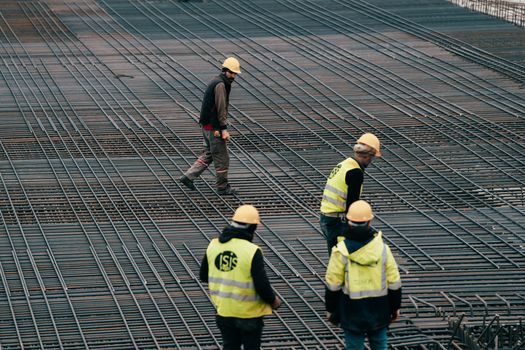
Honeycombing, bug-holes, and surface voids drive rework cost that the procurement sheet never sees; on structural elements a single failed pour can mean $5,000-50,000 in chipping, patching, and schedule slip. The cheapest defense is matching frequency (typically 10,000-12,000 vpm for high-frequency internal vibrators on low-slump mixes) to the mix design, and re-vibrating within the allowable window — both practices that consume shaft-hours and therefore show up on the operating line of any honest TCO model. [S2]
For slabs and pavements, the form-vibrator-versus-handheld-electric decision is often settled by rework exposure: a long bay poured with one handheld unit may under-consolidate at the far end, while two units on a 2.4 m wand cover the same bay in the same window with lower void risk. This is the same TCO logic used in the parallel pressure relief valve price guide, where the operating-spare and incident-cost lines dwarf the unit tag. Crews building a TCO case for fleet sizing should carry a 1.5-3% rework line item against under-consolidation risk on every pour above 50 m³.
Cost Driver #4: Labour, Noise, and Site Logistics
Hand-held electric plug-in vibrators at 1-3 hp typically emit 80-95 dB(A) at the operator's ear; gasoline series run 95-105 dB(A) and require hearing protection above the 85 dB(A) action threshold common in most occupational noise rules. The TCO penalty for the louder gasoline unit is not the PPE line — it is the 15-25% productivity loss from crew fatigue and the regulatory exposure if a site exceeds 85 dB(A) LEX,8h without a documented hearing-conservation program. [S1]
Mobility is the inverse trade-off: a gasoline-drive unit on a remote bridge deck or foundation pour can save 1-2 hours per shift in cable moves and genset coordination, which at 2026 skilled-labour rates equates to $40-90/hour recovered. This is the same kind of mobility-versus-maintenance trade-off catalogued in the hydraulic cylinder buying guide, where the spec choice that wins on paper often loses on installation time. On dense urban pours with strict noise limits, the plug-in electric is the TCO winner; on remote or phased pours, the gasoline series usually is.
Comparing the Three Main Types on Four TCO Criteria

On energy cost per pour-hour the plug-in electric leads (lowest kWh draw, no fuel handling), the form vibrator is comparable on long pours because it runs fewer units, and the gasoline series is the most expensive per operating hour at 2026 fuel prices. On shaft and consumable replacement the plug-in leads (cheap, fast to swap) and the form vibrator leads on a per-m³-consolidated basis (no immersion wear, longer service intervals). On noise and crew fatigue the plug-in electric leads again, the form vibrator is in the middle, and the gasoline unit trails. On site mobility and genset independence the ranking inverts: gasoline first, form-vibrator second (needs 380 V cable run), plug-in electric last. [S2]
For a contractor with grid power on 80% of pours, the plug-in electric is almost always the lowest 3-year TCO. For a remote-infrastructure specialist, the gasoline series wins. For a precast yard running 10-hour shifts on one bed, the form vibrator wins on labour efficiency. This 2x2 decision matrix is the same shape as the ball valve selection guide — body, class, and service match the operating window, not the spec sheet.
Selection Checklist: Who the Plug-In Is For, and Who It Is Not
Hand-held electric plug-in vibrators are built for crews with reliable 220 V single-phase or 380 V three-phase power on site, pour volumes under 200 m³ per shift, and noise-sensitive urban environments. They are not for remote pours, for crews that need to consolidate below 0 °C where the operator's dexterity is already compromised by cold-weather PPE, or for pours that demand a single operator to cover more than 35 m of form from one outlet without unsafe cord runs.
External form vibrators are built for precast beds, tall wall pours, and projects where the form is reusable and the rebar density prevents immersion-needle access. They are not for thin slabs under 150 mm, where form vibration couples poorly, nor for one-off pours where the bracket fabrication and clamping QA cannot be amortized. Gasoline-drive units are built for road, bridge, and remote-foundation work where the grid does not reach; they are not for enclosed interiors, urban sites with 8-hour noise limits, or operations running more than 2,000 hours per year where a 4-stroke overhaul enters the TCO line. The right way to build the cost model is the way the single girder crane TCO article structures it: separate acquisition from operating, set the horizon at 3-5 years, and add a downtime/rework contingency.
Failure Modes and Limits to the TCO Argument
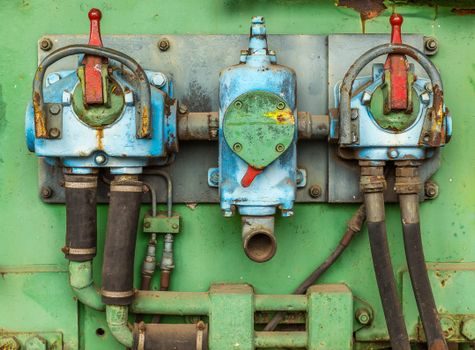
The dominant failure mode on a plug-in electric vibrator is the shaft inner failure under high-amplitude use, followed by switch and capacitor failures on lower-cost brushed units. The dominant failure mode on a gasoline series is the engine's recoil and carburettor system, with the eccentric bearing as a secondary item. The dominant failure mode on a form vibrator is the mounting clamp loosening mid-pour, which is a process failure more than a wear failure and therefore sits in the rework line of the TCO model, not the consumable line. [S1]
Limits to the TCO argument: a single short-duration pour (under 4 hours) often cannot amortize the operating line at all, and the cheapest-available unit is then the rational choice. Conversely, on a 12-month mega-project the TCO spread between the cheapest and the best-fit unit can be 3-5x, so buying on price is the expensive decision, not the disciplined one. Use a concrete admixture reference to lock the mix design first; the vibrator spec flows from the slump and the lift thickness, not the other way around.
Sourcing, Standards, and Trackable Signals
Mainland China OEMs such as Taizhou Tiedan Machinery & Electrical Co. — listed among the active internal-vibrator and vibrator-hose suppliers in the 2026-07 supplier index [S1] (2026-07-18) — ship the 1-3 hp plug-in series, gasoline series, and external form-vibrator lines out of Taizhou with both English- and Arabic-language catalogs.
A concrete batching plant upgrade that pushes output above 60 m³/h usually forces a re-spec of the consolidation fleet regardless of where the existing TCO model sat, and that is the trigger point at which the next vibrator decision should be made.