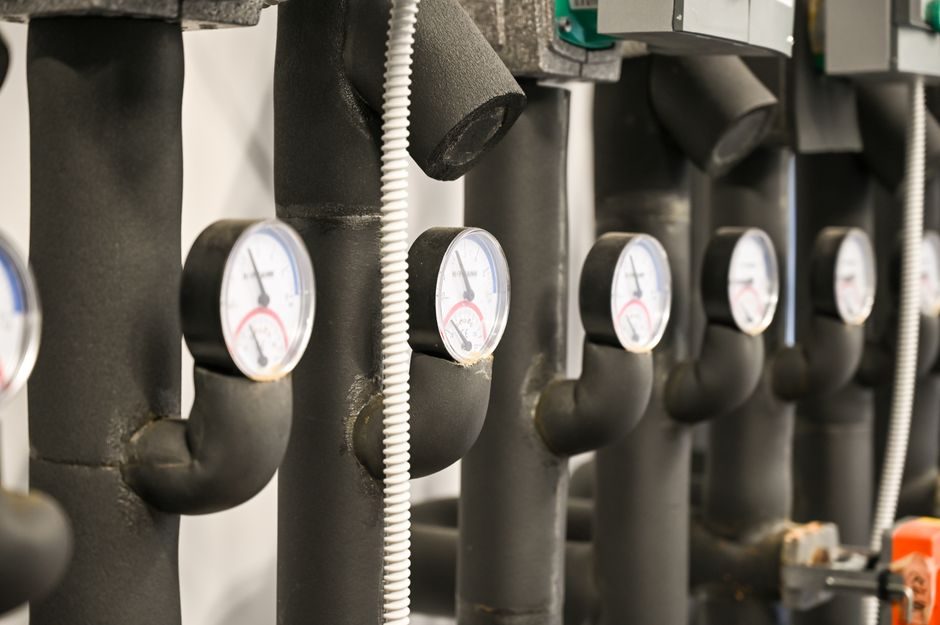
A ball valve is a quarter-turn shutoff device whose chrome-plated spherical disc with a through-bore either aligns with the pipe (open) or sits perpendicular (closed), giving bubble-tight isolation in a 90° turn with visible handle position feedback [S1].
Industrial ball valves routinely cover pressures up to 1000 bar and temperatures up to 200 °C in sizes from 0.5 cm to 30 cm, and they sit in the same family as butterfly and plug valves [S1]. The selection job is not whether to use one — it is which of the five body styles (single body, three-piece body, split body, top entry, fully welded) and which material class matches the line fluid, pressure class, and maintenance philosophy [S1][S3].
Define the Duty Before You Touch a Catalog
Duty definition is the first gate: ball valves deliver reliable shutoff after years of disuse, but they are not throttling valves, and they will not survive sustained partial-port operation on slurries or fibrous media without hard-facing or a metal-seated trim [S1].
For on/off isolation in clean or slightly dirty service, specify full-port bore to match pipe ID and minimize pressure loss; for instrumentation and analyser sample lines, multi-port 3- and 5-way designs such as the Bray Series 3HP — built to ASME B16.34 with NACE-compliant 316 stainless steel balls — switch multiple streams in a single compact body [S4]. The two questions to lock first are: (1) full-bore or reduced-bore, and (2) does the line need to be cleaned in place without removal — that decision alone picks the body style.
Body Style: Floating vs Trunnion vs Top Entry
Body style is a pressure-driven decision: floating ball valves (the ball is held only by the seat seals, line pressure pushes it downstream) are the economical default up to ASME Class 600 in small to medium sizes [S2][S3].
Above Class 600, or in sizes above ~6 inch, switch to a trunnion-mounted design where the ball is fixed on upper and lower trunnions and seats are spring-loaded — this drops operating torque and lets seat stress stay independent of line pressure [S2][S3]. Top-entry and fully welded bodies are picked for buried service, district heating, or lines that cannot be cut out for maintenance: a 26 inch Class 900 trunnion ball valve per API 6D face-to-face is a typical upper-end trunnion size [S2].
Three-piece bodies remain the workhorse for process plants that need to keep spares on the shelf: the center section drops out without breaking the end flanges, so a seat or seal change is a 20-minute bench job. Electric-actuated packages on three-piece bodies are also the cleanest way to standardize spares across multiple isolation points in a skid.
Material Selection: Carbon Steel, Stainless, and Low-Temp
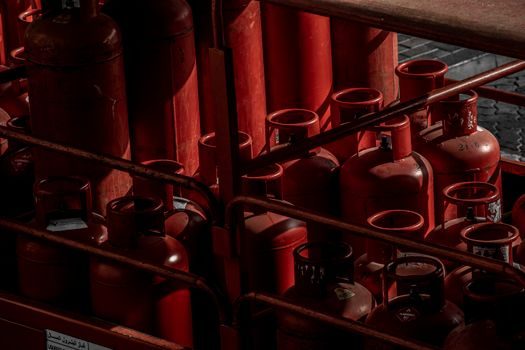
Material is the corrosion-driven gate: ASTM A216 WCB cast carbon steel is the default for hydrocarbons, steam, and water up to ~425 °C where the line is non-corrosive [S3].
For corrosive chemicals, pharma, or offshore, move to 316/316L stainless (F316L is the forged equivalent for higher-pressure ratings) or duplex/super-duplex for chloride-containing service [S3][S4]. Low-temperature duties below -29 °C require impact-tested grades: ASTM A352 LCC cast carbon or ASTM A350 LF2 forged carbon, both used as the body material in cryogenic ball valves [S3]. Aluminum bronze is the niche pick for seawater ball valves where galling of stainless against stainless is a concern [S3].
A useful shortlist logic: WCB for hydrocarbons and general service, 316L for chemicals and sanitary, LCC/LF2 for cryogenic, duplex for chloride hot spots, and aluminum bronze for海水 service. EN ISO 5211 (part-turn actuator mounting) interfaces are common across all of these, so the actuator bracket decision is decoupled from the body material choice [S3].
Pressure Class, Flange Dimensions, and Code Match
Pressure class is governed by ASME B16.34 (valve design) and the pipeline code (ASME B31.3 for process, B31.4 for hydrotransport, B31.8 for gas): typical industrial builds run Class 150, 300, 600, 900, 1500, and 2500, with face-to-face and bore dimensions per API 6D for pipeline valves and per ASME B16.10 for flanged general-service valves [S2][S3].
End connection selection follows class: ASME B16.5 flanges cover Class 150–1500 in NPS ½–24, ASME B16.47 covers Class 150–1500 in NPS 26–60, and Class 2500 uses B16.5 with stepped bolt circles [S2]. Butt-weld ends are picked for higher integrity and to eliminate flange leakage paths in hydrocarbon service; threaded and socket-weld ends stay on small-bore instrument and utility lines [S2][S4].
Testing follows API 598 (shell and seat tests for petroleum valves) or ISO 5208 for non-API valves — both define hydrostatic shell test pressure and the low-pressure air seat test for bubble-tightness verification [S4]. For sour service (H₂S), the metallurgical requirement is NACE MR0175/ISO 15156 compliance on wetted parts; for sanitary (food, beverage, pharma), 3-piece SS304/316L with non-retention cavity and sanitary Tri-Clamp ends is the standard build [S4][S7].
End-Use Fit: When a Ball Valve Is the Wrong Pick
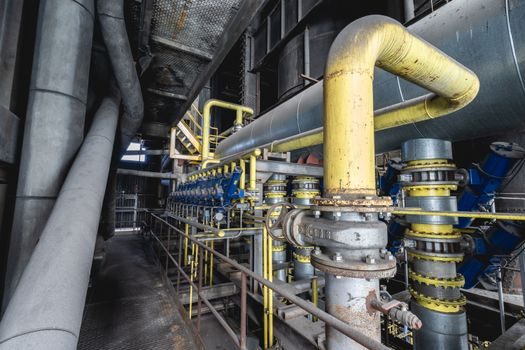
Ball valves are the wrong pick for sustained throttling duty, for slurry or fiber service, and for lines that require linear flow-characteristic control — all three are better served by globe or control valves, not a ball valve [S1].
They are also the wrong pick where the line fluid attacks the elastomeric seat: high-temperature steam above the seat rating, supercritical CO₂, or strong oxidizers will move you to a metal-seated ball valve, which costs more and has higher torque but tolerates conditions where soft seats fail [S3]. For analyser and sampling panels, the multi-port 3HP pattern (NACE, ISO 5211, API 598) is the fit; for clean water in agriculture and OEM skid builds, a single-union threaded 316 ball valve at sub-$5 piece-price tier is the right answer, not a flanged trunnion [S4][S6].
Actuation and Sourcing Considerations
Actuation selection sits on top of the body and material choice: quarter-turn ball valves pair with electric, pneumatic, or manual gear operators per EN ISO 5211 (part-turn interface) and EN ISO 5210 (multi-turn), and the same body often ships either bare or as an actuated package from the factory [S3].
For actuated packages, electric ball valve assemblies with ISO 5211 direct-mount pads cut bracket cost and side-load error, and they integrate cleanly with the I/P or electro-pneumatic positioner selection discussed in smart valve positioner selection 2026 for modulating service. Sourcing-wise, Indian manufacturers (Mumbai/Ahmedabad) and Chinese suppliers (Lishui, Wenzhou) both publish API 6D Class 150–2500 catalogs; sanitary 3-piece SS304/316L ball valves in DN15–DN100 land in a US$50–60 per-piece band on platform listings as of mid-2026 [S1][S7]. Sanitary pneumatic and flanged sanitary ball valves on Made-in-China.com show raw-material plus automation gaps that buyers should price separately rather than as a single line item [S7].
Shortlist logic for the spec engineer: pick body style by pressure and maintenance philosophy, pick material by fluid compatibility and temperature, pick class and end connection by the piping code, then drop in the EN ISO 5211 interface and the seat material. Track the 2026 update of the I/P vs electro-pneumatic positioner trade-off (smart positioner selection) if modulating control is on the scope — that single decision moves the rest of the actuator chain.
Spec-level background on the components involved: linear guide.