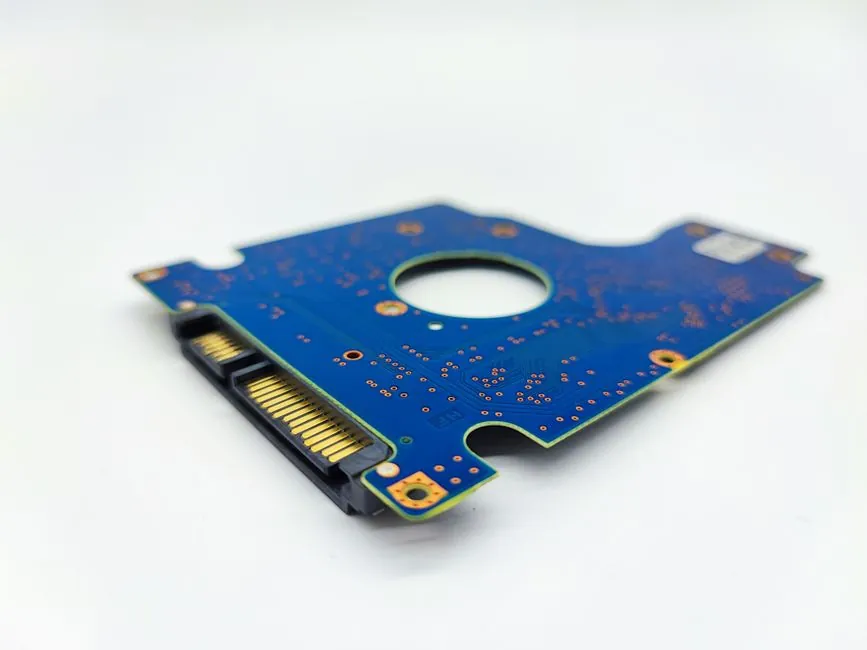
Carbon-black filled POM-C (copolymer acetal) is the workhorse ESD-dissipative engineering plastic for electronics handling, semiconductor fixturing, and ATEX-zone mechanical parts, with surface resistivity commonly engineered into the 10^4-10^11 ohm/sq dissipative band by tuning filler loading above the percolation threshold [S2][S3].
Ensinger's TECAFORM AH ELS black datasheet, the clearest public reference for a carbon-black filled POM-C, lists long-term service temperature of 100°C, good chemical resistance, and high strength and hardness as the headline mechanical envelope; conductivity is achieved with carbon-black filler rather than carbon fibre, keeping the base polymer properties largely intact [S2].
Why POM-C, and Why Carbon Black Specifically
Standard POM-C is an electrical insulator; adding carbon black creates a percolating conductive network that turns the part into a static-dissipative or conductive body [S3]. The percolation threshold is the critical point: enough carbon black must be present to form continuous pathways, while excessive loading embrittles the part and degrades mould flow [S3]. For ESD (electrostatic discharge) parts, the design intent is dissipation, not conduction: surface resistivity sits in the dissipative 10^4-10^11 ohm/sq window so a static charge bleeds off before it can arc into an IC [S3]. Carbon black is the traditional filler for this job because it is cheaper than metal powders, does not corrode, and survives the 200°C+ melt processing of acetal [S4]. Ketjenblack-class superconductive carbon black, with its high surface area and structure, reaches the dissipative range at lower loadings than standard grades, which is why it is the preferred carbon black for POM-C and other engineering plastics that cannot tolerate high filler fractions [S7]. The base POM homopolymer/copolymer distinction matters here too: copolymer grades (POM-C) are specified over homopolymer (POM-H) where thermal-oxidative stability and formaldehyde-leach resistance matter, which is most ESD fixturing and semiconductor applications.
Performance Range of Carbon-Black Filled POM-C
Public OEM data for TECAFORM AH ELS black confirms the envelope: long-term service temperature 100°C, good chemical resistance, high strength and hardness, with carbon black as the conductive filler rather than carbon fibre, stainless fibre, or metal powder [S2]. Generic electrically active POM-C grades with carbon black filler are positioned for general electronics, ESD protection, and semiconductor processing use, with the same dissipative conductivity window [S8]. Cabot's VULCAN XCmax extra-conductive carbon black is engineered to span the dissipative-to-highly-conductive range of the ESD spectrum without sacrificing the base polymer's mechanical behaviour, a key requirement when the host resin is as process-sensitive as POM [S1]. Cabot also offers low-moisture-absorption conductive carbon black variants, important because ESD applications such as IC and PCB packaging are sensitive to moisture pick-up in the compound, and excess moisture causes blistering, voids, and outgassing in moulded parts [S1].
Comparison: Carbon Black vs Other Conductive Fillers in POM

Four filler families compete for the dissipative window in engineering plastics: carbon black, carbon fibre, stainless-steel fibre, and graphite. Carbon black is the cost-efficient baseline and the traditional choice for ESD parts in molding compounds, but it must be loaded to the percolation threshold before conductivity appears, and over-loading embrittles the part [S3][S4][S9]. Ketjenblack superconductive carbon black reaches the same surface-resistivity targets at lower loadings, preserving mechanical properties, and is widely cited as the highest-conductivity carbon-black additive per unit mass [S7]. Carbon fibre and stainless-steel fibre deliver higher absolute conductivity and better impact retention, but raise part cost, cause surface-finish issues, and can scratch mating components, so they are reserved for specialty applications. Graphite is cheaper than carbon black in some regions but requires higher loadings for the same resistivity and degrades mould flow more sharply [S5]. For a POM-C grade the practical decision almost always lands on Ketjenblack-class carbon black for premium ESD parts and standard conductive carbon black for cost-sensitive fixturing.
Who Specifies Conductive POM-C, and Where It Goes
End-use areas divide into three groups. First, electronics manufacturing and SMT (surface mount technology) automation: PCB trays, IC handling trays, and ESD-safe enclosures, where the dissipative 10^4-10^11 ohm/sq window prevents static-discharge damage to bare silicon during transport and pick-and-place [S3]. Second, semiconductor processing equipment: wafer-handling pins, chuck components, and wet-bench fixtures, where the combination of dimensional stability, low ionic contamination, and ESD control is non-negotiable [S2][S8]. Third, ATEX and hazardous-area mechanical parts: pump housings, gear wheels, and conveyor components where a non-sparking, statically dissipative plastic is required to prevent ignition of solvent or fuel vapours [S1]. Cabot's conductive carbon blacks are also used in automotive fuel systems and electronic/electrical packaging, both of which are mature application families for the same dissipative mechanism [S1].
Processing Pitfalls and Failure Modes

Carbon-black filled POM-C tolerates injection moulding but the filler window is narrow. Below the percolation threshold the part is still an insulator and fails ESD qualification; above it the part becomes brittle, shows surface defects, and loses mould-flow length, which causes short shots on thin-wall or long-flow features [S3]. Optimising the recipe means selecting a high-structure conductive carbon black at the smallest practical particle size and pairing it with appropriate dispersing aids, because over-sized particles fall out of the polymer matrix and produce sloughing, a failure mode documented in conductive ABS and the same physics applies to POM [S6]. Cabot's low-moisture-absorption carbon black products specifically target moulded ESD packaging where compound moisture causes blistering and surface marking during the injection-moulding steam-sterilisation cycle used in semiconductor fabs [S1]. The base mechanical trade-off also matters: high carbon-black loading cuts elongation at break, so snap-fit features, living hinges, and any geometry that depends on ductile deformation should be avoided on conductive grades [S3].
Standards, Sourcing, and How to Spec It
ESD classification of plastic parts follows the ANSI/ESD S541 and the surface-resistivity banding (conductive below 10^5 ohm/sq, dissipative 10^5-10^11 ohm/sq, insulative above 10^11 ohm/sq) used by every major OEM, even where the OEM does not cite the standard number on the data sheet. For process engineers, the actionable spec on a conductive POM-C drawing should include: surface resistivity range (typically 10^4-10^9 ohm/sq for dissipative), volume resistivity, long-term service temperature (100°C for TECAFORM AH ELS black-class grades), base resin (POM-C, not POM-H, where formaldehyde-leach resistance matters), filler type (carbon black, not carbon fibre unless impact is critical), and a moisture-content limit on incoming compound [S2]. Cabot's VULCAN XCmax extra-conductive carbon blacks are the most cited public-source filler family for engineering plastics spanning dissipative to highly conductive, with Ketjenblack the standard premium option for low-loading conductivity [S1][S7].
Decision Map: When Carbon-Black POM-C Is the Right Answer
Specify carbon-black filled POM-C when the part needs ESD dissipation (10^4-10^11 ohm/sq), mechanical performance close to base POM-C, and chemical resistance to fuels, solvents, and weak acids, all in a moulded or machined shape [S2]. Do not specify it for applications that need: high impact (use carbon-fibre reinforced grades), continuous service above 100°C (move to PEEK or PPS), structural load-bearing parts (use unfilled or glass-filled POM-C), or precision optical or ultra-low-outgassing applications (use virgin or specially compounded grades). Within the carbon-black POM-C family, choose standard conductive carbon black for cost-sensitive ESD fixturing, and Ketjenblack-class superconductive carbon black when the part has thin walls, tight conductivity targets, or limited filler-loading tolerance [S7]. For parts that will see the same moisture-sensitive moulding environment as PCB trays, also specify Cabot-class low-moisture-absorption carbon black to avoid steam-sterilisation blistering [S1].
The next trackable signal is supplier-side disclosure of volume-resistivity data (not just surface resistivity) for carbon-black filled POM-C, because several public datasheets still list only the surface number. Watch for revisions to the dissipative-window banding if the next ANSI/ESD S541 update is published before September 2027, since most conductive-POM datasheets reference it implicitly.
Spec-level background on the components involved: carbon fiber, and carbon steel.
This topic is covered further in ASTM C578 Type IV vs Type VII XPS: ICC-ES Compliance and Spec Selection.