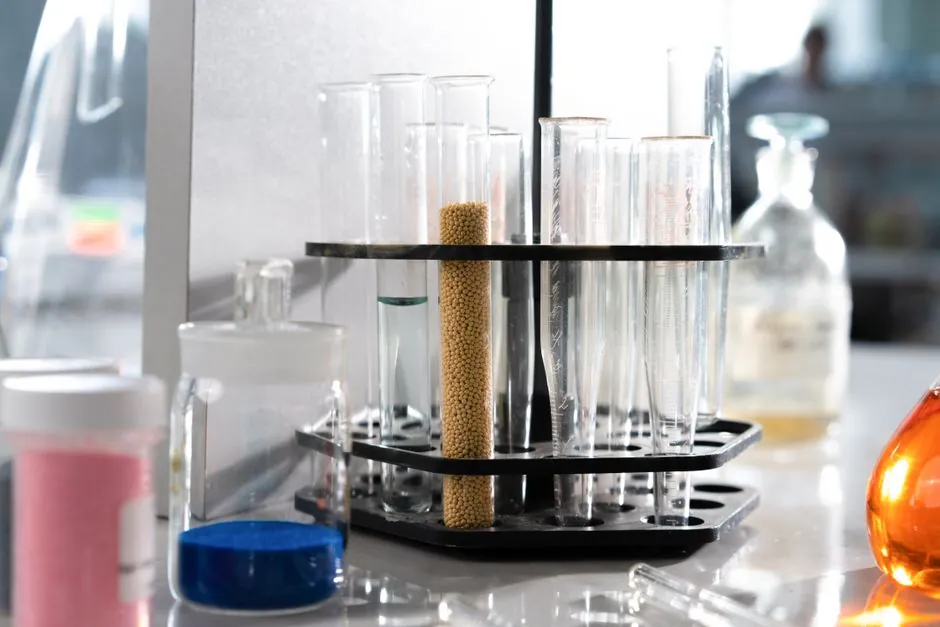
The split between a reagent as a raw material and a formulated laboratory chemical is a grade decision, not a brand decision: raw-material streams run at technical or industrial purity with no per-batch assay, while laboratory chemicals carry a published purity spec, an impurity panel, and a certificate of analysis tied to ACS, USP, FCC, or SEMI compendia [S1][S3][S5].
Across U.S. and European buying guides published in 2025 and 2026, seven grades dominate procurement language: ACS, Reagent, Laboratory, Technical, Pharmaceutical, Food, and USP/NF [S3][S5]. Raw-material sourcing is consistently placed in the Technical or Laboratory-grade band, not in the ACS or USP bands reserved for finished analytical work [S2][S6].
Grade Definitions and the Purity Threshold That Separates Them
ACS grade meets the American Chemical Society Committee on Analytical Reagents monograph: assay is typically ≥95% for general reagents, with named maximum limits on individual trace impurities published in the ACS Reagent Chemicals book [S1][S3]. Reagent grade is generally treated as equivalent to ACS, with ≥95% purity, and is accepted for food, drug, or medicinal use and for most laboratory and analytical applications [S1].
Laboratory Reagent Grade, by contrast, sits below ACS: it maintains sufficient purity for analytical procedures but is not as stringent as ACS or HPLC grade, and carries no ACS monograph compliance [S9]. Technical grade is intended for industrial and manufacturing use, not as a reference or research material, and the same molecule is often sold at several purity tiers by the same supplier [S3][S6].
Raw-Material Procurement: What Changes When You Buy as a Feedstock
Procurement guides from January 2026 frame chemical raw materials as inputs to a downstream process, not as finished analytical products; the buying decision turns on supplier audits, COA review, SDS completeness, and lot-to-lot consistency rather than monograph compliance [S2]. Technical-grade material is explicitly positioned for industrial applications, general use, and as raw material in the production of other products rather than as a research or reference material [S6].
For production, this means assay, identity confirmation, residual-solvent limits, trace-metal panel, water content, and batch-specific documentation may all be relaxed or omitted compared to ACS [S3].
Formulated Laboratory Chemicals: Documentation and Use-Case Fit
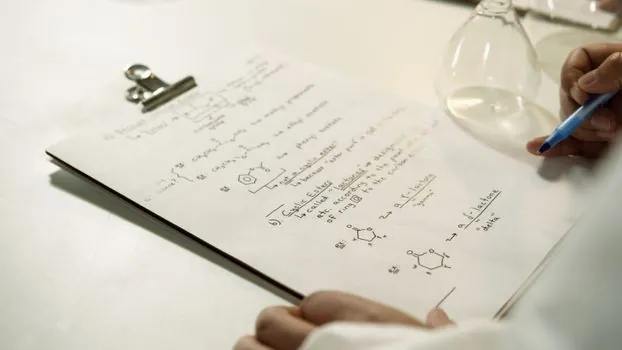
A formulated laboratory chemical is delivered as a graded, tested, documented SKU: purity claim, impurity limits, CoA per lot, and a defined use case such as analytical, cell-culture, HPLC, or pharmaceutical input [S3][S5]. Organizations setting the rules are ACS, USP, NF (jointly as USP-NF), FCC, ASTM International, and SEMI, each owning a different domain: ACS for analytical reagents, USP/NF for pharmaceuticals, FCC for food ingredients, SEMI for electronics [S5].
Cell-culture grade is the clearest example of a formulated laboratory chemical: sterile, mycoplasma-free, endotoxin-tested, often animal-free, and built on USP/ACS platforms, with products like Water for Injection (WFI), DPBS, and DMSO routinely specified to USP/ACS [S5]. The practical use-case rule is that a highly sensitive assay or analytical method needs a different grade than a basic cleaning, processing, or teaching application [S3].
Decision Matrix: When to Buy Raw Material vs a Formulated Lab Chemical
Use raw material (technical or industrial grade) when the chemical is consumed as a process input: synthesis, formulation, cleaning, pH adjustment, water treatment, or as a precursor in a multi-step route where downstream purification removes trace impurities [S2][S6]. Use a formulated laboratory chemical (ACS, Reagent, HPLC, USP, cell-culture) when the material is measured, dosed, or directly contacted with a regulated system: analytical standards, HPLC mobile phase, cell-culture media, pharmaceutical excipients, or any test where impurities can distort results [S3][S4][S5].
For teaching, formulation testing, or non-critical industrial applications, reagent-grade chemicals typically suffice; lab-grade materials serve general laboratory tasks such as rinsing, dissolving, or production feedstock where higher purity is not required [S4][S7]. A practical comparison: ACS sets the highest assay and impurity discipline and is the default for trace analysis; Reagent tracks ACS at ≥95% and is acceptable for food, drug, or medicinal use [S1]; Laboratory grade covers routine wet-lab work at lower cost; Technical grade is the raw-material default; USP/NF and FCC are mandatory for pharmaceutical and food applications respectively; SEMI rules for semiconductor wet-etch and cleaning chemistries [S3][S5].
Limits, Failure Modes, and Common Selection Mistakes
Selecting technical grade for a trace assay is the most common failure mode: trace-metal or residual-solvent contamination in a non-purified feedstock can shift baselines in HPLC, ICP, and qPCR work, invalidating runs and consuming analyst time on root cause [S3][S9]. Buying ACS grade into a production line is the symmetric waste: the per-kilogram premium compounds at scale and offers no process benefit when downstream steps already remove impurities [S2][S6].
Misreading labels is the second failure mode, since "reagent grade" and "laboratory grade" are routinely used interchangeably by generalist buyers, even though only Reagent tracks ACS at ≥95% while Laboratory sits below that benchmark [S1][S9]. Documentation gaps, missing lot CoA, and absent impurity panels, are the third failure mode, and they are more common in raw-material sourcing than in catalog lab chemicals [S2][S5].
Sourcing Standards and Reference Material
The controlling standards bodies for this decision are ACS (analytical reagent monographs, Reagent Chemicals book), USP and NF (USP-NF joint compendium for pharmaceutical input and excipients), FCC (food ingredients, now managed under USP), ASTM International (industrial and testing specifications), and SEMI (electronics wet-chem purity tiers) [S5]. Raw-material buyers rely on supplier-side documentation, SDS, COA, and audit, rather than these compendia, which is why technical-grade acceptance is contractually negotiated per lot [S2][S5].
For broader context on how a feedstock decision like this fits into a spec-driven procurement workflow, the comparison approach in AOC vs DAC in 2026 AI Clusters: Lead Time, Reach, and the Cabling Decision applies the same criteria-based trade-off logic, and the material-grading discipline echoes the A706 vs A615 Rebar: Specifying Seismic-Grade Welded Reinforcement decision pattern, where a code-stamped grade is mandatory for the critical path and a cheaper grade is acceptable only off the critical path. For background on the underlying purity terminology that defines the chemical reagent and chemical material categories, those entries lay out the assay, impurity, and documentation anchors used in the matrix above; the chemical anchor reference gives the procurement-side vocabulary for raw-material qualification.
Trackable signals to watch next: any 2026-2027 update to the ACS Reagent Chemicals monograph list, which would shift which molecules are available at guaranteed ≥95% assay, and the SEMI C78/C79 series revisions for ultra-trace wet-etch chemistries, since semiconductor purity tiers are the most active grade boundary in the U.S. market.