A coordinate measuring machine is a 3-axis (or multi-axis) metrology platform that probes a part on X/Y/Z slides and resolves geometry against a digital CAD model; in 2026 the buying decision is no longer "bridge vs gantry" but which of four engineering gates dominates the application [S2][S9].
Selection work concentrates on part envelope, permissible measurement uncertainty (MPE/E), probe strategy (tactile vs optical vs hybrid) and the operating environment (lab, shop floor, near-line), with horizontal-arm and gantry structures reserved for large or long parts and optical VMMs reserved for fragile, small or high-throughput features [S1][S4][S7].
Gate 1 — Part Envelope and Structural Class
The first hard spec is envelope, not accuracy: bridge CMMs cover the bulk of mid-size prismatic work, gantry and extended-stroke structures handle large sheet-metal and body-in-white parts, and horizontal-arm manual stages target large yet low-throughput jigs [S1][S4]. For shops that only occasionally measure a long arm or turbine blade, a manually-controlled horizontal-arm CMM is sold as a low-cost alternative to a full gantry [S1].
Economy manual CMMs in the Basic / Manual series are pitched as a pure manual gauge that can be field-upgraded later, which is the typical entry point for tier-2 machining shops that need ISO 9001 traceability without committing to a CNC machine [S8]. The opposite end — six-axis pose-measurement machines — exists for very large or multi-orientation workpieces where a 3-axis bridge cannot physically reach the datum frame [S5].
Gate 2 — Accuracy Budget (ISO 10360) vs Probe Type
Once the envelope is fixed, the second gate is the MPE-E / MPE-P budget defined in ISO 10360, which must be matched to the part tolerance, not to the marketing brochure of the OEM; engineering practice in 2026 is to specify ISO 10360-2 length-measurement error and ISO 10360-5 probe error separately so a tactile versus optical swap is auditable [S2]. Optical VMMs from ZEISS run non-contact multi-lens camera systems with variable illumination and accept tactile probes as an option, giving a single machine the ability to handle both soft-feature and hard-datum work [S7].
The decision between tactile scanning, optical, and hybrid probes is governed by surface finish, feature accessibility and required throughput: optical avoids stylus-induced deflection on thin-wall or soft parts, while tactile scanning remains the reference for tight datum and hole patterns where form matters more than speed [S7][S9]. When a tactile-optical hybrid is specified, probe-changing strategy (fixed vs servo vs automatic rack) becomes a separate line item that affects both cycle time and recalibration discipline [S2].
Gate 3 — Operating Environment and Thermal Discipline
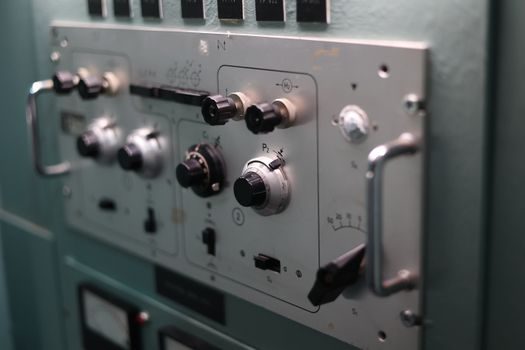
Shop-floor CMMs are explicitly designed to live next to the cell, while lab CMMs assume a 20 ± 1 °C room and vibration isolation; choosing the wrong class is the most common reason a "good" machine drifts out of spec six months after install [S3]. Used-shop-floor CMMs are a separate used market because buyers assume a thermal envelope wider than a lab unit, and pricing reflects that operating-cost difference [S3].
For manufacturers running two shifts, a near-line CMM with active thermal compensation is usually a better ROI than a lab CMM that sits idle between batches [S2].
Gate 4 — Probe Strategy, Software, and Measurement Planning
Once hardware is fixed, the fourth gate is the measurement plan itself: a CMM is only as good as the number and location of probing points, the datum strategy, and the alignment to CAD [S2]. Springer-Nature's measurement-planning chapter formalises the workflow — fixture, datum, sample size, feature extraction — and is the same logic a modern CMM software package (e.g. CALYPSO, PC-DMIS, Metrosoft) implements in DMIS code [S2].
For high-mix / low-volume work, optical VMMs cut the planning cost because they capture full features rather than discrete points, but the part must be visible to the camera and free of specular reflections [S7]. For high-volume prismatic parts, a tactile scanning head with a fixed probe change rack gives the lowest per-feature cycle time, at the cost of a longer calibration pass between part types [S2][S9]. The right answer for most tier-1 shops in 2026 is still a bridge CMM with at least one optical option, reserved for the 10–20 % of features that defeat a 3 mm ruby stylus.
CMM Class Comparison: Bridge, Gantry, Horizontal-Arm, Optical VMM

Four classes dominate the 2026 buy-list: bridge, gantry / extended-stroke, horizontal-arm, and optical VMM [S1][S4][S7]. On envelope, the order is bridge (small–mid) → gantry (mid–very large) → horizontal-arm (large but limited Y) → optical VMM (small–mid, dependent on stage travel) [S1][S4][S7]. On maximum permissible length error per ISO 10360, mid-range bridge CMMs typically lead in their envelope, gantry/extended series trade some accuracy for stroke, horizontal-arm sits lower still, and optical VMMs compete on repeatability rather than absolute length error [S4][S7].
On probe flexibility, bridge and optical VMMs are the most configurable (tactile + optical + scanning); gantry is tactile-dominant; horizontal-arm manual stages are usually a single fixed tactile probe [S1][S7]. On cost-of-ownership, the order inverts in many shops: optical VMM and basic manual CMM are cheapest to buy, but gantry/bridge CMMs win on cost-per-feature once throughput is factored [S4][S8]. Engineers buying in 2026 should score their application against these four axes before they look at brand or financing.
Where CMMs Fit — and Where They Don't
CMMs are the right tool when a part has tight GD&T (ISO 1101) datums, when reverse engineering from CAD is required, or when SPC demands traceable digital records per ISO 9001 / IATF 16949 audit trails [S2][S3]. They are the wrong tool for in-process 100 % inspection on a transfer line — that is the domain of inline gauges and vision systems covered in adjacent spec guides, not of a moving-bridge CMM [S10].
For shop owners cross-shopping capital equipment, a CMM also competes with hand-held 3D scanners and portable laser trackers; those are not "CMMs" in the strict sense but they overlap functionally on large parts where a gantry would be uneconomic [S9]. The rule of thumb in 2026 is: if the part fits in a bridge CMM envelope and tolerance is below 50 µm, a CMM is still the most defensible audit answer; if the part is larger than ~2 m or toleranced looser than ±0.1 mm, the business case for a CMM collapses and a portable arm or optical scanner should be evaluated first [S1][S7].
Trackable Signals: Sourcing, Standards, and the 2026 Market
Three signals to watch in the second half of 2026: (1) the supply mix on Made-in-China has grown to over 130,000 CMM listings from 3,000+ suppliers as of May 2026, confirming that manual and mid-range bridge CMMs remain the highest-volume segment [S10]; (2) freelance / contract CMM programming capacity is widely advertised, which means engineering teams can now outsource DMIS programming rather than buy a seat licence [S6]; (3) used-shop-floor CMM dealers continue to push rebuilt inventory as a low-capex path to ISO 9001 compliance [S3].
For related process-instrumentation spec work, the Pt100 RTD selection guide covers temperature sensor gates in the same envelope, while the pressure gauge vs DP transmitter spec guide and the GWR level meter probe gates handle adjacent process-variable decisions that usually arrive in the same CAPEX review. For a fully automated inline alternative, the vision measuring machine encyclopedia entry maps where optical VMMs and inline vision systems cross over, and the contour measuring machine entry covers the complementary 2-D profile use case that a 3-axis CMM does not address well.
Related: coding machine.