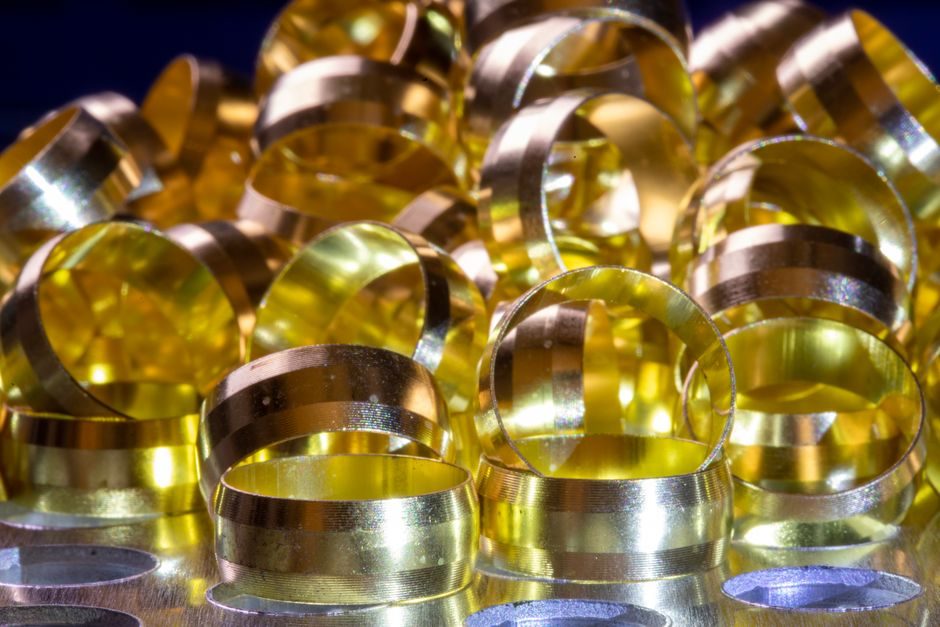
ISO 9001:2015-certified copper manufacturers such as Ganpati Wires, IMC Metals America, and Vipul Copper dominate the 2026 supply base, with IMC Metals shipping to more than 40 countries and Vipul Copper serving a fleet of over 500 clients since 1996 [S6][S7][S8].
The quality stack spans three layers: management-system certification (ISO 9001:2015), material-grade conformance (ETP, OF, DHP copper per ASTM B49/B170-type specifications), and process-equipment specs such as Danieli copper-mould crystallizers with section sizes from 100 to 700 mm square for billet and bloom casters up to 1200 mm length [S3][S8].
ISO 9001:2015 as the Baseline Quality System
ISO 9001:2015 certification is the entry ticket for export-grade copper suppliers in 2026, with Ganpati Wires displaying the mark on its bare bunched and braided copper wire product line [S8].
For OEM/ODM copper-conductor factories, the same standard frames documentation controls, traceability of heat lots, and corrective-action workflows that buyers audit during supplier qualification [S1]. The Vipul Copper quality charter further extends to global customer specifications covering submersible winding wire and electrical stamping, where 30-plus years of process data is used to demonstrate consistency [S6].
For plants that need wider compliance, ISO 9001:2015 sits alongside ISO45001:2018 occupational-health and ANSI/ESD certifications visible on supplier profiles, and many rubber-and-foam ancillary suppliers that touch copper handling (Cogent Products) also maintain ROHS, UL, and FDA material compliance on adjacent process lines [S4].
ASTM-Grade Purity: ETP, OF, and DHP Copper
ASTM-grade naming defines the conductivity and oxygen-tolerance envelope that a copper product must meet, and suppliers publish the grade on the product page rather than as a marketing claim [S7].
ETP (Electrolytic Tough Pitch) copper is the workhorse for busbar, wire, and motor-winding applications, while OF (Oxygen-Free) copper rod is specified where hydrogen embrittlement risk disqualifies ETP, and DHP (Deoxidized High Phosphorus) copper is reserved for refrigeration and plumbing where weldability under reducing atmospheres matters [S7]. IMC Metals America explicitly lists both ETP copper bars and OF copper rod on its 2026 product menu, and the conductivity trade-off between the two grades is the first filter buyers apply when validating a new source [S7].
Vipul Copper's electrical-motor product line targets the same ETP/OF selection matrix, with submersible winding wire in particular requiring low-impurity copper to keep winding resistance drift under control across three decades of field installations [S6].
Continuous-Casting Crystallizer Tube Specifications
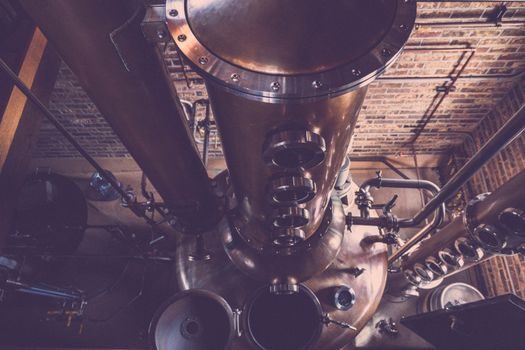
Copper-mould crystallizers govern the first solidification shell of a steel billet, bloom, beam blank, or slab, and Danieli specifies section coverage from 100 to 700 mm square, beam-blank diagonals up to 1000 mm, and slab diagonals up to 1000 mm with mould lengths up to 1200 mm [S3].
Quality in this context is not just alloy purity; it is the combination of high-purity copper alloys, advanced internal cooling-channel design, and a coating treatment that hardens the working surface against the abrasive wear of the initial steel shell [S3]. Danieli's ECO Power Mould and Power Mould product lines carry the brand-marked crystallizers into over 2,000 casting strands installed worldwide, and the LTSA (Long-Term Service Agreement) framework binds spare-parts delivery to the same quality envelope as the original equipment [S3].
For copper-product buyers, the crystallizer detail matters because the same surface-coating logic (harder working face, controlled thermal gradient) is the reference point when auditing any copper-tube or copper-plate drawing operation that supplies the energy and refrigeration sectors.
Wire, Conductor, and Contact-Tip Product Lines
OEM copper-conductor factories in Hebei publish a product family that includes wiring cable, overhead cable, power cable, flexible cable, control cable, photovoltaic cable, composite cable, and fire-resistant cable, all backed by OEM/ODM R&D capacity [S1].
Downstream consumables such as MIG contact tips illustrate the cost-vs-tolerance boundary that quality standards enforce: a 1.2 mm Tregaskiss-style contact tip lists at US$ 0.17 per piece at 1-piece MOQ, while a 1.6 mm copper MIG contact tip ranges from US$ 0.20 to US$ 0.28 per piece [S5]. The price band is narrow, but the bore tolerance and copper-alloy selection are what separate a tip that survives 8 hours of robotic welding from one that seizes in half that time.
Welding-cable assemblies, plasma-cutting nozzles, and cutting electrodes sit in the same quality framework, and the supplier profile flags welding torch, cutting consumable, and plasma consumable categories as discrete production lines with their own inspection gates [S5].
Decision Criteria: Which Copper Standard Applies
Specifying engineers should match the application to one of four copper-standard buckets before issuing an RFQ: conductor-grade (ETP/OF for electrical), casting-grade (high-purity crystallizer tube alloys), welding-grade (MIG contact-tip copper with bore tolerance), and structural-grade (DHP for plumbing and refrigeration) [S1][S3][S5][S7].
For each bucket the four decision criteria are (1) ISO 9001:2015 certification on the supplier's audit trail, (2) ASTM-grade designation published on the product datasheet, (3) section-size or dimensional range that matches the buyer's machine envelope, and (4) coating or surface-treatment evidence where the working face sees mechanical wear [S3][S7][S8].
Supplier Footprint and Geographic Spread in 2026
Hebei-based OEM/ODM copper-conductor factories form the bulk of custom-cable capacity on the Made-in-China supplier directory, and their R&D capacity is published as OEM/ODM rather than ODM-only [S1].
India adds a second pole of capacity: Vipul Copper in the electrical-motor and submersible-winding segment, and Ganpati Wires as an ISO 9001:2015-certified bare bunched and braided copper wire manufacturer with a dedicated sales line for domestic and export RFQs [S6][S8]. The United States is served by IMC Metals America, which exports ETP copper bars and OF copper rod to more than 40 countries, and Danieli in Italy anchors the caster-equipment tier of the supply chain [S3][S7].
For a complete reference on copper material selection, the encyclopedia entry covers the ETP/OF/DHP grade matrix, the IACS conductivity baseline, and the typical mechanical-property envelope that a buyer's datasheet should mirror.
What to Track Over the Next Two Quarters
Two trackable signals stand out for the rest of 2026: first, whether more Indian and Chinese copper-conductor factories add ISO 9001:2015 re-certification dates to their Made-in-China profiles (the directory currently shows the certification mark but not always a fresh re-certification timestamp) [S1][S8].
Second, watch the caster-equipment tier for revised crystallizer section-size ranges and new coating-treatment disclosures from Danieli and its peers, since the 100-700 mm square billet/bloom envelope and 1000 mm slab diagonal define the upper bound of what downstream copper-product buyers can expect to be referenced in 2027 datasheets [S3].
For the relevant spec sheets and selection criteria, see additive manufacturing material, and air quality monitor.
This topic is covered further in Sprocket installation guide: bore, keyway, alignment, and tensioning specs.