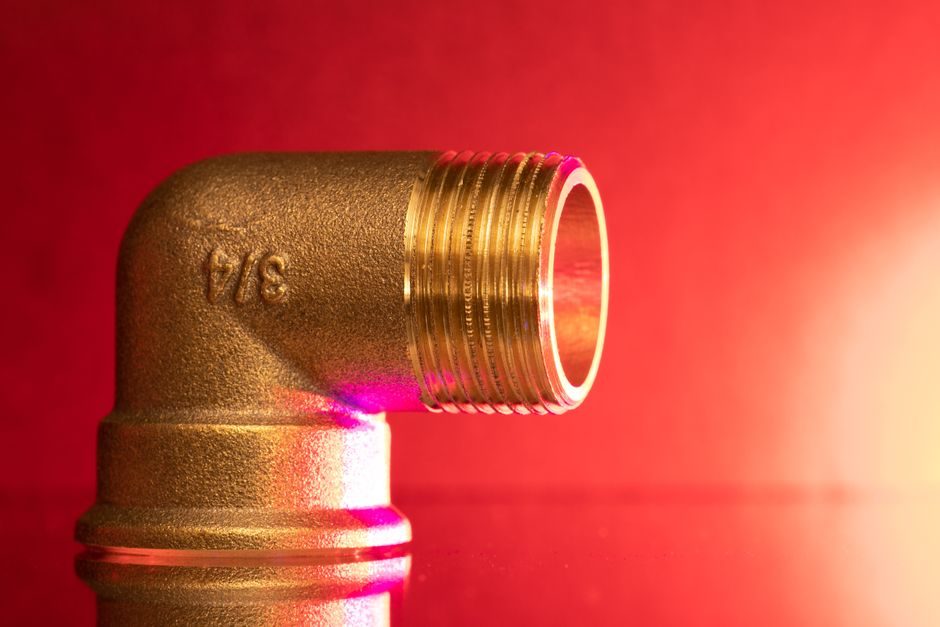
For 2026 aerospace builds, copper selection splits into four engineering lanes: C110/C101 wrought pure copper for busbars and grounding, C172 Cu-Be (UNS C17200) for structural springs and bearings rated to roughly 200,000 psi tensile, C194 Cu-Fe-P (UNS C19400) for lead frames, and copper-clad PCB laminates (XPC, FR-1, FR-2, CEM-1, FR-4) for avionics circuitry [S2].
Conductivity drives the first cut: C110 delivers 100% IACS minimum, C194 lands at 60-65% IACS, and C172 sits at 22-25% IACS — the trade is between current capacity, yield strength, and formability. Conductive inks and coatings are a parallel lane, supplied to ISO 9001:2015-registered shops for flexible aerospace wiring [S1].
Pure Wrought Copper: C110, C101, and OFHC
C110 (ETP, electrolytic tough pitch) and C101 (OFHC, oxygen-free high conductivity) remain the default for aerospace current-carrying members — power feeders, ground straps, and RF cavity walls — because conductivity holds at 100-101% IACS and annealed tensile strength sits near 32,000-35,000 psi [S1].
Selection pivots on joining method: C110 retains enough residual oxide for brazing but is restricted in reducing-atmosphere hydrogen service where H₂ embrittlement can occur at elevated temperature; C101 is the safer pick for vacuum or inert braze cycles. For high-vibration airframe runs, cold-worked C110 in H04 temper pushes tensile to roughly 45,000-50,000 psi at the cost of 2-3% IACS conductivity.
Copper-Beryllium C172 (UNS C17200): Springs, Bearings, Bushings
Where fatigue life and formability matter more than conductivity, C172 Cu-Be in the TH04 (hardened) temper delivers 175,000-200,000 psi tensile, 130,000-160,000 psi yield, and fatigue endurance around 35,000-45,000 psi at 10⁸ cycles — the spec for aerospace helical springs, landing-gear bushings, and connector contacts [S1].
The cost is roughly 5-8x that of pure copper and a Be-safe handling protocol; OSHA PELs govern dust and machining fines. For non-sparking tooling in fuel zones, Cu-Be is also specified where spark risk must drop, but newer Cu-Ni-Si alternatives are substituting where beryllium exposure is unacceptable.
Copper-Iron-Phosphorus C194 (UNS C19400) and High-Strength Wrought Alloys
C19400 is the workhorse for stamped aerospace lead frames, relay cores, and PCB heat sinks — conductivity at 60-65% IACS, tensile around 80,000-95,000 psi in the HT temper, and stress relaxation resistance that survives 1,000 hours at 150 °C. C195 (Cu-Fe-Sn-P) and C197 (Cu-Fe-P-Sn) extend the same family toward slightly higher strength or better solderability. [S1]
For thermal-management cold plates, C101 with internal channels dominates; for weight-critical avionics, C194 bonded to aluminum via roll-cladding is a common spec. The key engineering test is stress relaxation at service temperature — pick a temper whose relaxation stays under 10% at the design hot-spot.
Copper-Clad PCB Laminates: XPC, FR-1, FR-2, CEM-1, FR-4, 22F
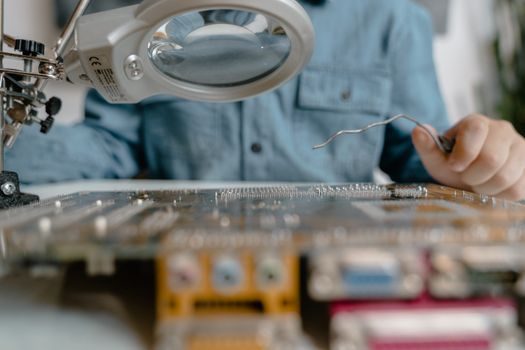
For avionics printed circuit boards, copper selection means picking the right laminate stack-up: XPC (economy phenolic), FR-1 / FR-2 (phenolic, flame-retardant grades), CEM-1 (composite epoxy with cellulose core), 22F (high-flex), and FR-4 (woven glass + epoxy) [S2].
Jiangsu Sunyuan Aerospace Material Co. — a joint venture backed by the China Academy of Aerospace Aerodynamics (CAAA) of China Aerospace Science and Technology Corporation — lists XPC, FR-1, FR-2, CEM-1, 22F, and FR-4 in multiple specifications, with annual capacity reported up to 12 million square meters of copper-clad laminate, exported to North America, South America, and Eastern Europe [S2]. Aerospace PCB designers typically pair FR-4 (Tg 130-180 °C, UL94 V-0) with 1 oz/ft² (≈35 µm) electrodeposited copper, upgrading to high-Tg FR-4 or polyimide for under-hood and engine-bay electronics above 150 °C.
Conductive Inks, Coatings, and Flexible Circuitry
Flexible copper alternatives — silver-flake conductive inks, copper-nanowire coatings, and stretchable conductive pastes — are increasingly specified for aerospace sensor skins, in-flight entertainment flex circuits, and EMI shielding on composite airframes. The relevant supplier base operates under ISO 9001:2015, with sustainability claims tied to long service life and lower replacement cycles rather than direct conductivity [S1].
For shielding gaskets and conductive surface treatments, copper-filled silicone or silver-coated copper particles dominate. Spec sheets typically cite volume resistivity in the 10⁻³-10⁻⁴ Ω·cm range — orders of magnitude worse than bulk copper, but acceptable for EMI control at kHz-MHz frequencies.
Standards and Spec System
Aerospace copper buys through AMS (Aerospace Material Specifications), UNS alloy designations, ASTM B370 (copper sheet/strip), ASTM B768 (Cu-Be), and NACE MR0175 for sour-service environments. PCB laminates route through IPC-4101 (laminate spec), UL94 (flammability V-0), and customer-specific avionics qualification (often DO-160 environmental testing). [S2]
For explosive-atmosphere or fuel-zone parts, ATEX 2014/34/EU and IEC 60079-x govern non-sparking requirements — an area where Cu-Be tooling has historically been specified, though Cu-Ni-Si or Cu-Al are valid substitutes where beryllium is restricted. Process engineers should lock the spec chain (UNS + temper + standard + test method) before tendering rather than chasing a single alloy number.
Selection Criteria: Matching Copper Family to Application
The four-lane decision is a simple weighted sum: conductivity need (% IACS), required strength (ksi or MPa), service temperature (°C), and formability/joining method.
Pure C110/C101 wins when conductivity sits above 95% IACS and service stays below roughly 200 °C. C172 Cu-Be is the pick when fatigue and yield above 130,000 psi matter and budget allows. C194 Cu-Fe-P balances cost and strength for stamped lead frames and heat sinks in the 60-65% IACS band. Cu-clad PCB laminates — XPC, FR-1, FR-2, CEM-1, 22F, FR-4 — dominate avionics circuitry, with the Chinese supply base now scaling into the tens of millions of square meters annually [S2]. For a deeper look at how raw copper feeds downstream spec chains, the copper material reference entry covers the alloying and conductivity envelope. Aerospace structural housings that interface with copper thermal hardware often pair with aluminum alloy selection work on the same airframe program, while the cold-chamber die casting spec map covers how copper-alloy inserts get cast into aluminum housings for heat-sink and EMC backshells.
Failure Modes and Common Pitfalls
Three failure modes drive the bulk of field rejects: hydrogen embrittlement in C110 when brazed in reducing atmospheres without proper flux, stress relaxation in C194 above 150 °C when the wrong temper is selected, and creep in Cu-Be springs at sustained temperatures above 175 °C where the alloy begins to over-age. PCB-side, CAF (conductive anodic filament) growth in FR-4 under humid bias is the classic reliability killer — mitigated by higher-Tg laminates and clean through-hole plating. [S1]
For sour-service aerospace or refinery chemical exposure, NACE MR0175 restricts copper-bearing alloys in certain hydrogen-sulfide environments because copper can promote cracking in adjacent high-strength steels. Validate the entire galvanic stack — copper to aluminum, copper to titanium, copper to carbon-fiber composite — before locking the spec.
The next trackable signal is Q4 2026 releases of revised AMS specs for Cu-Be and C194 tempers (industry-watch items), and any new Chinese supplier capacity announcements in copper-clad laminate for FR-4 high-Tg grades. Engineers should also watch Cu-Ni-Si alloy registrations under UNS, which are growing as Be-free substitutes in connector and spring duty.
Component reference pages worth checking: magnetic material, and quartz material.