
For general sheet, coil, and CNC-machined copper components, C110 (ETP, 99.9% Cu) and C122 (DHP, 99.9% Cu min with 0.015-0.040% P) cover the majority of architectural, roofing, and fluid-handling builds, while C260 (cartridge brass, 70% Cu / 30% Zn) and C36000 (free-machining brass) handle forming- and high-volume machining-heavy work [S3].
Copper fabrication in 2026 is dominated by four UNS designations: C11000, C12200, C26000, and C36000. Form (sheet, coil, plate, bar, tube), temper (H00, H02, O60, H04), and downstream process (CNC milling, CNC turning, stamping, deep drawing) drive the grade decision more than raw conductivity or price alone [S3].
UNS Grade Map: C110, C122, C260, C360 at a Glance
C11000 electrolytic tough-pitch (ETP) is specified to 99.90% Cu minimum with oxygen controlled to roughly 0.04% as Cu2O, giving IACS conductivity near 101% in the O60 temper; it is the default for copper sheet, coil, bus bar, and grounding hardware where maximum conductivity is required [S3]. C12200 deoxidized high-phosphorus (DHP) holds 99.9% Cu minimum with phosphorus held between 0.015% and 0.040%, which drops conductivity to roughly 85% IACS but eliminates hydrogen embrittlement risk in welded or brazed assemblies — the reason it is preferred for plumbing tube, refrigerant line, and welded roofing [S3].
C26000 cartridge brass (70% Cu / 30% Zn) is the workhorse when a part needs deep drawing, spinning, or high ductility rather than peak conductivity; C36000 free-machining brass (roughly 61.5% Cu / 35.5% Zn / 3% Pb) is the go-to for screw-machine parts on multi-axis CNC lathes, with machinability rated at 100% against the C36000 baseline [S3]. The trade-off is real: the 3% lead addition that gives C36000 its 100% machinability rating disqualifies it from potable-water contact under most regional plumbing codes.
Selection Criteria: Conductivity vs Formability vs Corrosion
Three engineering criteria govern copper grade selection: electrical/thermal conductivity, formability, and corrosion context. C11000 is selected when IACS conductivity is the primary spec; C12200 is selected when welding, brazing, or exposure to reducing atmospheres makes hydrogen embrittlement a risk; C26000 is selected when cold-forming severity (deep draw, severe bend) is the bottleneck; and C36000 is selected when cycle time on a CNC lathe dominates cost [S3].
Form and temper change the same alloy's behaviour dramatically. C11000 in the O60 (annealed) temper draws deeply but lacks springback control; C11000 in the H02 (half-hard) temper, roughly 0.040-0.080 mm grain size range with yield strength around 220-260 MPa, is the standard for architectural copper coil and copper sheet used in standing-seam roofing and rain gutters [S2]. For high-temp or fire-rated panels, the H04 (full-hard) temper trades formability for yield strength above 300 MPa and is typically specified for flat-lock and clip-lock roofing panels [S2].
Corrosion context swings the call hard. In coastal or marine atmospheres where ammonia or sulfide exposure is possible, C11000 suffers visible tarnishing but stays structurally sound; C12200 behaves similarly but welds without embrittlement, so welded gutter and downspout assemblies default to C122. Where dezincification is a risk (stagnant brackish water, low-oxygen plumbing), C26000 and C36000 are both vulnerable, and either a higher-copper brass (C44300 admiralty, ~70% Cu / 1% Sn) or a switch back to C122 tube is the engineering call.
Form and Process Compatibility by Route
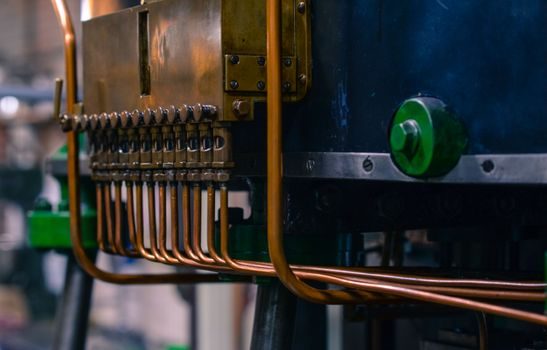
Copper fabrication is split across CNC machining, sheet-metal forming, stamping, and additive routes, and each carries a different preferred grade [S3]. For CNC turning and CNC milling of copper parts, C11000 is workable but its high thermal conductivity starves the chip-breaking action; C36000 brass is specified when feed rates above 0.1 mm/rev and surface speeds above 200 m/min are needed, and Zhongde's process list confirms multi-axis CNC turning and CNC milling as the two primary routes on copper alloys [S3].
For sheet-metal forming, stamping, and deep drawing, C11000 in O60 or H02 temper and C26000 cartridge brass dominate. K-style, half-round, built-in, and custom cornice copper rain gutters — listed as standard product forms at US copper fabricators — are roll-formed from C11000 coil, typically 0.6-0.7 mm (16 oz to 20 oz) for residential gutter and 0.45-0.55 mm for downspout [S2]. For stamped electrical contacts and bus bars, C11000 H04 (full-hard) is standard because springback tolerance is tighter in the harder temper.
For additive copper routes, bound-powder extrusion and selective laser sintering of copper feedstocks remain a research topic rather than a general-fabrication default, so most 2026 production still routes through CNC or stamping; for related material context, see the additive manufacturing material reference page.
Who Each Grade Is For (and Who Should Avoid It)
C11000 ETP is the right call for: electrical grounding hardware, bus bar, architectural copper sheet and coil where welding is not on the critical path, and any application citing IACS conductivity above 95% [S3]. It is the wrong call for: welded assemblies exposed to reducing atmospheres, potable-water systems in jurisdictions that require a deoxidized grade, and any part that will see sustained service above roughly 400 °C in hydrogen-bearing gas.
C12200 DHP is the right call for: welded roofing, brazed header assemblies, refrigerant and hydronic tube, and any potable-water line where code requires a deoxidized grade [S3]. It is the wrong call for: applications demanding the absolute highest IACS conductivity, since the 0.015-0.040% P addition drops conductivity by roughly 15 percentage points versus C11000.
C26000 cartridge brass is the right call for: deep-drawn hardware, drawn instrument cases, and formed architectural trim where a yellow colour is acceptable [S3]. It is the wrong call for: ammonia-bearing atmospheres, stagnant low-oxygen water, and any environment where dezincification attack is documented.
C36000 free-machining brass is the right call for: high-volume CNC turned parts — valve bodies, fittings, threaded inserts, electrical connector shells — where the 100% machinability baseline saves more than the 3% lead penalty costs [S3]. It is the wrong call for: potable-water contact under most regional plumbing codes, food-contact hardware, and any part that will be welded, since lead fumes and hot-shortness both create problems.
Standards, Spec Numbers, and Sourcing Anchors
ASTM B370 governs copper sheet and strip for building construction (the standard referenced implicitly by US copper roofing and gutter suppliers), ASTM B152 governs copper sheet, strip, plate, and rolled bar for general applications, and ASTM B75 governs seamless copper tube for general engineering — these are the three ASTM standards a general-fabrication buyer most often cites when calling out C110 or C122 [S2]. UNS designations (C11000, C12200, C26000, C36000) are the cross-vendor shorthand that the Chinese CNC fabrication supply base uses, with C11000 and C36000 listed as the most commonly stocked copper and copper-alloy grades at multi-axis CNC shops [S3].
For buyers cross-referencing material behaviour against adjacent spec domains, the copper material encyclopedia page covers conductivity, temper, and alloy data; broader context on related engineering-material decisions is in the magnetic material and quartz material references.
Failure Modes and Common Spec Mistakes
The four most common copper-fabrication failures are hydrogen embrittlement of C110 welds, stress-corrosion cracking of C260 in ammonia atmospheres, dezincification of C260/C360 in stagnant brackish water, and lead-leach failure of C360 in potable water [S3]. Each maps directly to a wrong-grade selection: hydrogen embrittlement to using ETP where DHP was specified, SCC to using brass where a higher-copper or tin-inhibited alloy was correct, dezincification to brass in a chloride-rich low-flow service, and lead leach to C36000 in a code-bound water system.
A second-tier failure is machinability mis-spec: shops sometimes quote C11000 for high-volume CNC turning to "stay pure," only to discover that the 100% IACS conductivity is draining heat from the cut faster than the chip can break, doubling tool wear. Specifying C36000 for the machined features and C11000 only for the conductive interface is the standard fix [S3].
Trackable Signals for the Next Buying Cycle
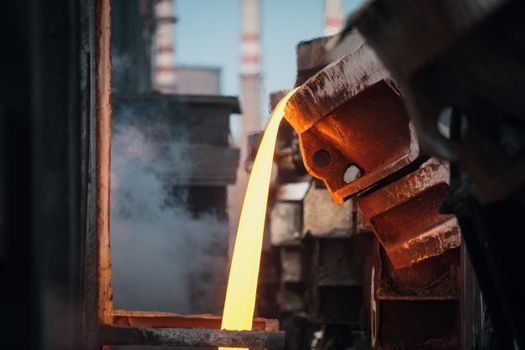
Two signals are worth watching through Q4 2026: copper C11000 and C12200 cathode spot prices on the LME and SHFE, which feed directly into sheet and coil surcharges, and the lead-time spread between C11000 coil (typically 4-6 weeks ex-mill) and C36000 bar (typically 2-3 weeks ex-stock at major CNC suppliers) [S2][S3]. A widening spread usually means stamping-and-forming buyers should lock C110 coil early; a narrowing spread means CNC shops can dual-source C360 bar without schedule risk. For buyers sourcing defence-rated copper grades and forms, see the Copper Material Selection for Defense: Alloy, Standard, and Form reference.