
Use O60 soft annealed copper for tight bends, drawing, and flaring; use H-series copper for higher strength and springback resistance [S1].
For copper material selection, temper is the supplied condition created by annealing or cold work, while the alloy grade and governing product specification remain separate requirements [S1][S2].
Soft and Hard Temper: Mechanical Trade-Off
Soft annealed copper combines maximum ductility with lower strength and lower springback, making it the practical choice for tight bends, drawing, flaring, and demanding deformation before service [S1]. The letter O identifies the annealed condition [S4][S5].
Harder H-series tempers are produced by rolling or drawing that introduces cold work. As deformation rises, strength and hardness increase while elongation falls, so subsequent forming becomes less forgiving [S1].
How to Specify the Correct Temper
Specify temper alongside alloy, product form, dimensions, and the applicable product specification. A drawing that states C260 sheet without temper leaves a material condition unresolved, even though the nominal alloy composition is unchanged [S1].
ASTM B601 classifies temper designations for copper and copper-alloy products by manufacturing process and resulting condition; it is terminology, not a universal product specification [S1][S5]. Consequently, H02 does not establish one property range for every product. Required mechanical values depend on alloy, form, section size, and the governing product standard [S1].
The standard notation places the temper after the alloy designation, separated by a hyphen. The temper system applies to wrought and cast copper-alloy products other than ingot, with letter designations and, where required, one or more subdivision digits [S2].
Selection by Forming Operation
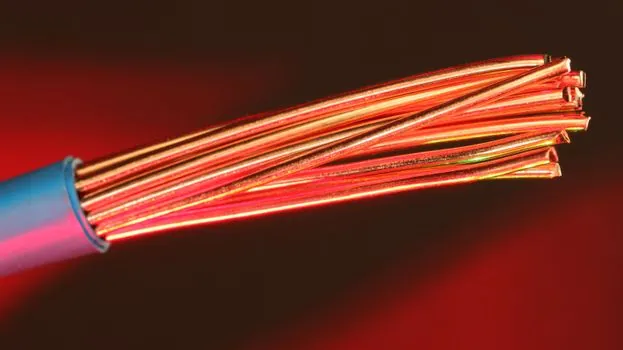
Choose O60 when the part requires deep drawing, tight bending, flaring, or extensive forming. Annealing removes prior cold-work effects and restores ductility, while the softer condition produces less springback than a heavily worked condition of the same alloy and section [S1].
For copper-beryllium, do not transfer ordinary cold-work logic without considering precipitation hardening. Age-hardenable material begins soft and ductile, forms easily, and is heat treated after forming; mill-hardened versions are partially aged at the mill, but their formability at the same strength level is lower [S3].
Applications and Forming Limits
Soft copper is suited to shells, drawn cups, flanged components, bent tubing, and parts requiring a large deformation ratio. Its lower springback improves dimensional control, but its lower strength makes it less suitable where the finished component must resist elastic loading or repeated loading [S1][S4].
Hard copper is suited to springs, clips, washers, and formed components that require a controlled spring response. The trade-off is lower elongation, less ductility, and greater springback, so the forming sequence must tolerate the material’s reduced deformation capacity [S1][S2].
Avoid selecting temper solely by a label such as “hard” or “soft.” The alloy designation, product form, section size, and applicable specification establish the enforceable mechanical requirements, while temper identifies the supplied condition [S1][S2].
Failure Modes and Process Controls
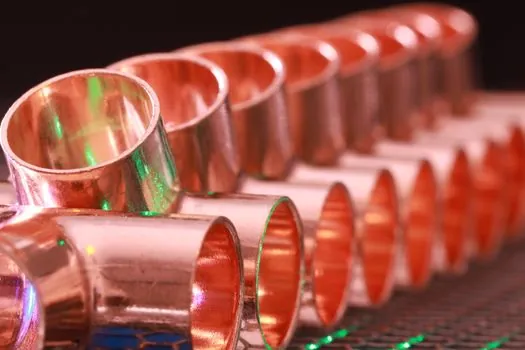
The primary failure mode when using hard copper for forming is cracking or excessive springback caused by reduced elongation and higher elastic recovery. Annealed material avoids that initial condition, but work hardening develops during forming, so each bend or draw still consumes part of the available ductility [S1][S4].
Hardening also leaves internal stresses in cold-worked material.
Stress relief is not a universal substitute for selecting a softer temper. It addresses residual stress after cold work, whereas forming difficulty is governed by the supplied temper, section size, alloy behavior, and the deformation sequence [S1][S4].
Heat-Treatment and Special-Alloy Exceptions
For common wrought copper, the principal condition-setting operations are annealing and cold work. A temper callout is not automatically a heat-treatment callout, because O and H conditions commonly identify annealed or cold-worked material, while some alloys use thermal treatment to develop specific properties [S1].
ASTM B601 designations for precipitation-hardened material distinguish solution heat treatment, quenched tempers, precipitation heat treatment, mill-hardened conditions, and combinations of cold work with thermal treatment. These designations should not be interpreted as ordinary soft-versus-hard copper [S2][S5].
Practical Purchase and Trial Criteria
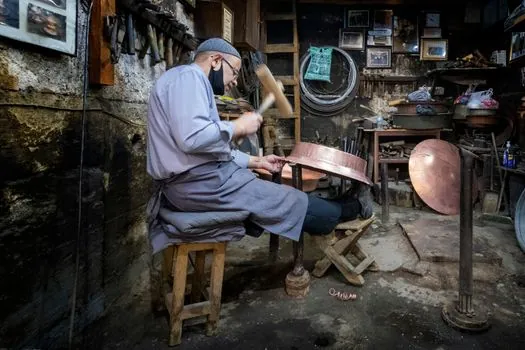
Before releasing a production order, compare the proposed temper against four measurable requirements: minimum forming strain, allowable springback, final strength, and forming sequence. For deep drawing or tight bends, the starting recommendation is O60; for controlled spring components, compare H02, H04, and H08 against the required strength and recovery [S1][S2].
Run representative tooling trials on production section size because formability and springback depend on the alloy, section, product form, and processing history, not on the temper code alone. The trial should confirm cracking limits, springback, dimensional repeatability, and any post-form heat treatment [S1][S3].
The next procurement record should state the alloy, form, dimensions, temper, and governing product specification as one complete material callout. If springback or cracking is unresolved, hold the order for a forming trial using O60 and the intended hard condition on the same section [S1][S2].