
Hard-drawn copper can reach 340 MPa tensile strength versus about 210 MPa for annealed copper [S6], with the difference driven by cold work and final heat treatment.
The comparison applies to copper wire, rod, and tube: hard-drawn material favors tensile load and straight runs, while annealed material favors bending, forming, and conductivity [S2][S3].
Tensile Strength and Elongation
Annealing reduced the tensile strength of a 0.08 mm single-crystal copper wire from 660.26 MPa to 224.7 MPa and increased elongation from 1.494% to 19.87% at an annealing temperature of 400 °C [S1]. At 550 °C, tensile strength and elongation fell to 214.4 MPa and 12.18%, respectively [S1].
For general copper, the practical comparison is approximately 210 MPa tensile strength for annealed material and up to 340 MPa for cold-rolled hard material [S6]. These are condition-level values, not guarantees for every diameter or product form.
In a direct criterion comparison, hard-drawn copper provides the higher tensile strength and rigidity, annealed copper provides the higher elongation and lower forming force, and annealed copper normally has the lower resistivity because its recrystallized structure permits easier electron flow [S2].
What Changes During Drawing and Annealing
Drawing reduces wire diameter through cold plastic deformation. One 14% deformation pass increased tensile strength from 500.83 MPa to 615.5 MPa, while resistivity changed from 1.745 × 10⁻⁸ Ω·m to 1.732 × 10⁻⁸ Ω·m [S1]. Drawing at 500 m/min then increased tensile strength to 660.26 MPa [S1].
Hard-drawn wire retains this work-hardened condition because it receives no post-drawing heat treatment. Repeated drawing raises strength and hardness but reduces flexibility and increases the risk of fracture under bending stress [S2].
For the tested 0.08 mm wire, the 400 °C treatment produced 224.7 MPa tensile strength and 19.87% elongation [S1]. A general copper material purchase specification should therefore state condition, temper designation, product form, and dimensional range.
Temper Designations for Procurement
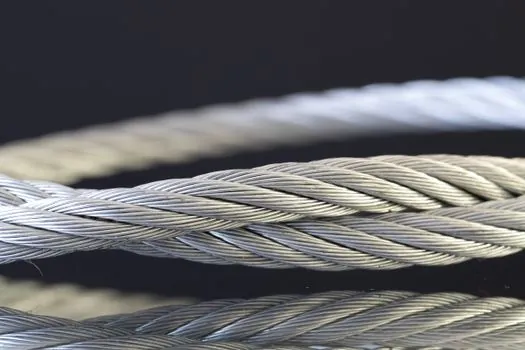
The cited temper-designation article describes O-series annealed and H-series cold-worked conditions, with O60 denoting soft annealed material, O65 drawing annealed material, O68 deep-drawing annealed material, and O70 dead-soft annealed material [S5].
For electrical conductors, specify the exact wire temper and product standard instead of accepting only the words soft or hard.
Application-Based Selection
Choose hard-drawn copper where straight-run installation, high tensile loading, dimensional control, and limited bending dominate. Suitable applications include overhead conductors, straight bus installations, industrial installations, and outdoor railroad or utility work [S2]. Hard-drawn copper busbar vs cable for high-current busway comparisons should therefore separate conductor material properties from connection and installation details.
Choose annealed copper for tight bends, complex routing, forming, and applications requiring lower forming effort. The 0.08 mm test wire increased from 1.494% elongation before annealing to 19.87% after treatment at 400 °C [S1], which demonstrates why annealed stock is easier to bend and shape.
Annealed copper is a poor default for a requirement defined solely as maximum tensile strength. Hard-drawn copper is a poor default for repeated forming. The correct condition follows the installation cycle, not a universal belief that one grade is better.
Electrical Performance and Manufacturing Trade-offs
Hard drawing raises resistivity relative to annealed copper because deformation disrupts the crystalline structure and impedes electron flow [S2].
Hard-drawn wire omits heat treatment after drawing, which reduces its cost but leaves it less flexible [S2].
The 0.08 mm experiment provides a specific process window rather than a universal recipe: annealing at 400 °C produced 224.7 MPa tensile strength and 19.87% elongation, while 550 °C produced 214.4 MPa and 12.18% [S1]. Verify the actual product under its specified test method before treating either condition as a substitute for the other.
Limits, Failures, and Acceptance Checks
The principal hard-drawn failure mode is fracture during bending or handling after excessive cold work [S2]. In the tested single-crystal copper wire, increasing the annealing temperature from 400 °C to 550 °C reduced tensile strength from 224.7 MPa to 214.4 MPa and elongation from 19.87% to 12.18% [S1].
Do not specify tensile strength without also specifying product form, diameter or section, temper, heat-treatment route, and test method. Wire, tube, sheet, and rod can have different temper systems and acceptance criteria [S5]. For alloy steel or aluminum alloy substitutes, compare tensile strength, elongation, conductivity, joining method, and bend allowance rather than matching only one tensile value.
For procurement, require the supplier to identify O60, O68, O70, H80, H85, or H86 where applicable, state dimensional tolerances, and provide tensile and elongation results for the delivered condition [S5]. Reject substitutions that meet tensile strength but fail elongation, bend, or conductivity requirements.