
Dry pressing applies pressures of 69–830 MPa and is effectively used for mass production of simple parts [S3].
Cold isostatic pressing applies equal pressure through liquid at room temperature for complex alumina forms, while ceramic injection molding uses a binder-polymer feedstock for small parts with dimensional requirements of no more than 1% [S3][S5].
Choose by Shape, Volume, and Dimensional Control
The three methods form different production envelopes. Uniaxial dry pressing uses rigid punches, CIP uses a flexible mold in a pressurized liquid, and ceramic injection molding uses a plasticized feedstock split by a rigid mold [S1][S3][S5].
Select dry pressing for simple shapes, high volume, and short cycle time; select CIP when uniform compaction or a complex internal shape outweighs tooling and cycle-time costs; select injection molding for small parts requiring repeatable dimensions and complex geometry in high volume [S3][S5]. Do not select CIP merely to replace a die press when the part is simple and volume is large.
All three produce a green compact that still requires sintering or other consolidation after forming. CIP creates pressure from every direction through a fluid, while dry pressing applies one principal loading direction through two rigid punches [S1][S3].
Dry Pressing: Fast Cycles and Rigid Tooling
Dry pressing applies 69–830 MPa to alumina powder between rigid punches at room temperature.
This process fits high-volume components such as insulators, magnetic ceramics, capacitor parts, and substrates. It offers simple automation and short cycles, but the rigid cavity creates wall friction and a pressure gradient, so density can be less uniform than with CIP [S3][S4].
Press capacity alone does not define capability.
The method is a poor fit for long, thin-walled tubes, deep internal cavities, and other geometries where uniform die filling is difficult. It is a poor fit when every component requires an individually shaped flexible mold and a separate wet-bag pressure cycle [S3][S4].
CIP: Uniform Compaction for Complex Shapes
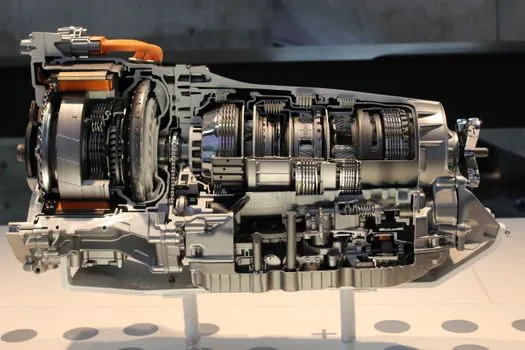
CIP compacts dry or semi-dry powder inside a flexible, commonly polyurethane, mold submerged in a pressurized liquid at room temperature. Wet-bag tooling is removed and refilled for each cycle, while dry-bag tooling is integral to the pressure vessel [S1][S2][S3].
Wet-bag CIP is suited to large, complicated parts and mixed-shape production. Dry-bag CIP is suited to smaller, simpler parts and easier automation because the mold remains installed in the vessel [S3][S4]. The flexible barrier follows powder shrinkage during compaction, and hydrostatic pressure reduces die-wall friction and directional density gradients [S1][S3].
CIP can form long, thin-walled tubes and other complex forms more effectively than uniaxial die pressing. One supplier reports 68% green density for alumina and attributes cracking control to more uniform particle packing, but that value should be treated as a process-specific result rather than a universal CIP specification [S6].
The trade-offs are cycle time, flexible-mold preparation, dimensional control, and pressure-vessel handling. Powder quality, moisture condition, sealing, mold geometry, pressure distribution, and deairing remain process variables, so the green compact must still be sintered to achieve a dense ceramic component [S1][S4].
Ceramic Injection Molding: Precision and Automation
Ceramic injection molding combines alumina powder with a thermoplastic binder system to create a moldable feedstock. The feedstock is injected into a rigid mold, cooled or cured, and then subjected to debinding and sintering to produce the final dense part [S5][S8].
Injection molding is suited to small parts with intricate geometry [S3].
Injection molding is not the automatic choice for large, heavy, or low-volume parts because feedstock preparation, injection equipment, mold cost, and thermal processing add complexity.
Injection molding can produce parts with intricate geometry and includes a binder-removal stage [S3].
Decision Matrix for Alumina Components
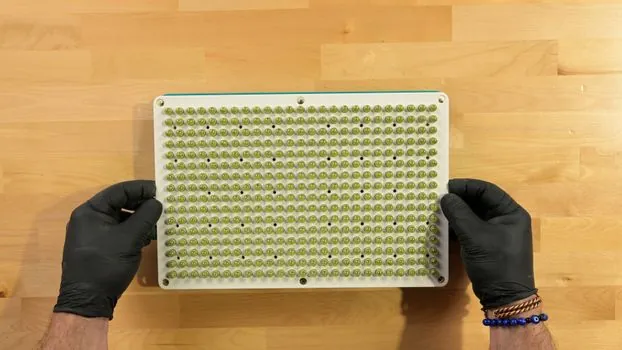
Injection molding suits high-volume automated runs, but the cited reference does not provide a comparable cycle-rate value, so no numerical comparison should be inferred [S3][S5].
Dry pressing favors simple parts, CIP can form more complex shapes, and injection molding is suited to small parts with intricate geometry [S3][S4][S5].
Against uniformity, CIP has the strongest process rationale because pressure acts through liquid from all directions. Dry pressing is faster and simpler but can show wall-friction and density gradients. Injection molding provides repeatable molded dimensions, although uniform final density still depends on feedstock quality, debinding, and sintering rather than injection alone [S1][S3][S5].
Against production fit, use dry pressing for thousands to millions of straightforward parts, CIP for lower-volume or larger complicated parts, and injection molding for high-volume precision components where the tooling and feedstock development can be amortized. These process ranges are engineering guidance, not a universal cutoff.
Typical Parts and Process-Specific Risks
Dry pressing fits alumina insulators, capacitor dielectrics, magnetic ceramic parts, and substrates. CIP fits large or complex structural components, including long thin-walled alumina tubes and laboratory crucibles. Injection molding fits small precision alumina components, including optical, medical, and mechanical parts where automated volume and dimensional consistency justify the process [S3][S5][S9].
Dry pressing can produce lamination, density gradients, or cracking when powder filling or tool motion is nonuniform. CIP can produce defective compacts if the flexible mold is poorly sealed, trapped fluid remains, or the powder does not flow uniformly. Injection molding can produce voids, binder residue, warpage, or cracking if feedstock viscosity, mixing, mold filling, debinding, or sintering is outside the validated process window [S4][S8].
Alumina ceramic behavior after forming is not determined by the green-forming method alone. Powder particle size, purity, additives, green density, binder content, sintering schedule, final geometry, and machining allowance all influence the finished alumina ceramic. Evaluate the complete route from powder feed through sintered dimensions rather than comparing green shapes in isolation.
Forming Decision and Process Validation
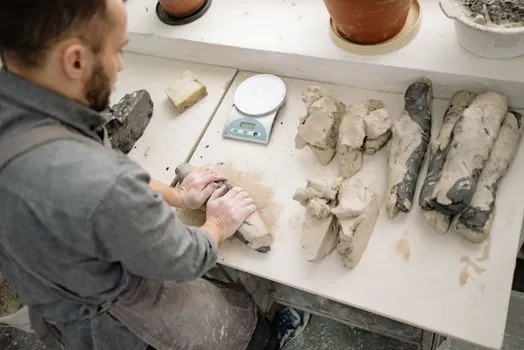
Use a weighted process comparison for the actual part: geometry, annual volume, size, required dimensional tolerance, allowable porosity, tool cost, cycle time, and post-forming machining. If a simple part must be produced in high volume, begin with dry pressing. If density uniformity and shape complexity dominate, trial CIP. If small size, intricate geometry, and repeatable dimensions define the business case, qualify ceramic injection molding. [S3]
Verify each route with production-intent alumina powder rather than a generic green body. Record powder condition, forming pressure where applicable, green density, defect locations, sintering shrinkage, and final dimensional capability. A supplier claim of 68% green density for CIP illustrates why a supplier-specific processing result must be validated on the specified powder and tooling [S6].
Request prototypes from all viable routes when geometry or volume is borderline, then compare green-part uniformity, machining allowance, sintered shrinkage, and total cost per accepted part. The first measurable decision signal is filled-part defect rate at the required dimensional tolerance; the second is sintered-part yield after consolidation.