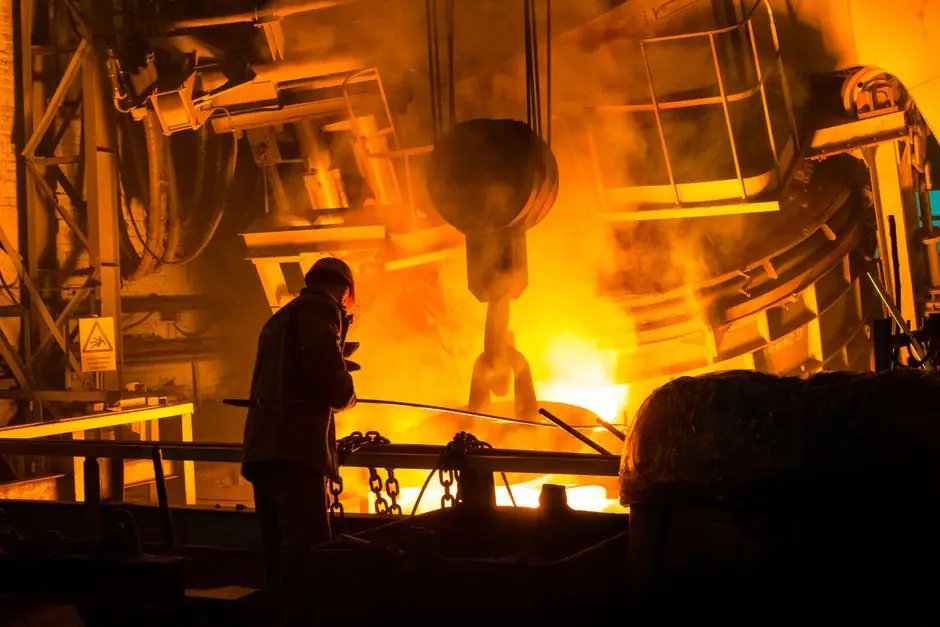
A coreless induction furnace coil used in aluminium scrap remelt presents an intrinsic power factor of 0.1 to 0.3 lagging to the bus, because the water-cooled copper coil behaves as a large air-cored inductor [S4].
Modern power supplies correct that to a measured grid-side power factor of 0.95 or higher, with IGBT inverter and parallel resonant circuit topologies reporting 0.99 at the inverter input, while 400 to 550 kWh per tonne is the published band for melting aluminium and furnace electrical efficiency sits above 90 percent [S3][S4][S6][S8]. The physics of induction furnace operation, the metallurgical choices for aluminum alloy feed, and the smelter-side economics of aluminum scrap remelt are linked: poor power factor penalises the kWh bill, so correction hardware is not optional, it is part of the furnace.
Why the coil power factor is so low, and why that is a problem
An uncorrected coil power factor of 0.1 to 0.3 is a direct consequence of building the inductor as a large air-cored helical copper coil, which maximises magnetic coupling to the charge but also maximises stored reactive energy per unit of real power [S4]. At 0.1 power factor, the apparent power drawn from the bus is roughly 10x the real melting power, so a 1 MW melting demand would otherwise require cabling and transformer capacity near 10 MVA, and utilities in most jurisdictions levy a reactive power penalty well before that point.
The coreless geometry amplifies the issue for aluminium specifically: the metal’s low density and high electrical conductivity give a relatively shallow skin depth at mains and medium frequency, forcing the coil to run at high current for a given kW of shaft power, which inflates reactive current [S2]. The same low density that lets foundries specify gas aluminum melting furnace alternatives does not save the induction furnace from this electrical penalty, it sits in the coil regardless of charge material.
How correction hardware reaches 0.95 to 0.99 at the grid
Correction is done at the power supply, not at the coil: a switched capacitor bank is sized to cancel the coil’s lagging reactive current, and modern supplies use IGBT inverters with a parallel resonant tank that reports cos phi = 0.99 measured at the inverter input [S3][S4]. The correction is dynamic, capacitor stages are switched in and out as the furnace ramps from cold start through full-power melting into holding, and modern controllers also adjust frequency, which is how the same power supply can present a high power factor at any operating point from 50 Hz to 10 kHz [S4].
Otto Junker publishes the multi-layer energy-saving coil as giving an additional 7 to 9 percent energy saving on copper and aluminium alloys on top of the inverter base efficiency, and the Junker Melting Interface forwards cos phi and kWh data over OPC UA so the corrected power factor is auditable, not just claimed [S3]. Without that hardware, the 0.1 to 0.3 coil figure is what the utility meter would actually see, and that is why no coreless induction furnace ships without its capacitor bank in the same skid.
Energy use: 400 to 550 kWh per tonne and electrical efficiency above 90 percent

Published specific energy for melting aluminium in a coreless induction furnace sits in the 400 to 550 kWh per tonne band, the wide range reflecting charge geometry, oxidised turnings versus clean extrusion scrap, and the difference between a cold-charge batch and a hot-charge continuous feed [S6]. Electrical efficiency is reported above 90 percent for state-of-the-art coreless units, with maximum furnace capacities of 270 tonnes on the largest single-coil designs and 35 tonnes for typical aluminium melting applications [S3][S8].
By comparison, the channel-type (or coreless-with-iron-core) induction furnace principle is reported as 10 to 15 percentage points more efficient than the coreless principle for the same melting duty, because the iron return path confines the magnetic flux and lowers reactive current, a useful benchmark for any plant comparing a greenfield coreless scrap melter against a retrofit of an existing channel furnace [S7]. The 2026 cost-curve work on aluminium power exposure is the right frame for that kWh number: every 10 kWh saved per tonne is a direct margin line on a 1.5 to 2.0 million-tonne secondary smelter.
Frequency, stirring, and how they interact with the correction
Frequency is the second lever, alongside capacitor staging. Coil current is highest at 50/60 Hz mains frequency, so a cold charge of light scrap is often started at medium frequency (a few hundred Hz to about 10 kHz) to push the meniscus and draw chips under the bath, with the same power supply then switching to a lower frequency once the bath is liquid to maximise stirring for alloying and homogenisation [S3][S4]. Bath velocity in single-phase coreless melting is published at up to 2.5 m/s, and in polyphase coreless furnaces with two or three coil sections driven by a stirring converter, the phase shift between sections is the knob that trades heating against stirring, lower phase shift for more heat, higher phase shift for more turbulence [S2].
Switching frequency changes the reactive current the coil demands, which is why the inverter and the capacitor bank have to be controlled together, a static capacitor bank sized only for one frequency would give a power factor that drifts badly as the operating frequency changes. A safety-PLC-based controller such as JuMI can sequence both in real time and log the result, which is the kind of detail an auditor will ask for if the plant is on a utility tariff that penalises any month with cos phi below 0.90.
Who the coreless remelt is for, and where it is the wrong tool
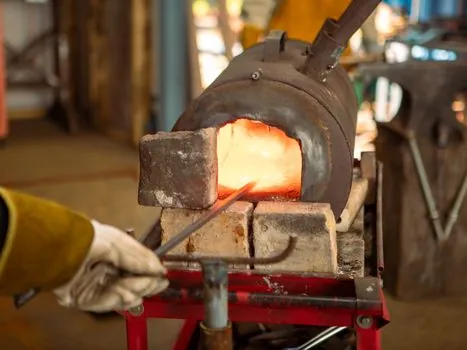
Coreless induction is the right tool for batch-style remelt of clean aluminium scrap, chips, and turnings in foundry and secondary smelter service, with rapid alloy changeover (the crucible can be emptied completely between heats) and short melt-to-pour cycles of typically under 30 minutes for a properly sized crucible [S3]. It is the wrong tool for very high tonnage continuous melting of dirty or heavily oxidised scrap, where a gas aluminum melting furnace or a shaft melter typically wins on kWh per tonne and refractory life.
Operators feeding the charge into an aluminum alloy holding furnace downstream also have to plan for the refractory buildup that EPRI flagged as a chronic issue on coreless units melting aluminium, and for the meniscus-driven exposure of the bath surface, which raises oxidation loss on magnesium-bearing alloys unless a cover flux is used [S6]. In a plant that already runs coreless iron furnaces, the same switchgear and water cooling skid can often be reused, and the aluminium cell inherits the existing cos phi correction, which is a non-trivial saving on the retrofit bill.
Selection checklist: capacitor bank, inverter, coil, data
Three specs to lock in before signing a PO. First, the power supply must publish a measured grid-side power factor, not just a coil power factor; 0.95 to 0.99 corrected at the inverter input is the current benchmark, with cos phi 0.99 reported on parallel-resonant IGBT units [S3]. Second, the capacitor bank has to be switchable in stages, not a single fixed bank, so the correction tracks the load from cold start to holding. Third, the control system should export cos phi and kWh per tonne data over OPC UA or equivalent, otherwise the plant has no way to demonstrate compliance to the utility or to its own energy team.
On the furnace itself, the multi-layer energy-saving coil (7 to 9 percent additional saving on aluminium and copper alloys), switchable frequency from mains to medium frequency, and laser-optical coil temperature monitoring are the three hardware options that pay back fastest on a 2026 aluminium scrap remelt cell [S3]. Skip any of them and the 400 to 550 kWh per tonne number drifts upward, which on the current European power tariff is the difference between a viable cell and one that loses money on every heat.
Next signal to track: the EU’s removal of aluminium scrap export curbs, paired with the U.S. UBC ban moving ahead, will push more secondary aluminium into European remelters through 2026, so coreless induction capacity additions and the 2026 kWh per tonne band are the two data points to watch on the next quarterly capacity update.