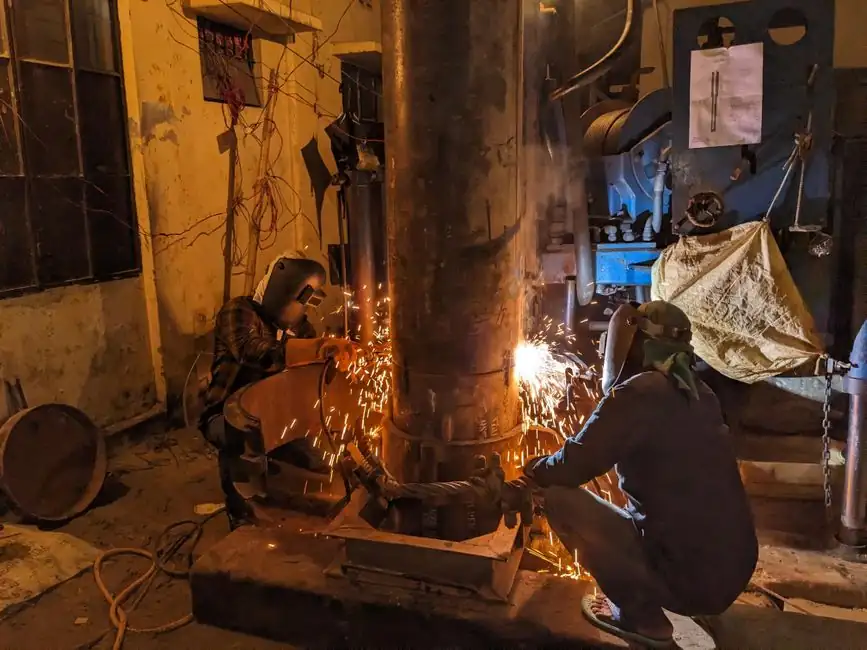
A cold box core shooter with triethylamine gas curing typically delivers a shorter cycle time and higher production efficiency than a hot box core shooter, while the hot box process gives finer dimensional accuracy at the cost of 40-120 s shell-layer hardening at 250-350°C box temperatures [S1][S2][S5].
The decision between the two comes down to resin chemistry, heat-source availability, tooling cost, and takt-time pressure on the molding line. Both processes are widely used in iron and aluminum foundries serving automotive, pump, valve, and diesel-engine block production, and the same machine frame can frequently be converted between hot and cold configurations if the resin and curing subsystem is changed [S2].
Process Principle and Curing Mechanism
A hot box core shooter shoots resin-coated sand into a preheated core box; the box is typically heated to 250-350°C by electricity, natural gas, or coal gas, and the heat alone cures the resin binder [S4][S5]. The core box is clamped and shot under low pressure (about 0.2-0.4 MPa) because coated sand has good flowability, and curing is purely thermal with no separate gas generator required [S2][S5].
A cold box core shooter shoots a dry sand and two-part resin mixture into a room-temperature box, after which a triethylamine (TEA) generator vaporises amine and blows it into the core through a gassing plate to cure the resin at ambient temperature [S2][S3][S4]. Because the binder is unset until the gas arrives, the machine must seal the box, shoot, gas, purge, and then open, which is why the sand shooting pressure and the air intake channels have to be larger than on a hot box machine [S2].
Cycle Time Breakdown and Why Cold Box Wins on Takt
Hot box cycle time is dominated by sintering: the shell thickness is set by hardening time, usually between 40 s and 120 s depending on box temperature and part wall thickness [S5]. A complete hot box cycle of shoot, hold in the heated box, eject, and reheat the box back to setpoint commonly pushes the per-core time into the 60-180 s range, which is why the source material characterises hot box as having long cycle time and low production efficiency [S2].
Cold box cycle time is dominated by the gassing and purge step rather than thermal soak: sand is shot in 1-3 s, TEA gas is pulsed through the core for a few seconds, then an air purge clears residual amine before the box opens [S1][S2][S3]. Net cycle on a typical cold box cell falls in the 20-45 s band for small-to-medium cores, and the source material directly states that cold box has short cycle time and higher production efficiency versus hot box [S2]. A practical reference for the fill, gas, purge, and eject sequence itself is given in the step-by-step cold box core making map, which lines the gassing duration up against the sand-blow window.
Machine Architecture and Tooling Differences
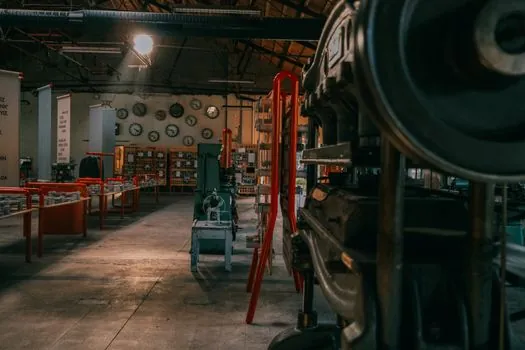
Hot box machines use mainly cylinder (pneumatic) transmissions with low pressure, so each part of the machine has relatively low steel requirements; the main components are the open/close mechanism, the sand shooting system, the mold heating system, and the electric system [S2][S4]. Because coated sand flows well, the sand mouth is small (a 60-80 mm aperture is enough on many cores) and the sand-adding mechanism is simple [S2].
Cold box machines use mainly hydraulic transmission, which delivers higher clamping force and higher shot pressure; the steel and frame requirements are higher, and the system needs a triethylamine generator plus an exhaust gas treatment train in addition to the open/close, sand mixing, sand transport, and sand shooting subsystems [S2][S4]. Sand flowability is poor compared with coated sand, so the sand mouth is larger, vibrating sand-adding equipment is commonly fitted, and the air intake channel and sand shooting pressure must be larger than on a hot box machine of the same core size [S2].
The same machine frame can be converted between hot and cold service in many cases by swapping the heating platen for a gassing plate, a point made explicitly in the comparison from Wuhan Jianheng [S2]. This matters for capacity planning: a foundry buying a shell core shooter and then switching cores to cold box chemistry does not always need a new machine, but it will need the amine gas generator, exhaust scrubbing, and larger shot pressure hardware.
Selection Criteria: When to Pick Which
Choose a hot box core shooter when the application needs very fine surface finish and tight dimensional tolerance, when small cores with thin walls dominate, and when electricity or natural gas is cheap relative to amine gas and exhaust treatment. The trade is 40-120 s hardening at 250-350°C box temperature and a slower per-core takt [S1][S2][S5].
Choose a cold box core shooter when takt is the constraint, when cores are large or section-variable, when energy cost matters (no box heating), and when the plant already handles or can install amine gas safety infrastructure including the generator, gassing plate sealing, and exhaust gas treatment [S1][S2][S3][S4]. Cold box also tends to give better working conditions and lower energy use per core, at the cost of larger machine frames and more controls.
For foundries running both iron and aluminum, the cold box path is usually the higher-throughput default, while the hot box path remains the higher-precision niche, particularly for thin-wall intricate cores where the 40-120 s sintering window at 250-350°C is acceptable in exchange for the surface and tolerance it delivers [S1][S5].
Quality, Failure Modes, and Process Control
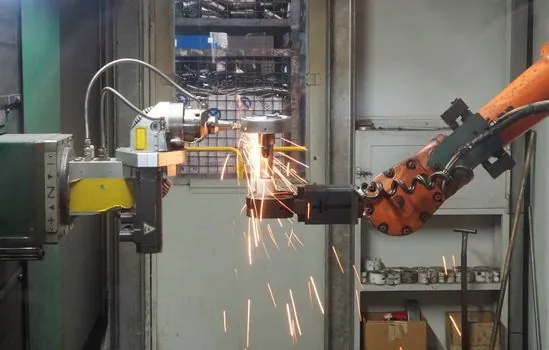
Cold box cores can suffer incomplete curing when the amine gas does not reach all sections of the core, and the source material on cold box core making calls this out as a leading cause of poor core quality, especially on complex geometries [S6]. The fix is gassing-plate design, vent placement, and shot pressure tuning, all of which are covered in the practical guide on cold box blow pressure and fill time optimization.
Hot box cores can suffer under-cure if the box temperature sags below 250°C or over-cure / burn-on if the box runs hot above 350°C, and shell thickness variation tracks the hardening time rather than the box temperature alone [S5]. Common cold box failure modes include amine smell carry-over from an under-sized purge step, soft cores from an exhausted TEA generator, and venting marks on thick sections. Common hot box failure modes include box-heater element failure, coated sand age-out, and ejection damage on thin walls. Process simulation is increasingly used on both sides to predict fill, cure, and gas flow before tooling cuts steel [S6].
Decision Matrix: Cold Box vs Hot Box vs Shell Core
On cycle time per core, cold box wins at roughly 20-45 s on small-to-medium cores, hot box sits at 60-180 s including reheat, and shell core shooting tracks hot box because the same 40-120 s shell-hardening window at 250-350°C applies to the pour-blow shell process [S2][S5]. On dimensional accuracy and surface finish, hot box and shell are ahead of cold box, and on equipment cost and energy per core, cold box is ahead because no box heating is required [S1][S2][S4].
On infrastructure, hot box needs a heat source (electricity, natural gas, or coal gas), cold box needs a triethylamine generator plus an exhaust gas treatment train, and shell needs both heated tooling and a controlled pour-blow cycle [S2][S4][S5]. On tooling flexibility, hot box is simpler and cheaper per tool, while cold box tools must be designed for higher shot pressure, larger sand mouths, and amine-resistant sealing; both can run on vertically or horizontally parted core boxes [S2][S5].
Standards, Sourcing, and Trackable Signals

There is no single ISO or ASTM standard that pins a cycle-time number to either process; the 40-120 s shell hardening at 250-350°C and the 0.2-0.4 MPa low-pressure pour range are process-engineering conventions from equipment makers and foundry reference works, not a regulatory requirement [S5]. Resin chemistry (furan, phenolic-urethane, alkaline phenolic) and amine selection are where suppliers differentiate, and the trade-offs on CO2-cured alkaline phenolic versus amine cold box are mapped in the 2026 spec decision map on CO2-cured alkaline phenolic vs amine cold box cores.
Trackable signals to watch through the rest of 2026: amine generator safety retrofits on existing cold box cells driven by tightening foundry exhaust rules, the rollout of larger-format cold box machines for EV battery tray and motor housing cores, and continued conversion of hot box cells to cold box where takt and energy cost are the binding constraints [S1][S3][S4]. Foundries comparing the two should benchmark the same core geometry on both cells before committing capital, because the 2-4x cycle-time gap is large enough to swing line balance on a high-volume automotive casting line [S1][S2].