
A fixed loop sorter has a current planning investment range of $2 million to $10 million, which is not a guaranteed quote and can vary with the sorter, throughput, destinations and surrounding automation.
The figure covers the sorter and its project-specific scope, while each carrier uses an individual belt to divert parcels toward fixed destinations on a continuous loop [S1][S3].
Price Per Meter Is Not a Valid Budget Basis
A useful cross-belt sorter price per meter of loop cannot be derived from the available public benchmarks because no published project pairs loop length with capital cost. The defensible planning range is $2 million to $10 million for a fixed loop sorter, including cross-belt and tilt-tray architectures, subject to capacity and configuration [S2].
Loop footage alone does not define the machine. A 200-foot line with two diverts and a 200-foot line with 40 destinations, recirculation and high-speed scanning are different engineered systems, with the latter requiring more divert mechanisms, destination conveyor, sensors, I/O, controls and commissioning [S2].
The cost implication is direct: quoting dollars per meter rewards a linear transport calculation while ignoring the routing, identification and control functions that make the equipment a sorter. Destination count, item variability, induction, scanner architecture, recirculation and software integration can move the project more than total conveyor footage [S2].
What Drives a Cross-Belt Loop Price
Tilt-tray systems support a wide product mix and gentle handling, with throughput up to approximately 43,000 units per hour for small tray sizes. Each carrier carries its own belt that actively transfers the item to a chute or downstream conveyor [S1].
Capacity is the first major driver. Published fixed-loop planning ranges run from $2 million to $10 million, while fixed linear sorters range from $750,000 to $4 million; the difference reflects the greater infrastructure intensity of loop systems [S2].
Destination density is the second driver. Every loop destination is a physical position in the structure, unlike software-defined routing in an autonomous mobile robot system, so adding exits and destination conveyors directly raises structural and controls scope [S1].
Material handling is the third driver. These figures show why the same loop name can cover materially different mechanical and control specifications [S4].
Cross-Belt Versus Other Loop Types

Tilt-tray systems support a wide product mix and gentle handling, with throughput up to approximately 43,000 units per hour for small tray sizes, while their trays tilt and gravity slides each item into a chute. The comparison applies when destination count, product mix and required throughput are normalized.
Tilt-tray systems support a wide product mix and gentle handling, while loop sorters run items around a fixed track with limited sort destinations.
Installation, Integration and Commissioning Costs
The installed price therefore includes more than steel and carrier belts, because integration can add scanners, vision, PLC or warehouse-control-system logic, exception handling, recirculation and destination conveyors [S2].
Those features affect site planning, but they should not be treated as universal performance guarantees because another published loop-system description gives no equivalent speed, accuracy or package-size values [S3].
Total Cost of Ownership Beyond Purchase Price
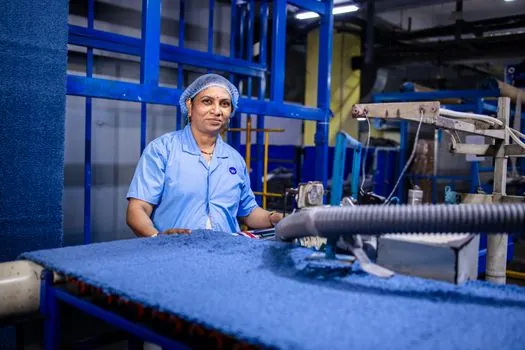
Total cost of ownership is driven by the chosen loop architecture, the number of carrier belts, energy demand, controls integration, maintenance exposure and the labor required for exceptions and recirculation. Public material does not provide a defensible cross-belt maintenance cost per meter, so any such figure would be fabricated. [S2]
Energy consumption should be scaled from the number of continuously operating carriers and diverting belts rather than from loop length. A longer loop usually means more structure and more possible destinations, while additional active belts and induction conveyors add electrical load and service points.
Maintenance exposure also follows the mechanism. Loop sorters carry individual items on a continuous track and discharge them at fixed points, with the discharge mechanism varying by sorter type. These differences affect the number and type of wear components, although no maintenance interval is given in the research.
The commercial consequence of redesign is substantial. Fixed-loop destinations require construction when the operation changes, whereas autonomous mobile robot destinations can be reconfigured in software; Tompkins gives a typical autonomous deployment time of 5 to 7 months and states that its systems can be expanded or relocated [S1].
When Cross-Belt Investment Is Justified
Cross-belt loop investment is justified for stable, high-volume operations with a wide product range and sustained throughput requirements, particularly when the physical layout and destination network are unlikely to change for 15 years [S1]. The system is less suitable for small routing counts inside an existing conveyor network, where a modular divert can provide a lower-cost configuration [S2].
It is also a weak fit where flexibility is the primary requirement. The autonomous alternative is documented at more than 50,000 items per hour, more than 6,000 destinations in one system, item weights from 1 ounce to 65 pounds and up to 75% less floor-space use than traditional sorters [S1].
A cross-belt loop is not the right choice merely because a facility has many linear feet of conveyor. The economic case depends on simultaneous item identification, accurate destination assignment, active diversion and sustained movement. For budget approval, request a configuration quote that states loop length, destination count, throughput, package envelope, scanner coverage, controls scope and commissioning assumptions.
The trackable procurement signals are the quoted loop length and destination count, then the written capacity guarantee and delivered price. If a supplier offers only a per-meter figure without those parameters, the quote is not comparable.