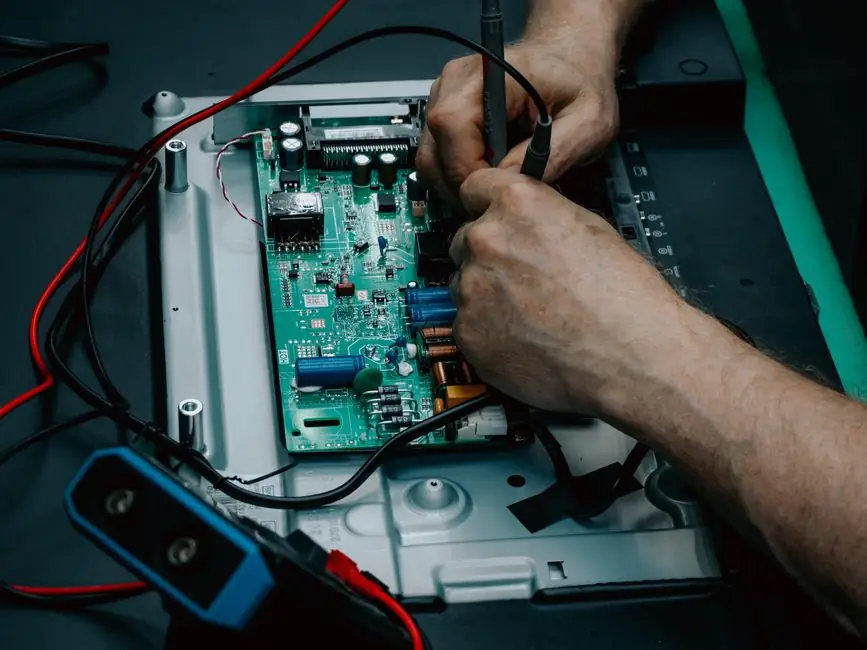
One company recommends replacement when estimated repair costs exceed 50–60% of the price of a new unit [S6].
Full replacement is justified by structural damage, chronic hydraulic or mechanical faults, insufficient load capacity, and repeated downtime, not by purchase price alone [S1][S3].
Repair-or-Replace Threshold by Condition
The first decision variable is the condition of the existing dock leveler, not the age of the unit. Targeted repair remains appropriate for a minor hydraulic leak, worn bumper, small deck imperfection, cracked spring, hold-down component, lip part, hinge pin, or related hardware [S1][S4].
Replacement generally becomes the stronger choice when the deck plate is cracked, lip edges are bent, structural members are warped, the leveler lifts unevenly, or hydraulic systems leak repeatedly or respond slowly [S1]. A unit that shakes, sticks, or moves unevenly can destabilize forklifts and loads, making continued operation a safety and productivity issue rather than a simple maintenance choice [S1].
A practical approach is to obtain a written repair estimate and a like-for-like replacement quote, then compare the estimated repair cost with 50–60% of the new-unit cost, while recognizing that this threshold is one company's criterion for recommending replacement rather than a statutory cutoff [S6]. Repair may be appropriate when the failed part is repairable and required parts are available, but the decision should also consider whether the repair will restore smooth, reliable operation [S1][S4][S6].
Component Repair and Full Replacement Compared
Mechanical dock levelers use springs, linkage, and hold-down systems, while electric-hydraulic models use motors, pumps, cylinders, and controls; the repair path differs by technology [S4]. Replacing one worn mechanical component can restore function without buying the complete unit, but electric-hydraulic diagnosis must address the specific failed motor, pump, cylinder, fluid, or control component [S4].
The comparison below shows how the options affect cost, service effort, operating risk, and service life. The purchase-price figures are broad reference ranges, while the repair threshold provides the decision rule.
What Full Replacement Actually Costs
A dock leveler purchase quote is not the complete replacement budget. Total ownership includes equipment, installation, preventive maintenance, unplanned repairs, downtime, and eventual replacement or disposal, less any residual value [S3]. Installation may add pit work, electrical wiring, and structural preparation, while a material-only purchase estimate excludes freight, tax, and installation [S3][S7].
Published pricing gives a $3,500–$10,000 range for a pit-mounted leveler, material only, with freight, tax, and installation outside that amount [S7]. A separate installation estimate places many units near or above $5,000 and premium units above $10,000 before installation [S8]. These figures are not interchangeable quotations because the equipment scope, platform, activation method, and inclusion of freight or installation differ.
Do not compare a repair invoice with the equipment-only price. The correct comparison is estimated repair plus diagnostic labor, emergency premium, parts delay, expected repeat failures, and downtime against the complete replacement project cost [S3][S4].
Cost by Activation and Operating Environment
Mechanical, air-powered, and hydraulic dock levelers occupy different cost and maintenance profiles.
For a mechanical unit, an experienced technician can repair springs, hold-downs, lip components, hinge pins, and related hardware; electric-hydraulic units require a different repair approach [S4].
Operating duty changes the economic threshold. Dock levelers can remain in service for 10 years or longer, so a small difference in service frequency compounds over the ownership period [S3].
Failure Modes, Downtime, and Safety
The main repair-versus-replacement failures are structural cracking, hydraulic leakage, slow or inconsistent movement, recurring service calls, and capacity mismatch [S1][S5].
A repair that merely clears the immediate fault can still be a poor decision if the same failure is likely to recur [S2].
When comparing dock controls during the assessment, activation pendant vs push-button panel can affect operational suitability, but control choice does not by itself resolve a structural or hydraulic replacement case.
Procurement Method and Serviceability
Use the same cost structure for both options. For repair, document diagnosis, labor, part, freight, emergency-call, and expected downtime. For replacement, document the complete installed scope, including the leveler, pit work, wiring, structural work, freight, tax, installation, controls, warranty, commissioning, and disposal of the old unit [S2][S3].
Check the manufacturer, model, serial number, activation type, deck dimensions, load rating, and required component part numbers before pricing parts [S4]. A nominal spare may not be interchangeable across manufacturers or ages because hold-down systems can use ratchet arms, cable release, or proprietary designs [S4]. The service pathway for electric pallet truck operations should also account for dock downtime while material handling is redirected, even if the replacement itself remains on schedule.
A clean decision record contains four numbers: complete repair cost, complete replacement cost, estimated repair-related downtime, and expected remaining service life of the repaired unit [S3][S5]. If estimated repair cost is below 50–60% of replacement, the failure is isolated, and no structural or capacity defect is present, repair is normally defensible [S5][S6]. If the threshold is reached or exceeded, or if structural damage, multiple failed systems, chronic leaks, or inadequate capacity are present, replacement is the stronger option [S1][S5][S6].
For each candidate unit, record the quoted installed price, component lead time, diagnostic labor, expected parts availability, structural defects, and downtime cost. Review the repair-to-replacement ratio after the written estimate is received, and treat any change in scope, repeat failure, or new structural finding as a new decision rather than an automatic continuation of the repair.