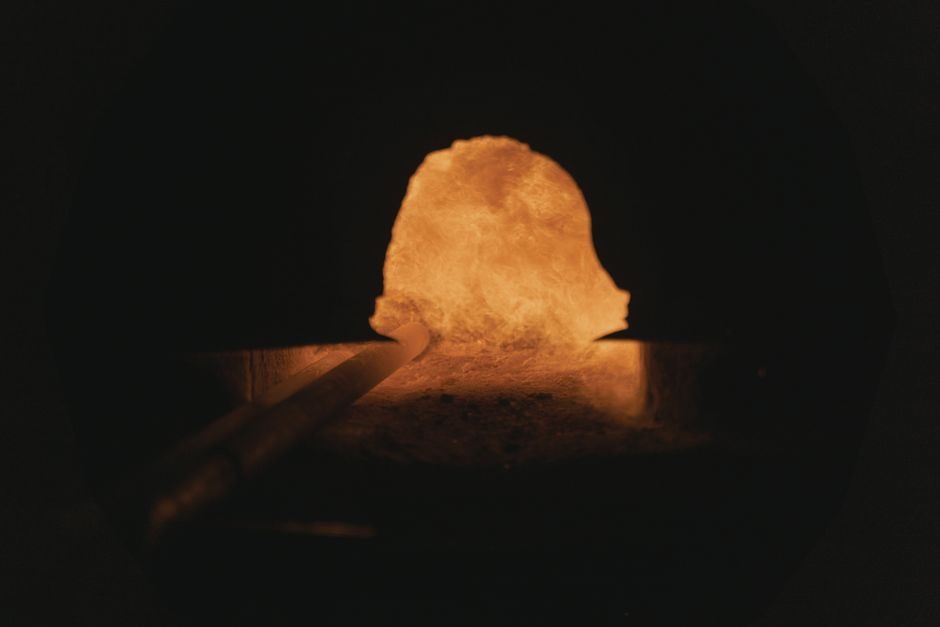
A cupola is a vertical, refractory-lined shaft furnace charged from the top with alternating layers of metallic charge, metallurgical coke, and flux (limestone/dolomite), with combustion air admitted through tuyeres around the lower shell; selection of a unit for a foundry is fundamentally a tonnage, coke-quality, and emissions-control decision rather than a generic "melting" choice, and a cupola furnace is almost always compared head-to-head with a crucible furnace, a holding furnace, or an induction furnace when the foundry sizes the line [S1][S2].
Cold-blast and hot-blast water-cooled cupolas dominate the small-to-medium grey and ductile iron foundry segment worldwide; the equipment is mature, the charge window is forgiving of contaminated scrap, and the tap-to-tap cycle is short relative to a melting furnace of the same throughput, which is why the design has survived decades of replacement attempts by electric induction [S1][S2].
Shell Diameter and Tonnage Banding
Internal shell diameter is the first selection lever because it sets melt rate, coke ratio, and the number of tuyeres; small foundries typically run 500–800 mm diameters delivering roughly 1–3 t/h, mid-size plants use 900–1400 mm shells for 4–12 t/h, and large integrated iron producers push 1500–2400 mm diameters into the 15–30 t/h range [S2].
Rule-of-thumb tuyere count scales linearly with diameter — one tuyere per 100–130 mm of circumference is the published OEM envelope — so a 1000 mm shell commonly carries 24–30 tuyeres, and any deviation from the OEM's tuyere-to-shell ratio must be reconciled against the blower CFM, otherwise wind penetration drops and bridging faults appear [S2].
Height-to-diameter (H/D) ratio is the second geometry lever: a tall shell preheats the charge more thoroughly, lowers specific coke consumption, and lifts the melting zone away from the tuyeres; the band 3.5–5.0 H/D is the common process window, with values below 3.0 associated with high-coke, low-stack-efficiency operation and values above 5.5 associated with bridging risk on fine charge [S2].
Charge Mix, Coke Quality and Metallurgical Window
Foundry-grade metallurgical coke with low reactivity, low ash, and low sulfur is the single biggest process variable; cupola iron specifiers typically require fixed carbon above 88–90%, ash below 8–10%, sulfur below 0.6–0.8%, and a 50–80 mm size band, with fines rejected because they plug the bed and starve the tuyeres [S1][S2].
Steel scrap, pig iron, returns, and foundry ferroalloys form the metallic charge, and the mix sets the carbon pick-up and silicon loss window: higher steel content raises melt temperature and oxidation loss, so the cupola is paired with a downstream holding furnace or a channel-induction forehearth when the iron spec demands tight C and Si control [S1][S2].
Flux charge — limestone or dolomite — is sized to neutralize ash and to keep the slag basic; the typical CaO/SiO2 ratio window of 1.3–1.6 governs the choice of flux, and dolomite is preferred when the iron spec needs MgO for nodular graphite conditioning [S2].
Hot-Blast, Water-Cooling and Blower Sizing
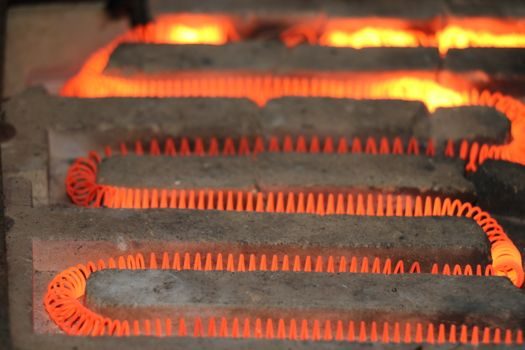
Hot-blast cupolas recover waste gas heat through a recuperator and preheat combustion air to 400–600 °C, which drops specific coke consumption by 15–25% relative to a cold-blast unit of the same diameter and is now the default specification for any new build above 4 t/h [S2].
Water-cooled shells — either full jacket or tuyere belt only — extend campaign life from weeks to months, and the copper or ductile cast-iron tuyere nozzle is the consumable that decides reline frequency; specifying replaceable tuyere stock and a designed water-flow interlock is now standard rather than optional on mid- and large-size units [S2].
Blower selection is matched to the bed area: a common process rule is 1100–1400 Nm3/min per square metre of tuyere cross-section at 25–40 kPa blower pressure, and departures above or below this band move the bed toward oxidation loss or toward reducing-zone instability [S1][S2].
Refractory Lining and Campaign Life
Selection between acidic (silica/alumina), neutral (chrome-magnesia), and basic (magnesia-carbon) linings is dictated by slag chemistry and tap temperature: acidic linings cost less and handle grey iron at 1450–1550 °C, while basic linings are specified where desulfurization is needed and where slag basicity pushes above 1.5 [S1][S2].
Lining life expectation, at 1500–1600 °C tap temperature, runs 6–12 weeks for acidic silica and 3–6 months for basic magnesia-carbon, and that campaign window is now the metric that defines the comparison against an induction furnace of the same tonnage — the cupola is preferred where the reline cost can be amortized over a long, high-tonnage run [S2].
Emissions, Slag Handling and Auxiliary Equipment
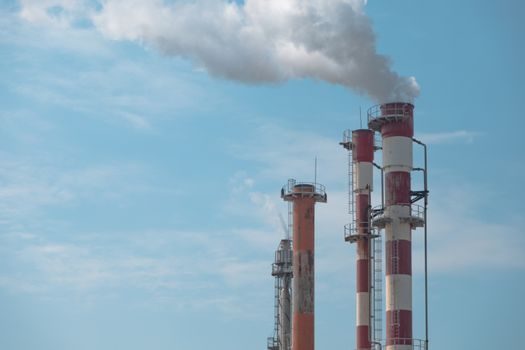
Foundry cupola selection in 2026 is constrained by particulate, SOx, CO, and dioxin limits that govern the gas-cleaning train: a fabric-filter baghouse with dry lime injection is the common specification for new builds, and the after-burner for CO/VOC destruction is sized at 750–850 °C with 0.4–0.6 s residence time per the published cupola-emission engineering envelope [S2].
Slag handling is the second-line selection criterion: granulation, drag-slag, or pot-slag options are weighed against the foundry's downstream aggregate market, and granulation water recirculation of 4–8 m3 per tonne of iron sets the auxiliary pump and cooling-tower spec [S1][S2].
Application Fit and Comparison vs Other Furnaces
A cupola is selected when the foundry runs grey or ductile iron at 5+ t/h, the charge mix is variable, and the operator is willing to live with a coke-handling line; it is not selected when the mix is ferrous-only steel scrap with tight temperature control, when a clean-room foundry needs the lower dust and noise envelope of an electric induction furnace, or when the metal is a non-ferrous alloy [S1][S2].
Decision-criteria comparison: cupola vs induction furnace vs crucible furnace on the four levers that move capex and opex: (1) tonnage per m2 of footprint — cupola leads at 10–20 t/h per footprint unit; (2) specific energy per tonne — induction wins at 500–600 kWh/t against cupola's 3500–4500 kWh/t fuel-equivalent, so the energy comparison must normalize the local electricity-vs-coke price; (3) emissions envelope — induction is cleaner per kg of metal but the cupola's baghouse + after-burner combination meets current particulate/CO/NOx spec on a stack-prMass basis; (4) melt chemistry control — induction is the right pick for tight C/Si spec, while the cupola is the right pick for high-tonnage runs where the chemistry is fixed by the charge mix [S1][S2].
For foundries buying a hot chamber die casting machine the cupola is the upstream source for the iron charge, and the spec flow — cupola → holding furnace → pouring ladle → die — sets the temperature-loss budget that the line designer has to honour; for foundries looking at a cold chamber die casting machine price and cost guide the upstream iron source is identical, and the cupola selection is decoupled from the die-casting tonnage bands [S1][S2].
Selection checklist: confirm melt rate (t/h), tap temperature (°C), coke specification (fixed carbon %, ash %, sulfur %, size band), tuyere count and blower CFM, refractory grade and expected reline interval, slag handling method, and the emissions train — these eight items freeze the cupola spec before a quotation request is issued, and they line up with the same selection logic a spec engineer uses when comparing a sand casting mold buying guide 2026 approach versus a permanent-mold line that is fed from the same upstream melt [S1][S2].
Trackable next signal: the 2026 hot-blast cupola OEM envelope is moving toward 600 °C recuperator outlet and oxy-coke side-burner trim for low-emission retrofit builds; foundry operators planning a 2026–2027 cupola specification should lock the tuyere and blower spec first, then size the recuperator to the chosen blast temperature, since the recuperator and the blower are coupled, and an under-sized recuperator will push the coke ratio up by 5–10% within a single campaign [S1][S2].
For related coverage, see Hot Chamber Die Casting Machine Price & Cost Guide 2026.