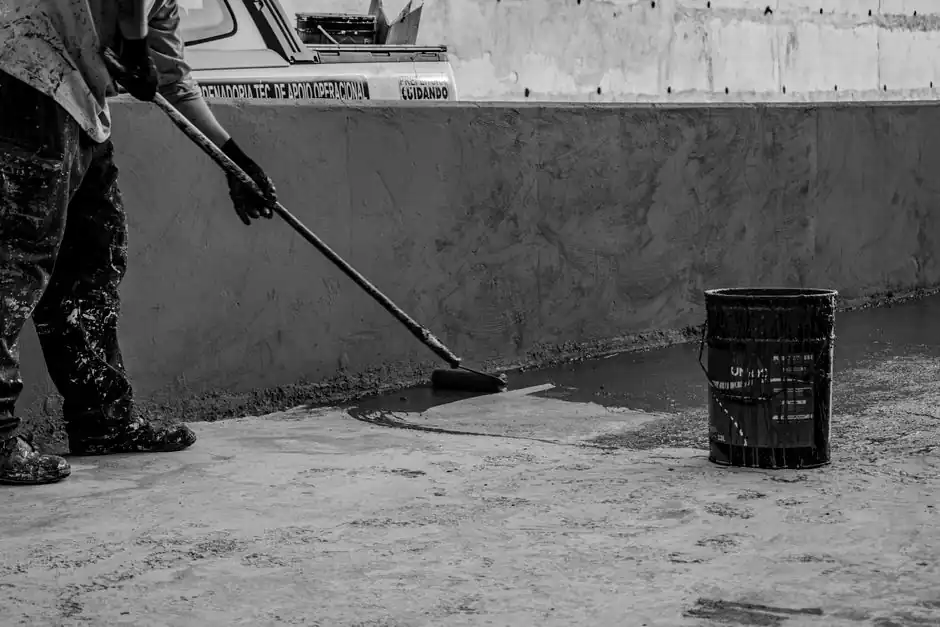
Spray-applied curing compounds at 200 ft²/gal (4.91 m²/L) coverage land the material in a 0.85 to 2.30 USD/m² range for product alone, while a compliant wet-burlap regime on the same slab needs 7 to 14 days of water, labor, and replacement burlap that pushes the all-in cost past 1.40 USD/m² on small pours and past 4.00 USD/m² on labor-tight bridge decks [S1][S3][S5].
ASTM C309 Type 1 Class A and B resin- and wax-based compounds remain the most specified chemistry in 2026, with the global market valued at USD 1.7 billion in 2026 and projected to USD 2.9 billion by 2036 at 5.6% CAGR, a sign that the cost gap versus wet curing has narrowed enough for specifiers to standardise on compounds across infrastructure work [S4].
Per-Liter Cost Stack: Compound Versus Wet Cure
WR Meadows 1100, a hydrocarbon-resin emulsion meeting ASTM C309 Type 1 Classes A and B, ships in 5 gal (18.93 L), 55 gal (208.20 L), and 275 gal (1040.99 L) packages with a published coverage of 200 ft²/gal (4.91 m²/L); bulk drum pricing in the U.S. distribution channel in 2026 puts the landed material at roughly 0.35 to 0.90 USD/m² of slab before labor, with smaller 5 gal pails carrying a 15-25% premium [S1][S5]. Independent testing on hydrogel-based systems such as CONQOR CURE shows curing performance equivalent to both water curing and an AS3799 film-forming membrane across strength, internal RH, and chloride resistance (ASTM C1202), and is supplied per m² of slab cured rather than per liter, which lets contractors benchmark a true like-for-like cost on a 1000 m² deck [S3].
Wet curing is a different cost animal. A 7-day continuous water cure on a 100 m² slab needs roughly 14,000 L of water in hot, dry conditions (replenished 2-3× per day to keep burlap wet), plus 100-150 m² of burlap, plastic sheeting, and a laborer on rotation; in temperate climates the water figure drops but the labor stays. Material for burlap, sheeting, and stakes lands at 0.10 to 0.25 USD/m², while labor to lay, soak, and re-wet the mat for 7 days drives the dominant line item, often 1.20 to 3.50 USD/m² on residential and small commercial pours and higher on access-restricted bridge work where workers must physically reach the surface twice daily [S2][S7].
Decision Matrix: Compound vs Wet Burlap on Five Criteria
On a 1000 m² industrial floor or bridge deck, the per-m² installed comparison is reasonably close between the two routes, but the rank-order shifts hard by criterion, and a specifier needs the full picture rather than a single line item [S1][S3][S4][S7].
Material cost per m²: compound 0.35 to 0.90 USD/m² (bulk drum, ASTM C309 Type 1); wet burlap 0.10 to 0.25 USD/m² in consumables, dominated by burlap and sheeting. Labor and supervision: compound 0.10 to 0.30 USD/m² (one spray pass); wet burlap 1.20 to 3.50 USD/m² (7-14 days of wetting cycles). Water consumption: compound 0 L; wet burlap 50 to 140 L/m² over the curing window. Schedule risk: compound leaves the slab walkable within hours and adds zero re-work before coatings; wet burlap blocks follow-on trades for the full cure window and can leave a wet surface that delays resilient flooring. Coating compatibility: resin- and wax-based compounds leave a film that must dissipate (about four weeks under UV for WR Meadows 1100) or be mechanically removed before tile, paint, or adhesive; water curing leaves the surface ready for any subsequent finish but adds a rescheduling line item for floor layers [S1][S3][S5].
Where Compounds Win, Where Wet Cure Still Wins
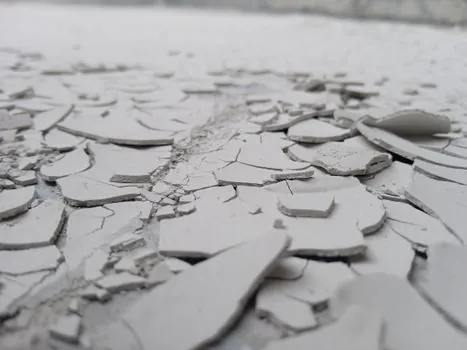
Compounds are the default on large horizontal pavements, bridge decks, and runways, where the 41,685 poor-condition bridges counted by the Federal Highway Administration in the June 2025 National Bridge Inventory are a clear specification target for moisture-retention systems that do not disrupt corrosion-inhibitor treatments [S4]. Wax-based compounds alone are projected to represent 28.0% of 2026 chemistry share, with clear compounds at 34.0% and pavements at 31.0% of application share, and the dominant chemistry routes (wax, acrylic, resin, silicate) are all VOC-compliant variants of ASTM C309 or AS3799 moisture-retention benchmarks [S4].
Wet curing and water-based alternatives still hold the line on small pours, decorative flatwork, and any slab that will receive a coating, tile, or adhesive within the first 30 days, because the four-week dissipation window on a resin-based membrane is too long when the floor layer is scheduled to mobilize at week two. Specifying engineers working on interior slabs with tight handover dates should also consider non-film-forming internal curing enhancers; see the concrete admixture reference for chemistry options that work without a surface film. For projects where wet burlap is the chosen path, matching the right concrete tool to keep the mat continuously wet is the single biggest labor cost driver [S3][S7].
Compatibility, Standards, and Failure Modes
ASTM C309 Type 1 Class A (clear) and Class B (white-pigmented) cover the moisture-retention performance spec, with Type 1-D adding a fugitive red dye for visual coverage control on horizontal pours; AASHTO M 148 mirrors the same Type 1 Classes A and B designations for transportation work, so a single product line covers both spec regimes without re-testing [S1][S5]. VOC compliance under the U.S. federal architectural coatings rule, CARB, LADCO, OTC Phase I and II, and SCAQMD is built into ASTM C309-compliant products, though VOC content varies by manufacturing site (WR Meadows 1100 ranges 42 g/L at AZ/CA plants to 278 g/L at IL/GA/PA/TX plants), which matters when a project sits inside California's South Coast district [S1].
Failure modes on the compound side are spray coverage gaps, premature foot traffic that breaks the film before set, and incompatibility with subsequent floor adhesives if the membrane has not dissipated, all of which surface as surface dusting, hairline cracking, or coating delamination months later. On the wet-curing side, the dominant failure is letting the burlap dry out, which interrupts the moisture profile and re-creates exactly the shrinkage problem the cure was meant to solve; a back-up spray system or rotation schedule is non-optional, not best practice. The general guidance on cement concrete hydration confirms that moisture continuity for the first 7 days is the engineering requirement, regardless of which delivery method gets you there.
Production Economics Behind the 2026 Price
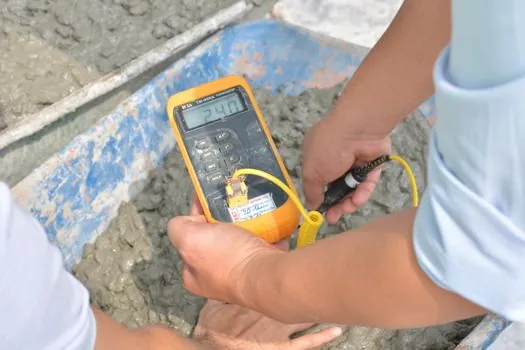
Industrial-scale production of ASTM C309 emulsions uses paraffin (8-12 parts) melted with sorbitan-ester or triethanolamine emulsifiers, then blended with 85-100 parts water under high shear to form a stable base, with nano-calcium carbonate or coalescing agents added before homogenisation and packaging; acrylic variants use emulsion polymerisation of methyl acrylate or styrene, and silicate variants use sodium silicate as the active densifier [S2]. Wax, acrylic, resin, water-based membrane-forming, and solvent-based chemistries each carry different raw-material cost stacks, which is why wholesale drum pricing for wax-resin emulsions sits lower than acrylic or styrene-acrylic options in most regional markets [S2][S4].
Market-side, the second 2026 forecast pegs the global concrete curing compound market at USD 1.29 billion in 2025 with a 5.8% CAGR through 2034 to USD 2.17 billion, broadly corroborating the Future Market Insights USD 1.7 billion / 5.6% CAGR reading; the two reports diverge on 2026 base value because of scope differences (one includes silicate densifiers, the other restricts to membrane-forming compounds) but they agree on the mid-single-digit growth band that keeps unit prices stable through 2026 [S4][S6]. For buyers tracking inputs, related materials such as concrete fiber reinforcement and concrete curing compound chemistry tend to move on different commodity cycles, so a multi-line material hedge is more useful than a single-product bet.
Verdict for Specifying in 2026
Pick a spray-on ASTM C309 or AS3799 compound when the slab is larger than about 500 m², when labor is constrained, when the schedule cannot absorb 7-14 days of wet cure, or when the project sits in a water-restricted region; the all-in cost lands at 0.45 to 1.20 USD/m² and the slab is back in service the same day [S1][S3][S4].
Pick wet burlap or a non-film-forming internal curing system when the slab will receive coatings, tile, or adhesive within 30 days, when the pour is small enough for one worker to maintain the mat reliably, or when the project specification explicitly excludes membrane residues (common in hospital and food-grade interior floors). The total installed cost rises to 1.40 to 4.50 USD/m² on these pours, but the rescheduling and surface-prep savings on follow-on trades usually close the gap [S3][S7].
For readers tracking the broader admixture cost band alongside this decision, the accelerator vs retarder price map gives the complementary winter- and summer-pour cost data, and a useful cross-check on the labor versus material split on time-sensitive slabs.