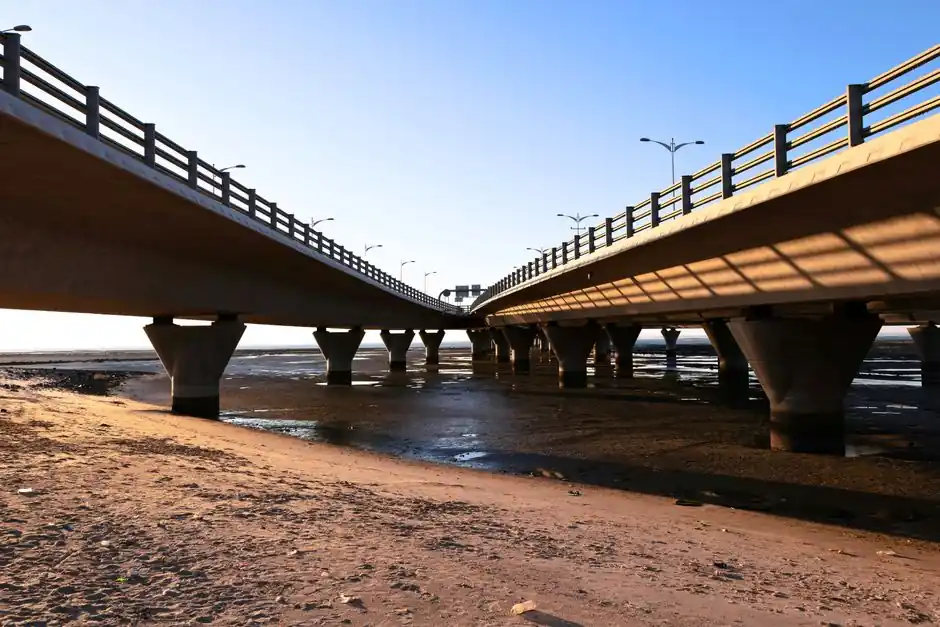
Preformed compression seals typically accommodate movements of less than 2 1/2" (≈63 mm) and are installed into a pre-formed joint gap using a lubricant-adhesive, with the neoprene or cellular profile held in place by elastic recovery against the joint walls [S3].
Cast-in waterstops are manufactured in widths of 4 in. to 12 in. and material thicknesses of 3/16 in. to 1/2 in., and are embedded across the joint so that roughly 50% of the section sits in the first concrete pour and the remaining 50% in the second pour, making the profile a permanent part of the structural cross-section [S2][S4].
How Each System Actually Stops Water
A preformed compression seal works on a single mechanical principle: an elastomeric profile, neoprene or cellular, is squeezed into a joint gap narrower than its free width, so the elastic recovery force maintains continuous wall pressure as the joint opens and closes. The seal sits between two steel or concrete headers, is not bonded structurally to the concrete, and can be removed and replaced when it wears or when the joint geometry changes [S3].
A cast-in waterstop, by contrast, is a passive barrier embedded in the concrete on both sides of the joint. The most widely used profile for decades has been the PVC thermoplastic dumbbell, 4 in. to 9 in. wide, with flat-web or center-bulb variants; center-bulb profiles flex to absorb shear and transverse movement, and tear-web variants rupture on first expansion to free the bulb for larger movements [S4]. A waterstop is not a surface sealant; it is a through-section obstruction that becomes monolithic with the surrounding concrete.
Movement, Load, and Traffic Suitability
Compression seals are classified for movements of less than 2 1/2" and are described as "especially suited for high traffic situations" on bridges and highways because the seal is mechanically retained, not bonded, and tolerates repeated dynamic loading from vehicle passages [S3]. Installation typically uses a 3 to 4 person crew for foam systems and a 5 to 6 person crew for winged or inflated neoprene systems, which require bonded headers and additional manpower [S3].
Cast-in waterstops accommodate movement through profile geometry rather than elastomeric compression: ribbed or dumbbell PVC profiles anchor into the concrete, while center-bulb and tear-web profiles convert lateral joint opening into controlled bulb deformation. Because the waterstop is part of the structural pour, its movement capacity is fixed at the time of concrete placement and cannot be upgraded later without cutting into the section. For U.S. Army Corps of Engineers civil works structures, the controlling reference for selection, evaluation, and use of both waterstops and preformed compression seals is EM 1110-2-2102, with ACI Committee Report 504R-90 cited as the sealing-joint guide [S1].
Selection Criteria Side by Side

Four criteria decide the call in most bridge-deck specifications. First, movement range: compression seals top out near 63 mm; cast-in waterstops with tear-web center bulbs can be specified for larger openings, but only if the profile is sized at the design stage. Second, replaceability: compression seals are removable and re-installable, which is why they dominate deck joints on rehabilitated bridges; a cast-in waterstop is permanent and any failure requires concrete breakout. Third, traffic and load: compression seals handle dynamic wheel loads through mechanical interlock, making them the default for high-traffic decks [S3]. Fourth, pour staging: compression seals and most winged systems "do not permit staged construction," while PVC dumbbell and ribbed waterstops are explicitly designed for two-pour cast-in-place sequences with 50% embedment per pour [S2][S3].
On cost, cast-in PVC waterstops are commodity items supplied in 50 ft rolls and represent a small fraction of joint cost; compression seals are engineered elastomeric profiles priced per linear foot but installed in a fraction of the time, with the labor savings often offsetting material cost on tight deck schedules. On watertightness, both are described as watertight when correctly installed, but failure modes differ: a compression seal fails by loss of elastic recovery, adhesive bond failure, or extrusion under shear; a waterstop fails by poor consolidation of concrete around the ribs, splice defects, or chemical incompatibility with the concrete admixtures [S3][S4].
Where Each System Fits, and Where It Does Not
Compression seals are the right call for bridge decks, highway overpasses, and parking structures where the joint is an accessible, inspectable, replaceable component and movement stays under the 2 1/2" envelope. They also suit staged construction where the joint is left open until the deck is closed, since the seal is installed from the top after cure [S3]. They are the wrong call for sub-elements that need to be poured monolithically with the structural concrete, or for joints where a small leak would be invisible until corrosion has progressed.
Cast-in waterstops, particularly the PVC dumbbell and ribbed profiles, are the right call for construction and contraction joints in abutments, piers, and deck diaphragms where the joint is the planned water path and the profile must be part of the structural section. They are the wrong call where the joint must be accessible, where post-construction adjustment is anticipated, or where the pour sequence cannot guarantee clean, consolidated concrete around both sides of the profile. For a deeper dive on how compression-style elastomers compare against metallic sealing geometries, see the EPDM gasket and seal grades spec sheet comparison.
Common Failure Modes and What Specs Should Demand
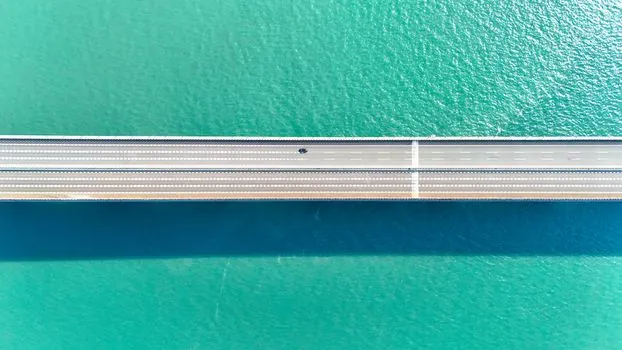
Compression seals fail most often at the adhesive-lubricant interface and at the seal corners where the gland meets the header. Specs should require a lubricant-adhesive system rated for the project's temperature range, joint faces that are square and sound, and a seal width sized to maintain 20% to 50% compression at maximum joint opening [S3].
Cast-in waterstop failures concentrate at splices, transitions, and at the concrete-waterstop interface. Specs should mandate factory-fabricated corner pieces rather than field-bent straight stock, ribbed or multi-rib profiles over plain dumbbells for improved anchoring, and consolidation procedures (vibration, mix design) that prevent honeycombing around the embedded profile. A waterstop is a primary line of defense against the passage of excessive water, water-borne matter, and gases through concrete joints, but it cannot stop water that bypasses the joint through shrinkage or settlement cracks, which is why a waterstop is typically paired with a waterproofing membrane in critical substructures [S1][S4]. For broader framing of how joint detailing sits inside the overall expansion joint family, including strip seals and modular systems, the USACE manual and ACI 504R-90 remain the primary references.
Trackable Signals for the Next Specification Cycle
Watch for revisions to ACI 504R, last issued in the 1990s series, as movement envelopes for elastomeric seals continue to widen with newer neoprene compounds. Watch also for changes to state DOT deck-joint standard drawings, which historically default to compression seals on new decks and to cast-in waterstops on monolithic substructure elements; the dividing line moves whenever a material innovation shifts one system's cost or movement ceiling. As a related comparison for embedded hardware on the same family of structures, the cast-in anchor plate vs climbing cone anchor decision map addresses a parallel cast-in vs post-installed choice on the formwork side of the same concrete joint. [S3]
The underlying component specifications are covered under cast iron.