
D-limonene offers stronger solvency than mineral spirits, with a Kauri-Butanol value near 67, and is suitable for cleaning heavy oils, greases, adhesives, tar, and carbonized residues [S5].
Petroleum distillates remain the lower-cost option for routine parts washing, while d-limonene is the higher-performance bio-based choice for stubborn deposits and applications where petroleum solvent replacement is required [S1][S5].
Decision Criteria for D-Limonene and Mineral Spirits
The comparison should be made on solvency, volatility, compatibility, safety, environmental profile, and delivered cost, not on the word “natural.” A published technical comparison gives mineral spirits a 42°C flash point, 158°C boiling point, and a composition dominated by C9–C15 cycloalkanes and alkanes, compared with d-limonene at a 48°C flash point and 175–176°C boiling point [S1][S5].
For mineral spirits, the research identifies CAS 64742-47-8 and a technical composition of 60–100% C9–C15 cycloalkanes plus 15–40% C9–C15 alkanes [S1]. For d-limonene, the relevant identity is CAS 5989-27-5, formula C10H16, molecular weight approximately 136.24 g/mol, and density about 0.84 g/cm³ at 20°C [S5].
Both remain combustible organic solvents. D-limonene is renewable and biodegradable, but it can oxidize when exposed to air and light, can cause skin irritation or sensitization, and is toxic to aquatic life [S3][S5]. Use of a citrus odor as a proxy for low hazard is not a defensible engineering decision.
Solvency and Cleaning Performance
D-limonene has a Kauri-Butanol value of approximately 67, described as roughly twice the solvency of mineral spirits [S5]. Its monoterpene structure combines nonpolar character with enough interaction to dissolve animal fats, synthetic oils, petroleum greases, waxes, adhesives, tar, bitumen, and carbonized residues [S4][S5].
Mineral spirits are broadly effective for ordinary hydrocarbon oils and grime because of “like dissolves like,” and they are generally less expensive than chlorinated solvents [S2]. They remain a practical choice where contamination is light-to-moderate, a long working window is useful in a soak tank, and the process does not require maximum dissolution strength.
The best fit for d-limonene is a heavy soil requiring penetration and lift, including heavy oils, synthetic grease, waxes, varnish, uncured adhesive, and petroleum residues [S8]. Its use can also extend to label adhesive, gasket residue, mastic, ink, and uncured resin, whereas its effect on a specific cured coating, elastomer, or plastic must be verified before exposure [S5].
Evaporation, Ventilation, and Equipment Fit
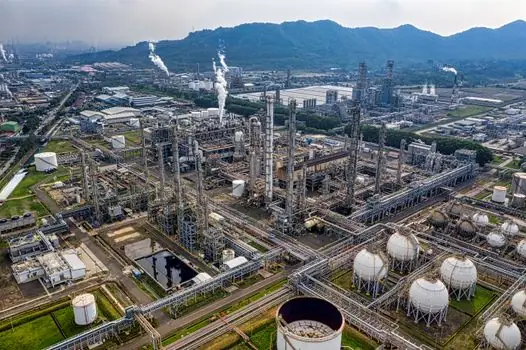
Mineral spirits and d-limonene have similar boiling ranges, but their use still differs by process. The cited values are 158°C for mineral spirits and 175–176°C for d-limonene, while the corresponding flash points are 42°C and 48°C [S1][S5]. A higher flash point does not make either product suitable for an unventilated enclosure or an ignition-controlled zone without assessment.
D-limonene is practically insoluble in water and water-immiscible [S3]. A water-rinsable d-limonene cleaner therefore requires formulation as an emulsion with surfactants, not as a simple solution of d-limonene in water [S5].
D-limonene can be used neat for heavy soil or supplied as a diluted, surfactant-emulsified cleaner [S5]. A pressure washer or flush operation requires enough vapor control to prevent an ignitable vapor cloud, while a soak tank benefits from lid compatibility, drainage, solvent recovery, and fire protection. These are mechanical constraints, not arguments for either chemistry.
Safety, Handling, and Environmental Limits
D-limonene’s environmental profile is preferable to petroleum distillates in many applications, but the product is not hazard-free. It is flammable, may cause skin irritation, can sensitize skin, and is aquatic-toxic; gloves, ventilation, ignition-source control, spill containment, and controlled waste disposal are required [S3][S5].
Petroleum-based degreasers present their own controls because they are flammable, emit VOCs, produce strong odors, and may cause skin irritation or respiratory problems [S2]. Chlorinated products such as trichloroethylene and perchloroethylene introduce separate occupational-health concerns, including possible effects on the liver, kidneys, nervous system, and reproductive organs, which explains substitution interest in citrus solvents [S2].
Store d-limonene cool, dry, and away from direct sunlight and ignition sources, and verify the lot-specific safety data sheet and certificate of analysis before process qualification [S3][S5]. The certificate of analysis governs purchased-product properties, so nominal web values should not be substituted for incoming inspection results.
Material and Surface Compatibility
D-limonene can lift adhesive from glass, plastic, and metal in the reported workshop application, but that does not establish universal compatibility with all plastics, painted surfaces, elastomers, or coatings [S3]. Its use as a paint-stripping alternative likewise requires attention to the specific coating system rather than treating all paints as one substrate [S7].
Mineral spirits also require compatibility testing, especially with plastics, sealants, and coatings. Because both families are hydrocarbon-soluble, they may attack oil-resistant elastomers or soften adhesives even when they clean metal effectively [S1][S5]. For a mixed production environment, run coupon testing with the actual soil, dwell time, temperature, and rinse procedure before changing the approved process solvent.
D-limonene’s formula is C10H16, and orange peel oil contains approximately 90–95% d-limonene before further processing [S4]. For formulations, compare industrial solvents by the specified purity and assay, not by “100% natural” wording, because finished degreasers may include emulsifiers, additives, or other carrier chemistry.
Cost, Supply, and Substitution Constraints
Petroleum solvent normally wins on purchase price. D-limonene costs more, and its price can track citrus crop variation and supply availability [S5]. This makes solvent price per litre an incomplete metric: a more expensive solvent can still be economical if it reduces labor, rework, solvent loss, or the need for hazardous-waste handling.
D-limonene is used as a bio-based alternative in heavy-duty citrus degreasers and suitable paint-stripping applications [S7]. For bulk substitution, compare industrial chemical reagents by assay, impurity profile, evaporation rate, compatibility, and lot-to-lot consistency, then evaluate the complete cleaning cycle rather than claiming one-for-one replacement.
A controlled substitution should establish a baseline for removal rate, soil mass per unit area, solvent consumption, evaporation loss, flash point, and waste stream. These measurable variables determine whether the higher purchase price of d-limonene is offset by process productivity. Any blend with industrial coating or adhesive residues should also be validated against the actual coating and adhesive grade.
Use-Case Selection
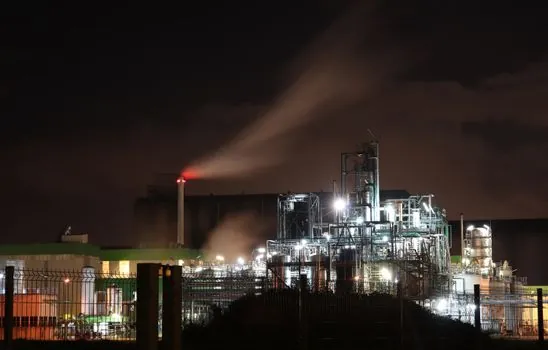
Select mineral spirits for routine automotive or mechanical parts washing involving ordinary oils and grime where cost, broad familiarity, and a stable hydrocarbon cleaning window dominate. The cited 42°C flash point and 158°C boiling point support ambient-temperature soaking, but ventilation and ignition controls remain necessary [S1].
Select d-limonene for heavy oils, synthetic grease, paraffin waxes, asphaltenes, tar, baked residues, and uncured adhesives where maximum solvency justifies higher cost. Its 48°C flash point, 175–176°C boiling point, approximately 67 KB value, and water immiscibility define a stronger but more specialized solvent profile [S1][S5].
Use d-limonene cautiously for painted equipment, plastics, elastomers, or any surface that can be damaged by a high-solvency terpene, and use petroleum solvent cautiously around coatings or sealants with limited hydrocarbon resistance. Neither option is the automatic choice for chlorinated-solvent replacement, sensitive substrates, or enclosed spaces. Pilot the actual formulation, then lock the decision through compatibility coupons, soil-removal testing, and site-specific handling review.