
Choose DMF for broad polymer solvency and low viscosity, DMAc when a higher boiling point is useful, and DMSO when thermal stability and non-SVHC status outweigh its freezing and workup constraints [S1][S2].
This comparison covers DMF, DMAc, and DMSO as polar aprotic solvents for polymer solutions, coating formulations, resin processing, and extractive workup, using boiling points from 153 °C to 189 °C, viscosities from 0.80 to 1.99 cP, and dielectric constants from 36.7 to 46.7 at 25 °C [S2].
Physical properties that change dissolution performance
DMF, DMAc, and DMSO all dissolve many polar organic compounds and are fully miscible with water, but they are not interchangeable processing fluids [S1][S2]. DMF has a boiling point of 153 °C, viscosity of 0.80 cP, and density of 0.944 g/cm³ at 25 °C. DMAc has a boiling point of 165 °C, a viscosity of 0.92 cP, and a density of 0.937 g/cm³. DMSO has the highest viscosity in this group at 1.99 cP and the highest density at 1.100 g/cm³, together with a boiling point of 189 °C [S2].
DMSO has the strongest dielectric constant at 46.7, compared with 37.8 for DMAc and 36.7 for DMF; its Kamlet-Taft π* value is also 1.00 versus 0.88 for both amides [S2]. Higher polarity can improve ionic or polar solute compatibility, but it does not guarantee faster dissolution of every polymer. The target polymer, formulation additives, temperature, shear, and solid concentration must be tested as a system.
For viscosity-sensitive coating or casting operations, DMF is the practical first screen. DMSO is less attractive where continuous ambient-temperature handling matters because its viscosity is about 2.5 times DMF at 25 °C [S2].
Polymer and formulation fit
DMF is the broadest baseline for polymers and resins because of its excellent solubilizing properties and chemical stability, while DMAc has a dielectric constant of 37.78 compared with DMF's 36.70 [S1][S2]. The solvents are used across polymer synthesis and processing, and their strong dipolar character supports dissolution of high-molecular-weight material [S5][S6].
DMSO should be selected only after confirming the polymer-solvent interaction in the finished formulation. Its dielectric constant of 46.7 and π* value of 1.00 favor strongly polar systems, but higher viscosity can slow mixing and increase the energy needed for pumping [S2]. It also has distinct sulfoxide redox behavior, so a solvent that dissolves the polymer may still be unsuitable if the formulation contains oxidizable or nucleophilic components [S2].
No universal substitution can be assumed from polymer family labels. DMSO-containing mixtures have produced useful results in peptide and organic synthesis, while propylene carbonate and other alternatives have also been evaluated, demonstrating that solvent composition may need adjustment [S1][S3]. For a broader treatment of solvent identity and handling, the industrial solvent reference provides a useful category starting point.
Comparison by processing priority
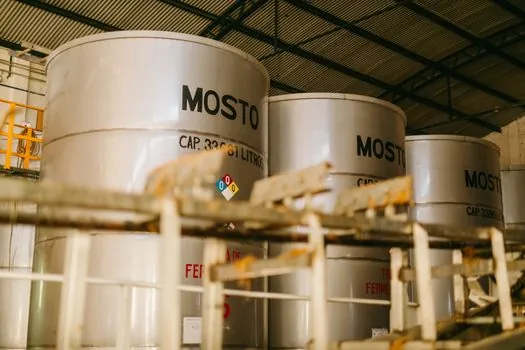
DMF leads on viscosity and evaporation burden: 0.80 cP and a 153 °C boiling point. DMAc leads among these three on boiling point at 165 °C, with only a 0.12 cP viscosity increase over DMF. DMSO leads on dielectric constant at 46.7 and is identified as the non-SVHC option among the three, but it has the highest viscosity at 1.99 cP and a melting point of 18.5 °C [S2].
These are selection signals, not universal purchasing conclusions. Bulk quantity, recovery yield, energy demand, recovery equipment, and local regulatory restrictions can reverse a laboratory ranking.
A practical rule is to screen DMF first when solvent removal, mixing, or viscosity dominates; screen DMAc first when hot-solvent processing dominates; and screen DMSO first when regulatory status or pharmaceutical fit dominates. Do not select DMSO for a cold warehouse pipeline unless a trace heating, melting, or seasonal control plan is available [S2].
Health, regulatory, and operator controls
DMF is classified by the European Chemicals Agency as a substance of very high concern because of reproductive toxicity and skin absorption, with potential liver damage under prolonged exposure [S1]. DMF is classified as a substance of very high concern (SVHC) because of its reproductive toxicity and potential for skin absorption, which can lead to liver damage upon prolonged exposure [S1].
Closed transfer, local extraction, compatible gloves, and controlled access are baseline requirements for any of these high-boiling solvents, not features unique to DMF. The process must also evaluate exposure to residues in dried products and coating films. A solvent substitution that removes one reproductive-hazard classification but changes drying, extraction, or waste treatment does not automatically reduce total process risk.
DMAc and DMSO should not be treated as harmless substitutes. Material compatibility, peroxide or degradation controls where applicable, skin exposure limits, and supplier-specific purity specifications remain part of the selection package. The chemical reagent guide is relevant for reagent-grade qualification, while pharmaceutical use requires a documented supplier grade and application-specific impurity profile rather than a solvent name alone.
Workup and solvent recovery constraints

DMF and DMSO are difficult to remove because both are highly polar, water-miscible, and high-boiling; DMSO boils at 189 °C and DMF at 153 °C, compared with 165 °C for DMAc [S2][S4]. Water dilution alone can create large solvent and wastewater volumes rather than a clean recovery stream.
For a product that can tolerate dilution and extraction, a stated rule of thumb is to use five successive 10 mL water washes per 5 mL of DMF or DMSO, followed by thorough washing of the organic phase [S4]. That laboratory rule does not replace a process mass balance. Extractive removal becomes less attractive as solvent viscosity and co-extraction rise, while the product may have limited stability in the water-miscible phase.
Industrial selection should compare recovery by distillation, evaporation, water extraction, and closed-loop reuse against the solvent lost in the product and purge streams. NMP is another established member of this dipolar-aprotic family, with a 2024 review focused on greener processing routes [S6], but the presence of NMP in a solvent portfolio does not remove the need to qualify DMF, DMAc, or DMSO separately.
Decision matrix for production trials
The key decision is not simply which solvent has the highest dielectric constant. Use a weighted comparison across four criteria: polymer solubility, process temperature, recovery burden, and regulatory exposure. DMF scores well where low viscosity and solvent removal dominate; DMAc scores well where a 165 °C boiling point permits more heat without increasing viscosity substantially; DMSO scores well where non-SVHC status or pharmaceutical availability dominates, but its 18.5 °C melting point and 1.99 cP viscosity impose controls [S1][S2].
Run comparative trials at the intended solids concentration, not at dilute laboratory concentration. Record dissolution time, solution viscosity, filtration behavior, coating appearance, dried-film properties, solvent residue, and recovery yield. Include aging at the maximum storage and processing temperatures. A solvent that passes an initial dissolution screen can still fail through poor solution stability, incompatibility with additives, or excessive energy demand during drying.
For the next engineering step, obtain current supplier technical data sheets for the exact DMF, DMAc, or DMSO grade, verify the relevant process temperature against the product specification, and complete a three-solvent bench comparison with identical polymer loading and mixing conditions.