Hyperscale data center operators in North America spent 2025 and 2026 reconfiguring their backup architecture around three distinct assets: diesel and natural gas reciprocating gensets, lithium-ion battery UPS, and grid-scale gas turbines, with each technology now owning a specific slice of the resilience window [S1][S3][S5].
The U.S. data center generator market was valued at roughly USD 1.6 billion in 2025 and is forecast to reach USD 2.97 billion by 2032 at a 9.2% CAGR, with standby units holding about 64% of unit share and the 350-800 kW class capturing 37% of capacity [S5]. Total U.S. data center load is projected to roughly triple to about 134.4 GW by 2030, a scale that has pushed operators to deploy every available power path in parallel [S5].
Natural gas reciprocating gensets: prime power, not just standby
Caterpillar G3520K natural gas gensets, each rated 2.5 MW at 1,500 RPM, form the core of a planned 4 GW campus in Millard County, Utah, paired with more than 1 GWh of battery storage and operated as prime rather than emergency power [S1]. The configuration is repeated at smaller scale across North Dakota, West Texas, Indiana, Pennsylvania, Kentucky, West Virginia, North Carolina, and Alberta, where an 8 GW Wonder Valley site targets first-phase 1.5 GW by 2027 [S1].
Rolls-Royce mtu has extended the same playbook to a 20V4000 gas genset delivering 2.8 MW with a stated fast-start of about 45 seconds, positioning the unit for both standby and continuous duty at AI campuses [S5]. Global Market Insights valued the global gas generator market at USD 6.9 billion in 2024 with an 8.8% CAGR to USD 16 billion by 2034, and projected machines above 750 kVA to reach roughly a quarter of the total by 2034, driven by data center and AI demand [S1]. The driver is lead time: Caterpillar's senior vice president of Electric Power stated that "the full generation package can be delivered ahead of most other generation technologies," a speed-to-power advantage that grid interconnection and new nuclear cannot match on AI build cycles [S1].
Lithium-ion UPS batteries: ride-through and the sub-minute window
Lithium-ion battery UPS remains the first line of defense during the sub-second to multi-minute window when utility power drops, holding frequency and voltage stable while gensets start and synchronize [S2]. Vertiv's hybrid-power white paper frames the architecture as three layers: grid primary supply, battery UPS for instantaneous ride-through, and gensets for sustained outage support, with the battery layer now absorbing an expanded role as AI racks push per-rack density well above legacy 10-15 kW baselines [S2].
Battery economics constrain how long that buffer can hold: beyond roughly 10-15 minutes the cost per kilowatt-hour delivered favors spinning reserve, which is why hyperscale designs in 2026 commonly pair a 1-5 minute lithium-ion UPS with 1-2 hours of additional BESS for peak shaving and frequency regulation [S2]. The Vertiv analysis explicitly identifies "Bring Your Own Power" as the new design philosophy when local utilities cannot commit additional capacity until 2030 or later, and notes that local permitting resistance to diesel is accelerating the move toward gas-plus-storage hybrids [S2].
Gas turbines: bridging the multi-megawatt, multi-hour gap
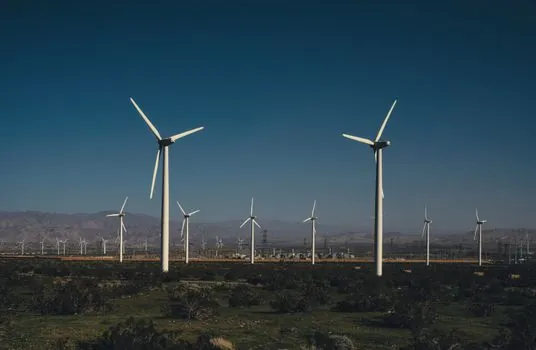
Aero-derivative and industrial gas turbines occupy the slot that neither batteries nor reciprocating gensets cover economically: continuous loads above about 10 MW sustained for hours to days. The 4 GW Millard County and 8 GW Wonder Valley campuses are sized at a scale where individual turbine packages in the 25-100 MW class become more efficient per MW than fleets of 2.5 MW reciprocating engines, though each turbine typically carries a 24-36 month OEM lead time versus roughly 12 months for a packaged gas genset [S1].
For comparison, Rolls-Royce mtu's 2.8 MW 20V4000 unit advertises a 45-second start window suitable for standby, while larger heavy-duty turbines from Mitsubishi Heavy Industries and Wärtsilä are typically specified for prime or peaking duty with start times measured in minutes rather than seconds [S5]. The choice of turbine class therefore maps to a specific load profile: gas turbines for prime and multi-hour peaking, reciprocating gas gensets for fast-start prime or standby, batteries for ride-through and regulation, and diesel only where regulations still require it as a final layer [S1][S3][S5].
Criteria comparison: which asset for which load profile
Across four decision criteria, the three technologies split cleanly. On start time, lithium-ion UPS is essentially instantaneous (milliseconds), gas reciprocating gensets start in 10-45 seconds, and gas turbines need 1-10 minutes depending on configuration [S2][S5]. On sustained runtime, batteries are economic up to roughly 10-15 minutes before cost per kWh delivered climbs steeply, while gas gensets and gas turbines run indefinitely on fuel, with diesel restricted by on-site fuel storage typically sized for 24-72 hours [S2][S3].
On deliverable capacity per unit, a single G3520K gas genset produces 2.5 MW, an mtu 20V4000 delivers 2.8 MW, and gas turbines span roughly 25-100+ MW per frame, while a containerized lithium-ion BESS typically ships at 1-5 MVA per unit [S1][S5]. On siting and permitting, diesel faces the heaviest local opposition due to NOx, particulate, and noise, with at least 38 U.S. states actively debating restrictions; natural gas reciprocating units face moderate scrutiny; and gas turbines, while emissions-intensive, often locate at dedicated energy sites rather than suburban campuses [S3].
Use cases and failure modes operators must price in
For a 100 MW AI training hall, the working baseline in 2026 is a 2N electrical topology with lithium-ion UPS covering 1-5 minutes, gas reciprocating gensets carrying the next 12-48 hours on pipeline natural gas, and gas turbines or utility restoral handling anything beyond [S1][S2][S5]. Diesel remains the regulatory insurance layer in many jurisdictions, sized for N+1 or 2N even when rarely run, which is why standby units held 64% of the U.S. data center generator market by unit count in 2025 [S5].
Real failure modes to budget against: gas pipeline curtailment during winter peaks, which has forced Texas and Midwest operators to retain diesel for cold-weather emergencies; lithium-ion thermal-runaway propagation risk that limits how densely cells can be packed in a white-space-adjacent UPS room; and gas turbine warm-start cycling wear, which is why most operators reserve turbines for sustained load rather than daily peak-shave duty [S2][S3]. Operators are also tracking the related shift in corporate power-procurement volumes, as covered in Data Centers Outpace Heavy Industry in 2026 Corporate PPA Volumes, since long-term PPAs and on-site gas both compete for the same capital envelope.
Standards, sourcing, and procurement signals to track
Generator packages in this segment are commonly rated to UL 2200, with emissions compliance under EPA Tier 4 Final for standby diesel and NSPS for natural gas, and seismic certification to IEEE 693 required at utility-scale sites in the western U.S. [S5]. Procurement teams should verify the specific emission tier and certification stack on each nameplate, since AI campuses frequently site in jurisdictions that adopt California's NSPS framework preemptively [S3].
Trackable signals over the next two quarters: OpenAI, Oracle, and partners announced the USD 500 billion "Stargate" initiative with five U.S. sites totaling nearly 7 GW, a build-out that will stress genset supply chains already running near capacity [S5]. Lead times on medium-voltage switchgear and large-frame gas turbines are extending, a constraint also visible in the connector and power-line market feeding these builds, and hyperscaler capex of USD 732.5 billion in 2026 (covered in AI capex 2026: $732.5B hyperscaler spend, inference pivot, and what slows first) confirms the demand side will not ease before 2027.
Component reference pages worth checking: data logger, gas analyzer, and gas cabinet.